
NASA Data Reveals a Dangerous Shift in Wildfires and Human Activity Is Driving It

NASA’s long-term satellite observations reveal a striking shift in wildfire behavior worldwide. According to NASA’s Earth Science Division, extreme wildfire activity has more than doubled globally, particularly in northern and temperate forests. What were once considered rare, high-intensity fire events are now occurring more frequently, burning hotter, and lasting longer.
A 21-year analysis of satellite data found that the largest increases in extreme fire behavior have occurred in temperate conifer forests of the Western United States and in boreal forests across northern North America and Russia. These ecosystems are now experiencing fires that are more intense and more difficult to contain. Warmer nighttime temperatures, another signal of a warming planet, allow fires to continue burning after dark, when they once would have slowed.
This isn’t simply a matter of better reporting or improved detection. NASA’s Terra and Aqua satellites have been tracking active wildfires consistently for decades, offering scientists a clear record of how patterns are changing. The data show that the shift is real and accelerating.
A Warmer, Drier Climate Is Supercharging Fire Seasons

Climate change is acting as a powerful catalyst. As NASA’s climate research explains, rising temperatures are drying out air and vegetation, making landscapes more flammable. In the Western United States, fire seasons are starting earlier in spring and stretching later into autumn, expanding the window for large-scale fires.
According to NASA’s wildfire and climate overview, human-caused climate change has been identified as the main driver behind increasing fire weather in the American West. Hotter weather, earlier snowmelt, warmer nighttime temperatures, and decreasing summer rainfall are combining to create ideal fire conditions. The amount of summertime precipitation, in particular, strongly influences how much land burns in a given year.
The numbers are sobering. NASA researchers report that carbon emissions from forest fires increased by 60% globally between 2001 and 2023. In 2023 alone, Canada’s record-breaking fires released about 640 million metric tons of carbon, illustrating how fire seasons are not only getting longer, but more destructive and climate-altering.
More Fuel, More Ignitions, More Risk

Climate isn’t the only factor at play. NASA scientists studying record fire years in the U.S. West point to three major drivers: a changing climate, increased fuel availability, and the expansion of urban areas. Each of these elements reinforces the others.
Decades of wildfire suppression have allowed forests in some regions to accumulate dense undergrowth and dead material. When drought and heat dry out this fuel, fires can burn more intensely and spread more rapidly. The 2020 fire season in the U.S. West illustrated this “perfect storm” effect, where record drought, extreme heat, and strong winds combined to create explosive conditions.
Human development also plays a critical role. As communities expand into wildland-urban interface zones, the number of ignition sources increases, from power lines and vehicles to accidental sparks. At the same time, more homes and infrastructure sit directly in fire-prone areas, increasing both economic losses and human risk. NASA’s data make clear that while fire is natural, today’s fire patterns are increasingly shaped by human decisions.
Wildfires Are Now Feeding Back Into Climate Change
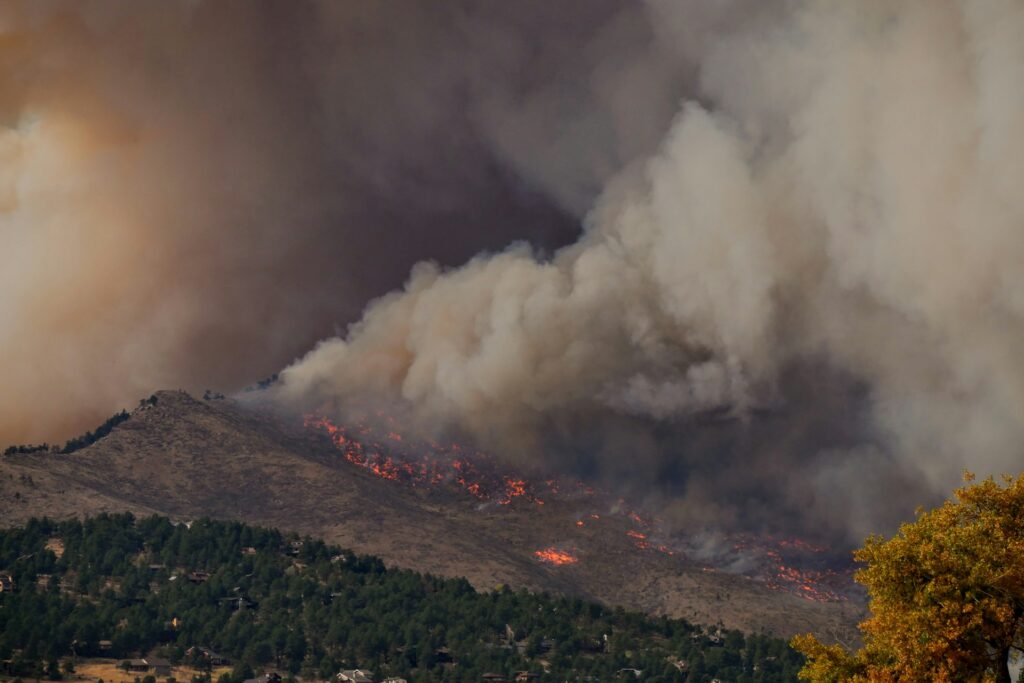
The relationship between climate change and wildfires is no longer one-directional. Fires are not just responding to warming; they are accelerating it. Wildfires release large amounts of carbon dioxide and carbon monoxide, adding greenhouse gases to the atmosphere. In extreme years, wildfire emissions can rival or exceed emissions from entire industrial sectors.
NASA data show that while the total number of wildfires in the United States has remained relatively constant over the past few decades, the amount of land burned each year has increased dramatically. In other words, fires are growing larger, not necessarily more numerous. Bigger fires mean more carbon released, more smoke pollution, and longer-lasting ecological impacts.
This creates a dangerous feedback loop. Hotter temperatures and drier landscapes increase fire activity. Larger fires release more carbon into the atmosphere. That added carbon traps more heat, which in turn fuels even more extreme fire conditions. NASA’s long-term observations reveal that this cycle is already underway. The data don’t just document a shift but signal a warning: without significant action to curb emissions and rethink land management, wildfire seasons may continue to intensify in ways that reshape ecosystems, economies, and communities worldwide.
PetsFanatic Team
Pet Care Expert & Content Creator
Passionate about sharing knowledge and tips for better pet care. Writing about everything from pet health to training techniques.