
NASA Astronaut Captures Strange ‘Tentacled’ Object on ISS, Sparking Online Reactions

A NASA astronaut has caused a stir on social media after sharing a photo of a bizarre, tentacled object growing aboard the International Space Station (ISS). Captured by Don Pettit during Expedition 72, the image depicts an unusual, egg-like structure with black tentacles erupting from its base. The startling appearance of the object quickly went viral, garnering nearly 100,000 views as fans reacted with a mix of fascination and genuine alarm.
Social media users were quick to compare the growth to something out of a science fiction film, with one user jokingly urging the astronaut to “kill it with fire!”. Others remarked that the object looked exactly like an egg hatching or a mimic from the movie Prey. The black, wiry appendages reaching out into the zero-gravity environment created a visual that many found disturbing before a factual explanation was provided.
Despite the alien aesthetic, the reality behind the photo is quite mundane: the object is actually an early purple potato. Pettit explained that he brought the potatoes to the ISS to create a personal space garden during his off-duty time. The tentacles are simply the plant’s sprouts and roots growing in a microgravity environment, anchored by a small patch of hook Velcro to keep the vegetable from floating away.
Spudnik-1 and the Science of Microgravity Gardening

Dubbed Spudnik-1 by Pettit, the orbiting potato was housed in an improvised grow light terrarium. Growing plants in space presents unique challenges that don’t exist on Earth, specifically regarding how roots behave without a gravitational pull to guide them. Pettit noted that in the absence of gravity, roots tend to grow in all directions simultaneously, which contributed to the potato’s strange, multi-limbed appearance.
The astronaut also observed that space-grown plants tend to grow far slower than their terrestrial counterparts. This slow growth rate and the chaotic direction of the sprouts are key findings from Pettit’s informal gardening experiments. While the Velcro docking adaptor looked like part of the plant to some viewers, it was a necessary tool to keep the experiment localized within the station’s light source.
NASA has a long history of experimenting with space-grown produce, but potatoes are considered particularly valuable. They are one of the most efficient plants when comparing edible nutrition to total plant mass, including the roots. This efficiency was famously highlighted in the book and movie The Martian, and Pettit believes getting a head start on potato cultivation is essential for the future of long-term space exploration.
From Space Gardens to Radiation Protection

The interest in Pettit’s potato highlights a broader NASA initiative to supplement astronaut diets with fresh space-grown food. To date, crews on the ISS have successfully grown a wide range of fruits, vegetables, and even flowers. Future plans at the Kennedy Space Center include expanding this orbital harvest to include more produce like tomatoes and peppers.
The benefits of these gardens go beyond simple nutrition and psychological well-being. NASA explains that certain antioxidant-rich foods—such as berries and specific types of beans—could provide natural space radiation protection for crew members who consume them. This makes the Spudnik-1 experiment a small but significant step toward sustainable life on a spacecraft.
Online fans continued to find humor in the situation, with one user joking that someone needs to invent a zero-g fryer as soon as possible. Another referenced the fertilizer methods used in The Martian, hoping Pettit brought actual supplies this time. While the potato might have looked like a monster to the internet, to NASA, it represents a vital component of the edible nutrition required for the next frontier of human travel.
The Future of Orbital Agriculture
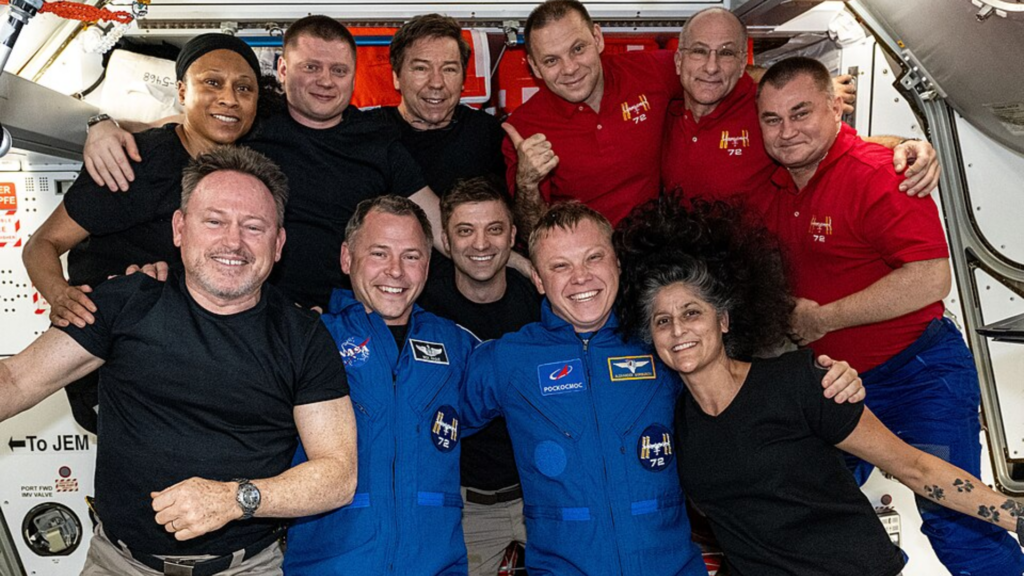
Don Pettit’s Expedition 72, which ran from September 2024 to April 2025, will likely be remembered for this viral alien potato moment. By sharing the progress of his purple potato, Pettit has brought a human element to the complex science of astro-botany. The high engagement on his posts proves that the public remains fascinated by the everyday realities of living and working in orbit.
The ISS serves as a unique laboratory where the mundane activities of Earth, like gardening, become extraordinary. Every plant grown on the station provides data on how to eventually sustain colonies on the Moon or Mars. Even if the results initially look disturbing to those on the ground, each sprout is a successful test of human ingenuity in a harsh environment.
As NASA looks toward future missions, the tentacled purple potato will remain a classic example of why space exploration requires both advanced technology and a little bit of Velcro. Pettit’s off-duty project has successfully bridged the gap between cinematic sci-fi fears and real-world scientific progress. For now, the Spudnik-1 is safely back in its terrarium, proving that in space, even a potato can become a global celebrity.
PetsFanatic Team
Pet Care Expert & Content Creator
Passionate about sharing knowledge and tips for better pet care. Writing about everything from pet health to training techniques.