
Scientists Uncover ‘Missing’ Human Bloodline in 7,000-Year-Old Desert Mummies
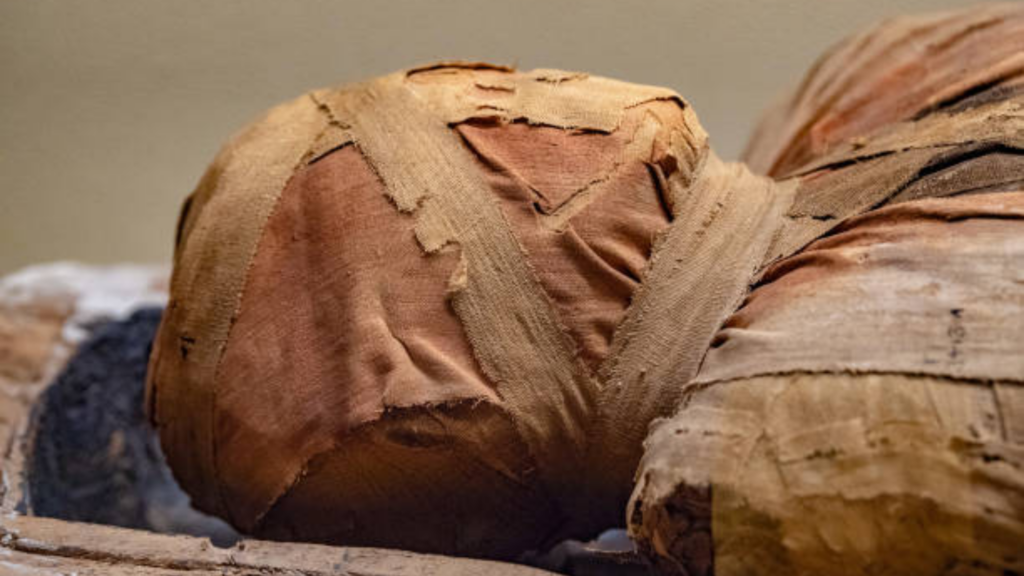
Deep in the Sahara, where rolling sand dunes now stretch for miles, researchers uncovered two remarkably preserved mummified bodies tucked inside a rock shelter. The remains are nearly 7,000 years old, dating to a time when this barren desert was green and alive. But it was not just their age that stunned scientists. It was their DNA.
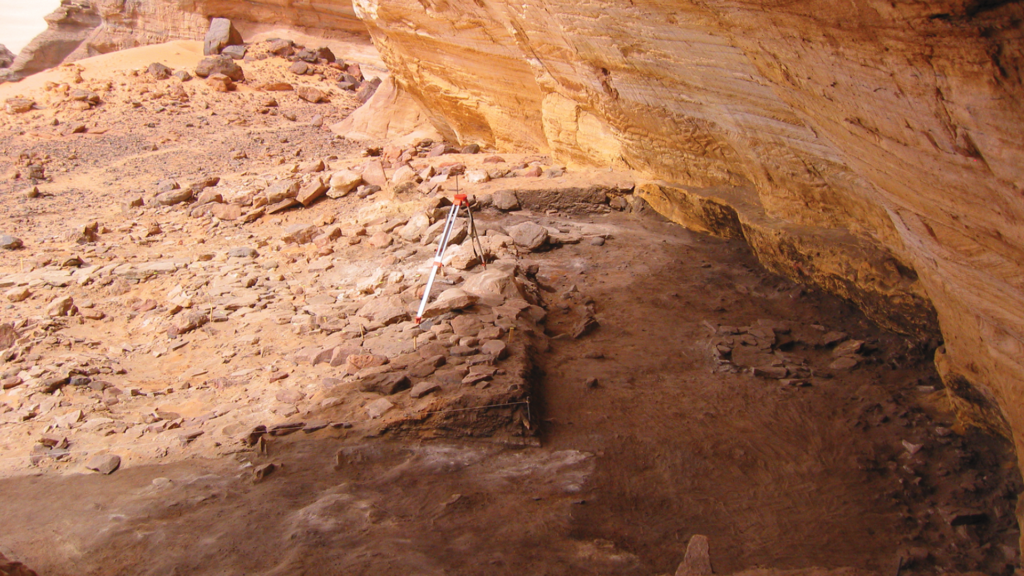
Led by archaeogeneticist Nada Salem, the team excavated the bodies at the Takarkori rock formation in what is now southwestern Libya. The two individuals were identified as female herders who lived during the African Humid Period, when lakes and grasslands covered much of the Sahara. What their genetic code revealed, however, challenged long held assumptions about human ancestry.
Initial testing showed that most of their ancestry came from a previously unknown North African lineage. This group appears to have split from other African populations tens of thousands of years ago, then remained largely isolated. In other words, these women belonged to a branch of humanity that seems to have vanished from the modern gene pool.
A Lineage Lost to Time

The study, published in Nature, explains that the Takarkori individuals descended from a deeply divergent population that separated from sub-Saharan African lineages around the same time as humans migrating out of Africa. Yet unlike those groups, this North African lineage stayed largely confined to its region.
Genetically, the Takarkori mummies are closer to 15,000-year-old foragers found in Morocco’s Taforalt Cave than to present day populations. Both lineages show comparable genetic distances from sub-Saharan groups of their era. The findings suggest a complex web of ancient migrations and separations that shaped early North Africa.
DNA analysis also revealed traces of Neanderthal ancestry. That detail surprised researchers, since this group appears to have had less contact with Neanderthals than some neighboring populations. The trace amounts hint at ancient encounters far beyond the Sahara, even if those interactions were limited.
When the Sahara Was Green

To understand how this lineage survived in isolation, scientists looked at the environment these women once called home. Between 14,800 and 5,500 years ago, the African Humid Period transformed the Sahara into a mosaic of lakes, wetlands, savannas, and woodlands. It was a radically different world from today’s arid expanse.
That ecological diversity may have acted as both refuge and barrier. Mountains, grasslands, and waterways created pockets of habitation that limited contact between populations. According to Salem’s team, this isolation likely helped preserve the group’s unique genetic signature for thousands of years.
Archaeological evidence shows the Takarkori people were primarily hunter-gatherers who later adopted pastoralism. They crafted pottery, baskets, and tools from wood and bone. Their lifestyle reflects cultural diffusion, meaning new practices spread through contact rather than mass migration. Their genes, however, tell a story of remarkable continuity.
Rewriting North Africa’s Human Story
The discovery reshapes what scientists thought they knew about North African prehistory. Instead of a simple bridge between sub-Saharan Africa and Eurasia, the region may have hosted long isolated populations with distinct evolutionary paths. The Takarkori lineage appears to have been widespread during the late Pleistocene before fading from view.
What makes this find so powerful is not just the existence of a lost branch, but its disappearance. Modern populations show little to no direct genetic continuity with these women. At some point, climate shifts, migrations, or population replacements erased their distinct signature from the record.
Today, winds sweep across the same Libyan rock shelter where they were laid to rest. Their world of lakes and grasslands is gone, and so is their lineage. Yet in fragments of ancient DNA, scientists have recovered a missing chapter of humanity’s story, proof that the family tree of our species once had more branches than we ever imagined.
PetsFanatic Team
Pet Care Expert & Content Creator
Passionate about sharing knowledge and tips for better pet care. Writing about everything from pet health to training techniques.