
Million-Year-Old Human Skull Found in China Rewrites the History of Modern Human

The chronicle of our origins is being reshaped by an extraordinary discovery in the heart of China. The Yunxian 2 skull, a million-year-old fossil, is providing new insights that challenge the traditional timeline of human evolution and the rise of modern humans.
Unearthing the Yunxian Legacy
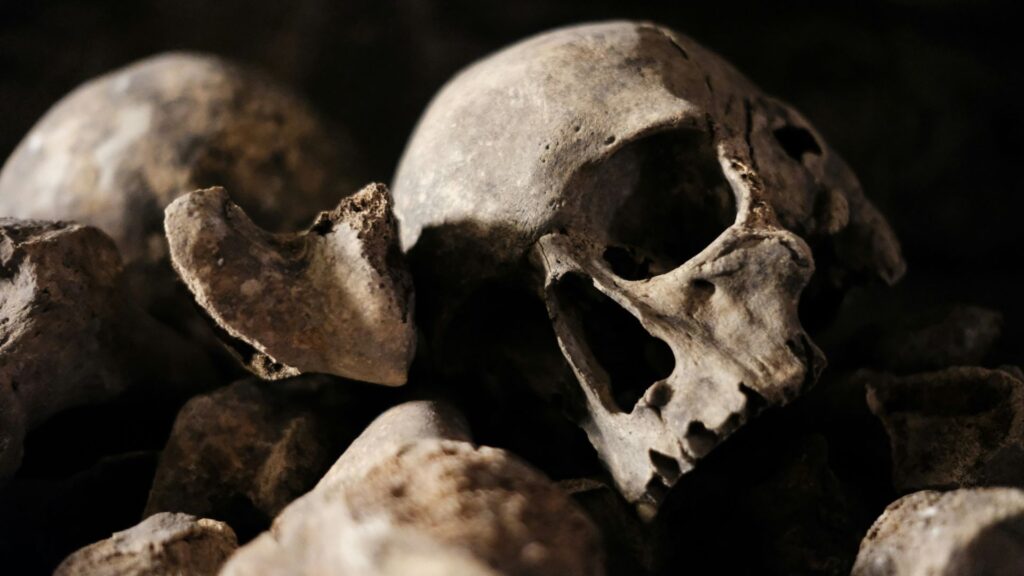
Found in the Hubei province, the Yunxian 2 skull lay hidden for a million years before its discovery. For many years, this fossil was categorized as Homo erectus due to its age and location, but its true nature remained obscured by the physical damage it sustained over the ages.
Reevaluating Ancient Ancestry

Recent scientific analysis has cast doubt on the original classification of the skull. By looking past the surface damage, researchers noticed anatomical features that appear far more sophisticated than those typically found in Homo erectus specimens, suggesting a much closer link to the direct ancestors of modern humans.
The Dragon Man Connection

Compelling evidence now suggests the skull may belong to Homo longi, a species often called Dragon Man. As a sister lineage to both modern humans and Neanderthals, this connection implies that the Homo longi group was active in Asia much earlier than previously thought, bridging a major gap in our evolutionary history.
Virtual Restoration of the Past

To uncover these details, a collaborative team from China and London utilized advanced 3D scanning technology to virtually reconstruct the crushed bone fragments. This digital restoration allowed the experts to see the skull’s original shape for the first time, revealing a structure that is far too advanced for its supposed placement in the human family tree.
Redefining the Temporal Blueprint

If this new identification is accurate, it pushes the emergence of the Homo sapiens lineage back by at least 500,000 years. This radical shift in the timeline suggests that the biological path leading to modern humans began nearly a million years ago, significantly lengthening our presence on the planet.
Shared Lineages and Cousins

This discovery points toward a long era of coexistence where multiple human species lived alongside one another for nearly a million years. Rather than a solitary journey, our ancestors likely shared the world with various cousins, creating a much more diverse and crowded ancient landscape than traditional models once suggested.
A New Model for Human Origins

The findings support a braided stream model of evolution, where different human populations overlapped and occasionally interacted rather than following a straight, sequential line. This perspective highlights Asia as a central hub for human development, challenging the idea that evolution happened in one isolated location.
Solving Archaeological Riddles

The Yunxian skull provides a vital missing piece for understanding other mysterious fossils that have long puzzled archaeologists. By offering a clearer framework for these unusual finds, the research helps organize the complex Asian fossil record into a more logical and coherent narrative of early human life.
The Rigor of Modern Chronology

While the implications are profound, many experts advise caution regarding the precise age of the fossil until further dating can be confirmed. Validating the geological age of such ancient remains is a complex task, yet the anatomical data gathered from the digital reconstruction remains a powerful argument for this historical rethink.
Mapping Our Collective Journey

As researchers continue to explore the site, the Yunxian 2 skull remains a beacon of new knowledge that could permanently alter our understanding of where we come from. It serves as a reminder that the path of humanity is full of surprises, and each discovery brings us closer to the truth of our ancient origins.
PetsFanatic Team
Pet Care Expert & Content Creator
Passionate about sharing knowledge and tips for better pet care. Writing about everything from pet health to training techniques.