
Archaeologists Unearth Mass Viking Grave and a 6-Foot-5 ‘Giant’ Who Underwent Ancient Skull Surgery
Archaeologists working in Wandlebury Country Park near Cambridge expected a routine training excavation in the summer of 2025. Instead, they uncovered a mass grave containing the dismembered remains of 10 individuals. Severed heads, detached limbs, and evidence that some bodies had been bound point to violent deaths more than 1,100 years ago.
The site sits atop an Iron Age hill fort later reused during Roman times. Previous excavations had revealed scattered human remains, but nothing on this scale since the 1970s. The discovery stunned researchers, who quickly linked the burial to ninth-century conflicts between Saxons and Vikings in eastern England.
Carbon dating of one skeleton placed it between 772 and 891, aligning with a turbulent era marked by Viking raids and territorial clashes. Yet the absence of traditional battle wounds suggests these individuals may not have died in open combat, raising new questions about their fate.
Execution Site or War Aftermath?

Unlike battlefield burials, the remains lacked defensive injuries typically seen in combat casualties. Instead, experts believe these men may have been executed, possibly as prisoners of war or victims of corporal punishment. Some body parts may even have been displayed publicly before being buried, according to archaeologist Oscar Aldred.
The deliberate positioning of bodies adds to the mystery. One man was buried facedown — a burial practice often interpreted as a sign of dishonor. Combined with the dismemberment, researchers suspect this grave may represent punishment or ritualized violence rather than a chaotic battle scene.
Cambridge was a strategic hotspot during Viking expansion in Britain. Repeated skirmishes between Anglo-Saxon forces and Norse raiders defined the region’s ninth-century history. Whether these men were Vikings, Saxons, or a mix of both may be clarified through ongoing DNA testing.
The 6-Foot-5 “Giant” Who Stood Out

Among the remains was a young man estimated to be between 17 and 24 years old — and approximately six feet five inches tall. In a period when the average male height was about five feet six inches, his stature would have made him extraordinary, possibly even intimidating.
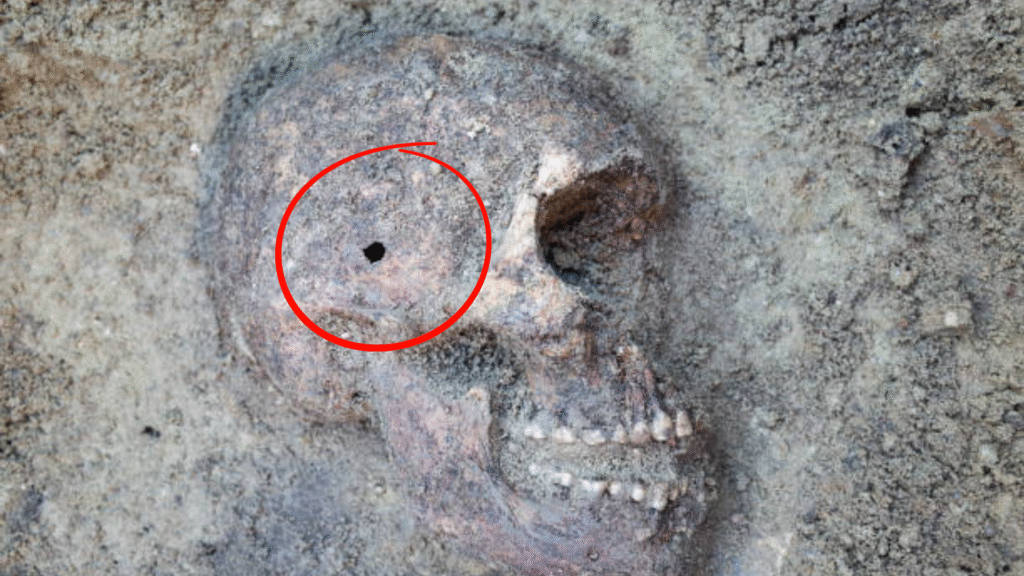
Osteologists found a 1.2-inch oval hole in his skull. Experts believe he may have suffered from pituitary gigantism, a rare condition caused by excess growth hormone, often due to a benign tumor affecting the pituitary gland. The condition can cause extreme height but also severe headaches and dangerous pressure inside the skull.
The presence of the skull opening suggests he underwent trepanation, an ancient surgical procedure involving drilling or scraping a hole into the skull. Trepanation was sometimes performed to relieve pressure or treat neurological symptoms. Evidence indicates he survived the procedure for some time before his eventual death.
Ancient Medicine and Unanswered Questions

Trepanation is one of the oldest known surgical practices in human history, documented across cultures from prehistoric Europe to the Andes. The Cambridge case adds rare evidence that such medical intervention was practiced in early medieval Britain, potentially to treat a serious endocrine condition.
Researchers now plan DNA analysis to determine the origins of the buried individuals. Were they Viking invaders executed by Saxons? Saxon captives punished by Vikings? Or something more complex? The genetic evidence may reshape understanding of who controlled the region at that time.
What began as a training dig has evolved into one of the most unusual archaeological finds in years. A mass grave, signs of execution, and a towering young man who underwent brain surgery centuries ago, the discovery offers a dramatic glimpse into violence, medicine, and life in Viking-age England.
PetsFanatic Team
Pet Care Expert & Content Creator
Passionate about sharing knowledge and tips for better pet care. Writing about everything from pet health to training techniques.