
Marine Scientists Are Tracking a Rare Contagious Cancer That Spreads Through Seawater

Most people know cancer as something that stays inside one body. In a handful of documented cases in nature, that rule breaks entirely. Bivalve transmissible neoplasia (BTN) spreads when living cancer cells pass from one animal to another through seawater. Scientists have now confirmed this is happening in the Pacific Northwest at a scale alarming enough to change how marine disease gets monitored.
Researchers first detected the disease in 2022 in soft-shell clams collected from Triangle Cove and the Stanwood area of Puget Sound, Washington. What they found next accelerated their concern. Within two years, the infection had spread far beyond an isolated anomaly, putting the health of clam populations in one of the country’s most ecologically active marine systems at serious risk.
A study published June 23 in the Proceedings of the National Academy of Sciences reports that cancer prevalence exceeded 75% at two Puget Sound locations by 2024, making it one of the most significant outbreaks of bivalve transmissible cancer documented in the region. The speed of that rise, from initial detection to near-total infection in under three years, is what pushed researchers to develop better tools for watching where it goes next.
A Disease That Crossed an Ocean

BTN is characterized by large numbers of cancer cells in the hemolymph, the circulatory fluid of the bivalve, followed by dissemination into the solid tissues as the disease progresses. Cancer cells can survive for days to months in seawater environments, which means an infected clam doesn’t just carry a disease. It actively seeds the surrounding water with cells capable of infecting its neighbors.
What made the Puget Sound outbreak especially striking to researchers was its origin. The cancer found in Washington’s clams matched a strain already known on the other side of the country. Genetic analyses showed the Pacific outbreak belongs to the same lineage previously identified along the Atlantic Coast of the United States, pointing to a transcontinental transfer that likely happened through human activity, according to senior study author Michael Metzger, Ph.D., Associate Investigator at Pacific Northwest Research Institute.
“The most likely explanation is accidental human-assisted transport of an infected clam or seawater containing cancer cells, but we don’t yet have evidence that allows us to determine the precise route,” said Metzger. The transmissible cancers in dogs and Tasmanian devils are known to spread through direct physical contact, but the exact route of transmission of bivalve transmissible neoplasia has not yet been confirmed. In the ocean, the delivery mechanism appears to be the water itself, filtered constantly through the very animals it infects.
Reading the Water for Warning Signs

“We were surprised to find a transmissible cancer spreading at this level in Pacific Northwest clams,” said Metzger. “The scale of the outbreak makes it an important system for understanding how these rare cancers emerge and move through wild populations.” To match that scale, the research team developed a new detection method capable of finding cancer without examining a single animal. They created a highly sensitive environmental DNA assay capable of detecting cancer-specific genetic markers directly from seawater samples.
Using this method, researchers surveyed 51 locations across Puget Sound in 2024 and detected cancer DNA at sites with infected clams and in surrounding waters, though they did not find it spread throughout all of Puget Sound. The tool works by pulling genetic traces that infected clams shed into the water. Finding the disease’s fingerprint in the water, rather than inside the animal, opens up a fundamentally faster way to track outbreaks before they become catastrophic.
The species composition of Puget Sound’s clam population added another layer. Researchers found that soft-shell clams in the area include hybrids of two closely related species, with preliminary evidence suggesting the Japanese species may resist infection more effectively. If confirmed, that dynamic could reveal how host genetics shape a population’s ability to survive a transmissible cancer, information relevant far beyond the shores of Puget Sound.
What This Outbreak Reveals About Cancer Itself
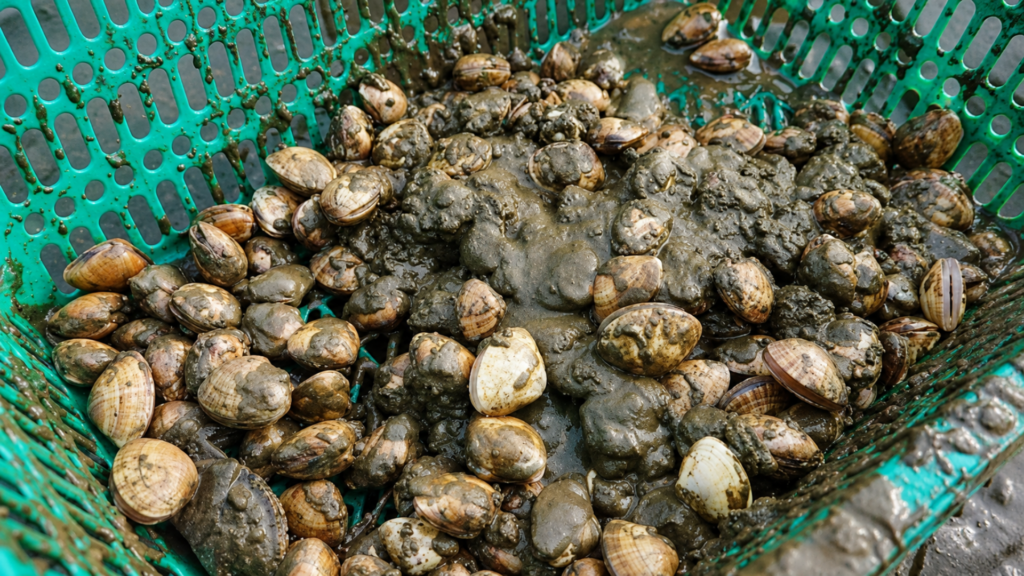
Transmissible cancers are unique cases in which cancer cells escape their original host and spread through a population as a clonal lineage. The phenomenon has been documented in Tasmanian devils, dogs, and at least ten bivalve species. Each case represents a biological rarity: a cancer that has evolved to move between bodies as though it were a virus. The Puget Sound outbreak is one of the few caught early enough to watch that process unfold in real time.
“This approach gives researchers a new way to monitor the spread of transmissible cancers in marine ecosystems and may help identify emerging outbreaks before they become widespread,” said Metzger. That capacity matters because the PNAS study is the first to document this cancer strain on the West Coast at all. Every month without a detection tool is a month the disease can expand invisibly, and the eDNA method changes that equation directly.
The Puget Sound outbreak, tracked in detail through a combination of clam sampling and seawater analysis, now stands as one of the clearest windows science has into how a contagious cancer establishes itself in a new environment. The cancer arrived undetected, spread rapidly, and will almost certainly attempt to move further. Whether marine populations develop resistance, and whether surveillance tools catch the next outbreak in time, depends entirely on the quality of monitoring built right now.
PetsFanatic Team
Pet Care Expert & Content Creator
Passionate about sharing knowledge and tips for better pet care. Writing about everything from pet health to training techniques.