
Man Finds Thrift Store Drawing That Looks Eerily Like Him, and It Was Made Before He Was Born

Mitchell Carey wasn’t looking for himself when he walked into a Maine thrift store in 2024, but that’s exactly what it felt like he found. Sitting quietly among old frames and forgotten artwork was a portrait of a broody, pipe-smoking man with long hair, glasses, and a face shape that mirrored Carey’s almost perfectly. The resemblance wasn’t vague or flattering in a distant way; it was sharp, immediate, and deeply unsettling. Then he checked the label. The drawing, described as an original by Chris Cunningham, was dated 1978, more than 20 years before Carey was born. In that instant, a routine browse through secondhand art turned into something far stranger: a confrontation with a face from the past that looked eerily like his own.
The Date Made It Impossible to Ignore

If the portrait had been recent, Carey might have laughed it off as coincidence and moved on. But the date changed everything. This wasn’t a modern sketch inspired by a photograph or some elaborate joke. It existed decades before he did. The idea that someone in 1978 sat down and captured the likeness of a man who would not be born for another 22 years gave the discovery a surreal edge. Carey later described the moment as “uncanny,” especially since his hair at the time closely matched the style in the drawing. The similarities weren’t just structural, they felt oddly specific, as if the portrait had been waiting for him.
Why Doppelgängers Unsettle Us
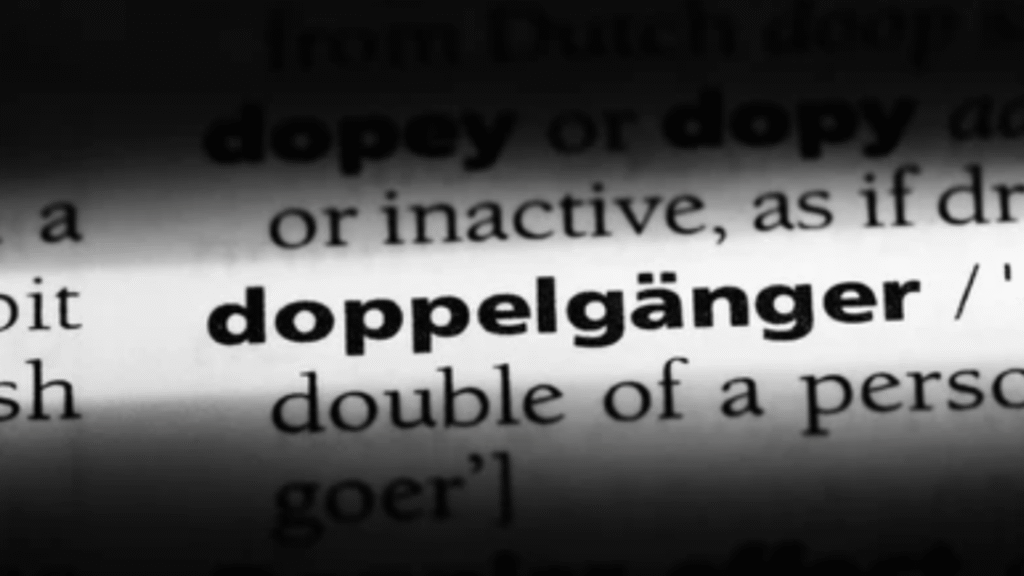
Stories like this hit a nerve because they challenge our sense of individuality. Most of us grow up believing our faces are uniquely ours, shaped by a specific mix of genetics and experience that won’t be replicated. Yet time and again, people stumble across strangers, sometimes from different countries, different centuries, who look startlingly similar. Psychologists suggest our brains are wired to detect patterns, especially in faces, and when we encounter a near-match, it creates cognitive tension. It feels familiar but not quite explainable. When that resemblance stretches across decades, as it did for Carey, the effect intensifies, blurring the line between coincidence and something that feels almost fated.
The Internet’s Obsession With Accidental Twins

Carey’s story didn’t exist in isolation. In recent years, social media has been flooded with posts from people who claim to have found historical photos, paintings, or even sculptures that look exactly like them. Entire online communities are dedicated to tracking down so-called “twin strangers,” unrelated individuals who share strikingly similar features. When Carey finally shared his thrift store discovery on Reddit, pairing the portrait with a photo of himself, the reaction was swift. Thousands of users weighed in, some stunned by the likeness, others joking that he had been “prophesied.” The internet thrives on moments that feel improbable, and this was exactly that.
A Thrift Store as a Portal to the Past

Part of what makes the story so compelling is where it happened. Thrift stores are time capsules filled with fragments of other people’s lives; objects once meaningful, now detached from their origins. A drawing created in 1978 could have passed through multiple homes before landing on that shelf in Maine. The identity of the man in the portrait remains unknown. Was he a local figure? A friend of the artist? A stranger who inspired a moment of creativity? The lack of context turns the piece into a mystery, and when Carey stepped into the frame—literally and figuratively—it felt like two timelines briefly overlapped.
Coincidence Has a Way of Feeling Personal

Statistically speaking, lookalikes are not as impossible as they seem. With billions of people on Earth and limited combinations of facial structures, similarities are bound to occur. Genetic researchers have even found that unrelated individuals who resemble each other can share certain genetic markers influencing facial traits. Yet knowing that doesn’t necessarily remove the emotional impact. Coincidence, when it feels this personal, doesn’t register as random. It feels targeted. That emotional reaction, more than the science, is what gives stories like Carey’s their staying power.
Humor, Skepticism, and the Viral Reaction

When Carey posted the images online under the username u/soldierzombie, he didn’t expect them to gain serious traction. But the side-by-side comparison quickly racked up thousands of upvotes. Some commenters were genuinely impressed, insisting the resemblance was undeniable. Others leaned into humor, suggesting he grow the same mustache as the man in the drawing or joking that his arrival had been foretold decades ago. A few skeptics questioned the authenticity of the find. Carey described the response as mostly good-natured, acknowledging that while not every comment was kind, the overall reaction was entertaining and surreal.
The Strange Pull of Ownership
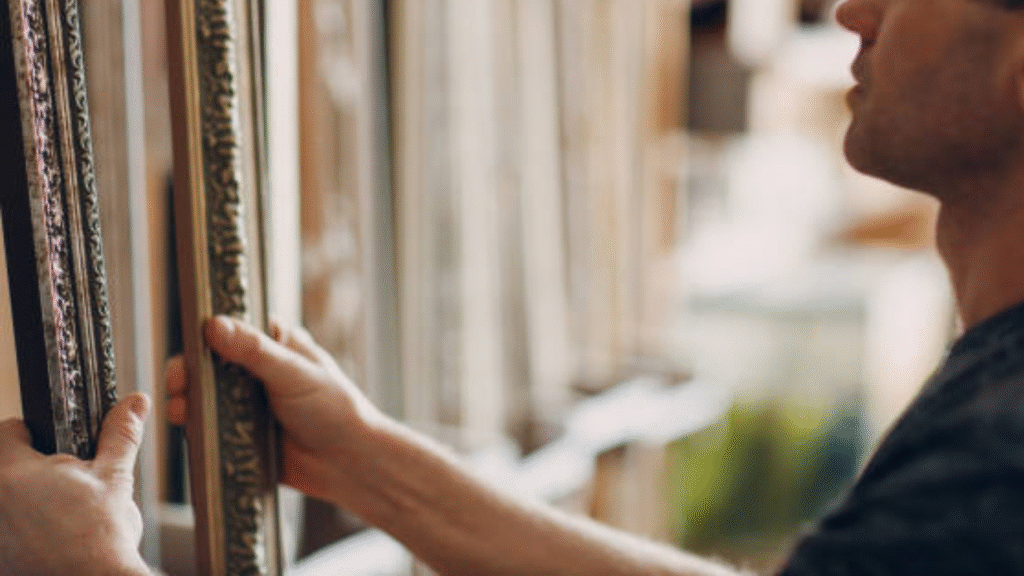
Perhaps the most telling detail is that Carey didn’t leave the portrait behind. He bought it. He later joked that if he hadn’t taken it home, he might have been “cursed,” but beneath the humor lies something instinctive. When we encounter something that feels connected to us especially something that mirrors our own face, we want to claim it. Leaving it on the shelf would have meant allowing a stranger to hang what looked like his double in their living room. Taking it home restored a sense of narrative control over an otherwise bizarre coincidence.
The Psychology of the Uncanny
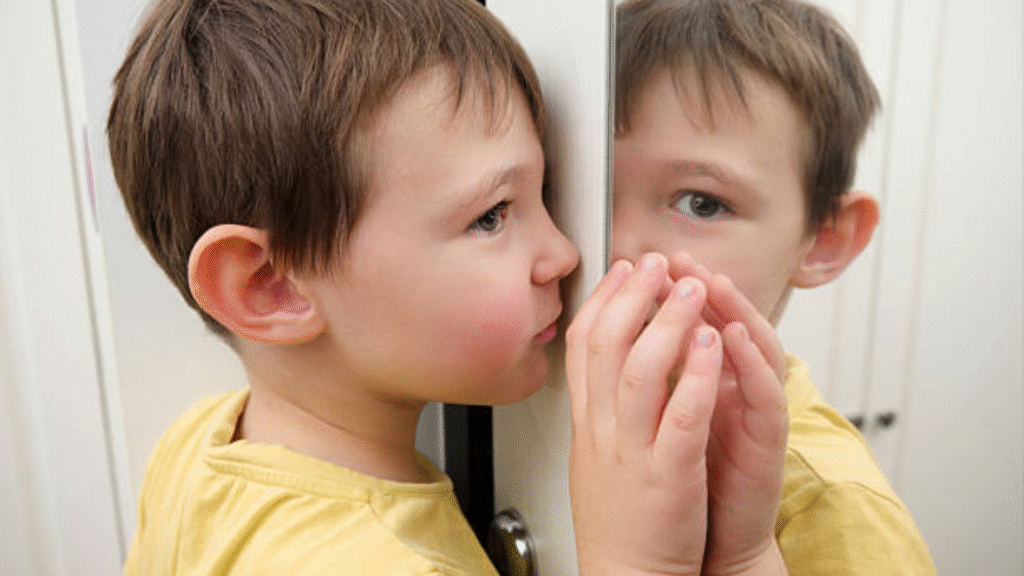
What makes the resemblance feel eerie rather than amusing is what psychologists refer to as the uncanny effect. It arises when something is almost familiar but not quite identical. The portrait wasn’t an exact replica of Carey, yet it was close enough to spark unease. The brain toggles between recognition and doubt, unable to fully categorize what it’s seeing. That ambiguity creates tension, and tension keeps us looking. It’s the same reason wax figures, lifelike dolls, and deepfake videos can feel unsettling, they hover just on the edge of reality.
A Mystery That Doesn’t Need Solving

In the end, there may be no grand explanation beyond coincidence and probability. A man in 1978 sat for a drawing. Decades later, a 26-year-old with similar features happened to walk into a thrift store and recognize himself in it. Yet the simplicity of that explanation doesn’t diminish the impact. Stories like this endure because they momentarily disrupt our sense of linear time and uniqueness. They remind us that faces repeat, histories overlap, and sometimes the past looks back at us in the most unexpected places. And somewhere in Maine, a portrait from 1978 now hangs on the wall of the man it seems to have been waiting for all along.
PetsFanatic Team
Pet Care Expert & Content Creator
Passionate about sharing knowledge and tips for better pet care. Writing about everything from pet health to training techniques.