
‘Magical’ Blue Flower Has Farmers Shocked as ‘Backyard Plant’ Becomes Money-Maker
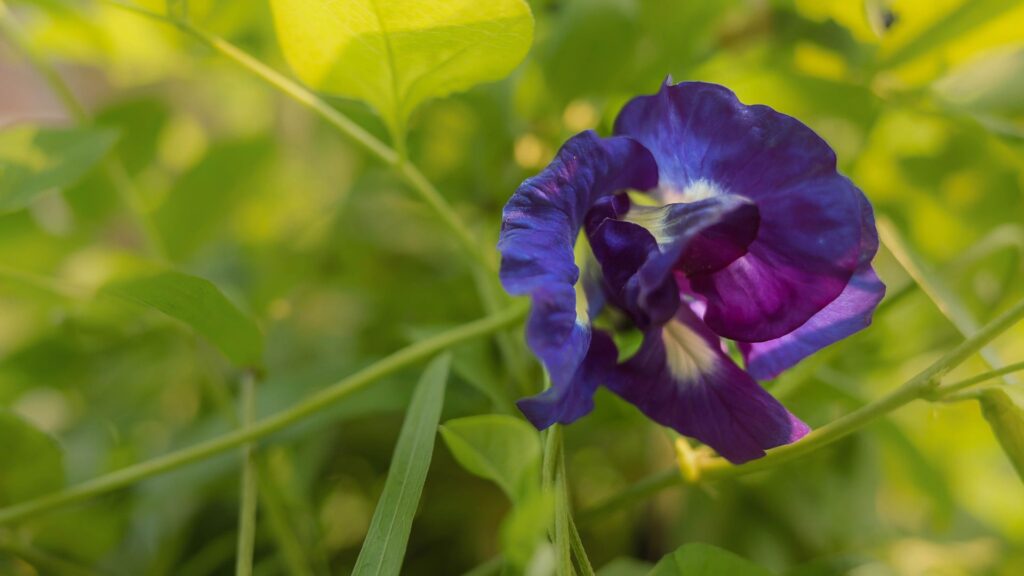
Nilam Brahma never imagined a climbing vine in her Assam village could change her life. The butterfly pea flower, known locally as aparajita, produces striking blue blooms that can be dried for tea or processed into a natural dye. Two years ago, she heard local women were earning money from the flowers. Her first sale brought $50, a sum that shocked her. She borrowed money for solar dryers and launched a small business, joining a growing movement across India, turning this overlooked plant into profit.
Thailand and Indonesia Dominated the Market Until Global Demand Surged

Thailand and Indonesia have been the leading growers and consumers of butterfly pea flowers for years. But growing global demand for natural ingredients is creating opportunities for Indian entrepreneurs. Varshika Reddy, founder of THS Impex, which exports natural dyes and additives, says the global appetite for natural colorants is exploding. Behind the surge is consumer preference for natural ingredients and tighter regulations in the US and Europe on synthetic food dyes, pushing manufacturers toward plant-based alternatives like butterfly pea.
The FDA Approved It, But Europe Raised Safety Concerns

In 2021, the US Food and Drug Administration approved butterfly pea flower as a food additive, opening American markets to products using the flower. However, in 2022, the European Food Safety Authority raised safety concerns about using it. Both the EU and the UK classify butterfly pea flower as a novel food, meaning it still needs approval for widespread use. Despite European regulatory questions, Indian entrepreneurs see enormous potential and are working to develop India’s domestic and export markets.
India Treats It Like a Backyard Plant, Not a Commercial Crop

Despite the opportunity, significant barriers remain in India. “The crop is still seen as a backyard ornamental or medicinal plant rather than a commercial commodity,” says Reddy. India lacks organized market systems, official crop designation, or standardized pricing, leaving farmers uncertain about potential earnings, according to Reddy. She is working with farmers to raise production standards, partnering with a dedicated cluster in Uttar Pradesh that includes a significant number of women farmers, providing formal contracts, comprehensive agronomy support, and guidance on irrigation management.
The Water Turns Blue, Then Purple With Lemon

Nitesh Singh, based just outside Delhi, was captivated by the flower’s properties. “When you infuse the flower in hot water, it turns blue, and when you squeeze lemon into it, it turns purple. That felt magical,” he says. In 2018, Singh founded Blue Tea, hoping to build an Indian brand with Indian butterfly peas. “It was here for thousands of years, but nobody knew it could become clean, healthy food,” Singh adds. His vision was to transform this overlooked plant into a commercial success.
He Had to Import From Abroad Because Indian Flowers Failed

Singh’s venture did not start smoothly. “Initially, we had to import because we couldn’t find good-quality flowers in India. The flowers here had fewer petals, and once sun-dried, nothing would remain. We needed a flower with more pigment, more petals, to retain colour after drying,” he says. Over the past seven years, Singh worked with farmers to raise both quantity and quality. Having started with five farmers, he now partners with 600 across the country, though training and quality control remain the biggest challenges.
Plucking Flowers With Soft Hands

Harvesting butterfly pea flowers requires delicate handling, work predominantly done by women. “Their hands are softer, and they instinctively know how to pluck delicate flowers without damaging the plant. So, women are trained in how to identify the flower for plucking,” says Singh. After harvesting, temperature control during drying is extremely important. One mistake and the flowers lose their value. Singh uses very mild temperatures for longer periods. If the heat is too high, the flower burns and loses its medicinal quality and color.
The Research on the Flower’s Health Benefits

Beyond the striking color, butterfly pea flowers may offer health benefits, though research is still limited. V Supriya, an assistant professor at Sri Ramachandra Institute of Higher Education and Research in Chennai, says that when she began reviewing the literature, hardly any studies had focused on butterfly pea despite its strong functional and herbal properties. Most available research involved rats and mice. She conducted a small study among people with prediabetes and found that those who consumed butterfly pea tea had better blood sugar control than those who didn’t.
Production Jumped From 50 Kilograms to 80 Kilograms

Pushpal Biswas owns a small farm in West Bengal and was introduced to butterfly pea by Blue Tea. He used to grow rice and vegetables, but often couldn’t sell his produce and faced losses. Everything changed over the past seven years. “It’s an easy-growing crop,” he says. With scientific methods, his production jumped from 50 kilograms to 80 kilograms. With the money he made, he leased more land. His land capacity increased, his production increased, and slowly, his income increased too.
The Flower Created a Network, a Community, a Business Family

For some Indian communities, butterfly pea has made a transformative impact. “In the last few years, many people from nearby villages have joined us in this cultivation,” says Biswas. The crop has created opportunities for farmers like Brahma, who invested in solar dryers and built a business around the flowers. “This isn’t just farming anymore,” Biswas explains. “It has become a network, a community, a business family.” As more farmers adopt butterfly pea cultivation, the flower continues to reshape rural livelihoods across India.
PetsFanatic Team
Pet Care Expert & Content Creator
Passionate about sharing knowledge and tips for better pet care. Writing about everything from pet health to training techniques.