
The Louisiana Bermuda Triangle: 12,000-Year-Old Underwater Pyramid Found Emitting ‘Mysterious’ Signals
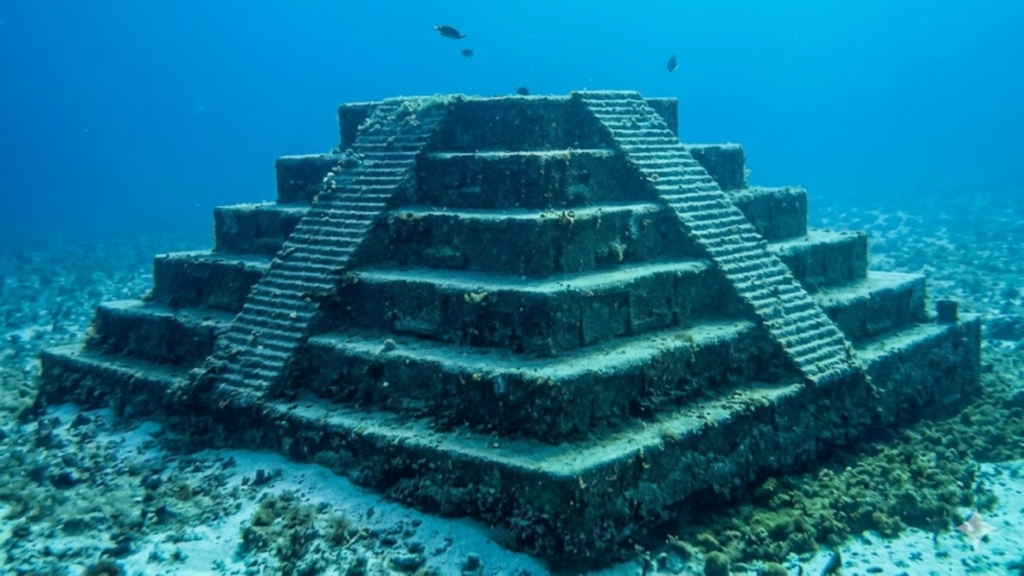
Thirty feet below the Gulf of Mexico, buried under a hundred more feet of sediment, something is allegedly making boat compasses spin out of control. A retired architect from Louisiana says he knows what it is: the ruins of a lost city older than the Egyptian pyramids, complete with a 280-foot underwater pyramid that may be sending out electromagnetic pulses. The story sounds like science fiction but the man behind it has spent 50 years trying to prove it isn’t.
George Gelé, a retired architect and self-described metropolitan forensics enthusiast, first began collecting sonar images of submerged structures off Louisiana’s Chandeleur Islands back in 1974. Over five decades, he personally bankrolled and carried out more than 40 underwater research excursions in the region. What he says he found is staggering: hundreds of mysterious structures sitting silently on the ocean floor, about 50 miles east of New Orleans, waiting to be explained.
The site lies off the Chandeleur Islands, a chain of uninhabited barrier islands in the Gulf of Mexico. Gelé presented his findings in a 2022 interview with local outlet WWLTV, and the footage has since resurfaced online, reigniting debate about what lies beneath those waters. To understand the full picture, you have to start with the stones that first caught his attention decades ago.
Billion Stones and a Buried City: The Case for Crescentis
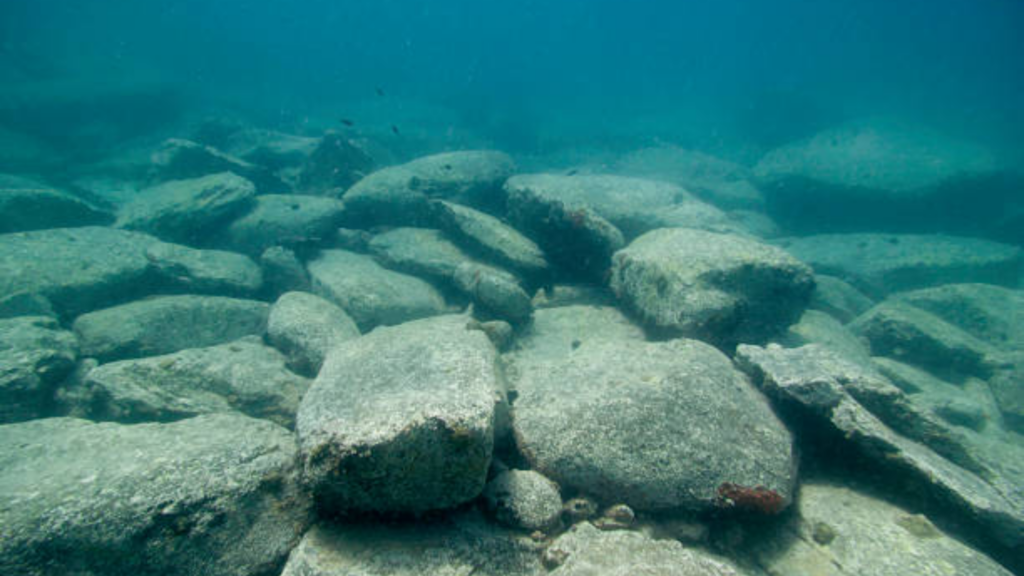
The foundation of Gelé’s theory rests on granite. Specifically, hundreds of granite stones found scattered beneath Chandeleur Sound, stones made of material not naturally occurring anywhere in Louisiana. To Gelé, their presence is not a geological coincidence. “Somebody floated a billion stones down the Mississippi River and assembled them outside what would later become New Orleans,” he declared. That somebody, he believes, lived in a civilization he has named Crescentis.
Gelé dates Crescentis to approximately 11,700 years ago, placing it at the tail end of the last Ice Age. At that time, rising seas from melting glaciers inundated vast stretches of coastline around the world, swallowing settlements that once stood on dry land. His theory holds that Crescentis was one such settlement, a fully developed metropolis that the ocean slowly claimed, leaving only its stones and its pyramid behind as evidence of its existence.
The crown jewel of the alleged site is a pyramid-like structure rising 280 feet from the ocean floor. Gelé claims it emits a powerful electromagnetic signature and asserts it is “geographically related to the Great Pyramid of Giza in Egypt.” He even holds up individual stones from the site as proof, pointing to grooves he identifies as architectural rain gutters. “This is a piece of architecture, this is not ballast,” he insisted during his examination of one recovered block.
Electronics Go Dark: The Fisherman Who Says Something Is Down There

George Gelé isn’t the only one with a story to tell about that stretch of water. Ricky Robin, a local shrimper who has ferried Gelé to the site on multiple occasions, says his boat’s instruments behave strangely every time he passes over the location of the alleged pyramid. Compasses spin without cause. Electronics cut out without warning. “Everything will go out on your boat,” Robin said. “All your electronics, like you were in the Bermuda Triangle.”
Robin recalled a specific moment when his compass began rotating on its own directly above the coordinates Gelé had identified. “I thought right away it was pieces of the pyramid because it was right around where that compass spun,” he said. He also reported that other local fishermen had unknowingly pulled strange, perfectly square rocks up in their nets while working the same waters, rocks that don’t match anything found naturally on the Louisiana seafloor.
Those squared stones are what draw the sharpest line between Gelé’s believers and his skeptics. Are they architectural remnants of a drowned civilization or something far more mundane? Researchers have proposed alternative explanations that don’t require rewriting history. But Gelé has spent half a century pushing back against every one of them, and his responses reveal just how wide the gap between the two camps really is.
Ballast, Artificial Reefs, or Something Older: What Science Actually Says

Not everyone is ready to declare a lost city found. A Texas A&M study from the 1980s suggested the granite stones could be ballast, heavy material that Spanish or French sailing vessels discarded in the shallows to make their ships easier to navigate. It’s a practical explanation with historical precedent, and it requires no pyramid. Gelé, however, rejects it outright. To him, the precision and scale of what he’s documented goes far beyond anything a passing galleon would leave behind.
In 2011, archaeology professor Rob Mann offered a second alternative: the granite could be the remnants of a 1940s effort to build an artificial reef in the area. Mann acknowledged the stones’ unusual presence but concluded that further underwater investigation wouldn’t yield clearer answers. Neither explanation has satisfied Gelé, who points to the grooved surfaces of the stones and their sheer volume as evidence of deliberate, large-scale construction not disposal or reef-building.
Critically, none of Gelé’s findings have been published in a peer-reviewed scientific journal, meaning his claims have not been independently verified or formally examined by the broader archaeological community. That absence of academic review doesn’t automatically make him wrong but it does mean the question remains officially open. And that may be exactly the point. Somewhere off the Louisiana coast, beneath decades of sediment and skepticism, something is sitting on the ocean floor. What it actually is may depend on who gets there next.
PetsFanatic Team
Pet Care Expert & Content Creator
Passionate about sharing knowledge and tips for better pet care. Writing about everything from pet health to training techniques.