
Lightning Strikes On Jupiter Could Be A Million Times Stronger Than On Earth, New Data Shows

The largest planet in the solar system, Jupiter, continues to challenge scientific understanding with its immense atmospheric activity. Recent findings suggest that the lightning generated within its storms could be far more powerful than anything observed on Earth, opening new paths for studying electrical phenomena beyond our planet.
These insights come from data collected by NASA’s Juno spacecraft, which has been orbiting Jupiter since 2016. Equipped with advanced instruments, Juno has been able to detect radio emissions associated with lightning, offering a more precise view of these events through the planet’s dense cloud layers.
The research, led by Michael Wong from University of California Berkeley, highlights how studying extraterrestrial storms can deepen the understanding of similar processes on Earth. Even today, many aspects of terrestrial lightning remain unexplained, making Jupiter a valuable natural laboratory.
A Closer Look at How Jupiter’s Atmosphere Fuels Powerful Lightning

Jupiter’s atmosphere behaves differently from Earth’s due to its composition, which is dominated by hydrogen. This difference alters how convection works, affecting how heat and energy move through the atmosphere. As a result, storms require significantly more energy to rise, but they also release far more energy once they fully develop.
On Earth, moist air rises easily because water vapor is lighter than the surrounding nitrogen-rich atmosphere. On Jupiter, however, the opposite occurs, moist air becomes heavier, making storm formation more demanding but ultimately more intense. This leads to stronger winds and highly energetic lightning that often occurs between clouds rather than between cloud and ground.
These findings suggest that the scale and structure of Jupiter’s storms directly influence the magnitude of their electrical activity. Some storms extend over 100 kilometers in height, dwarfing Earth’s thunderstorms, which typically reach only about 10 kilometers.
New Measurement Techniques Reveal Hidden Detail
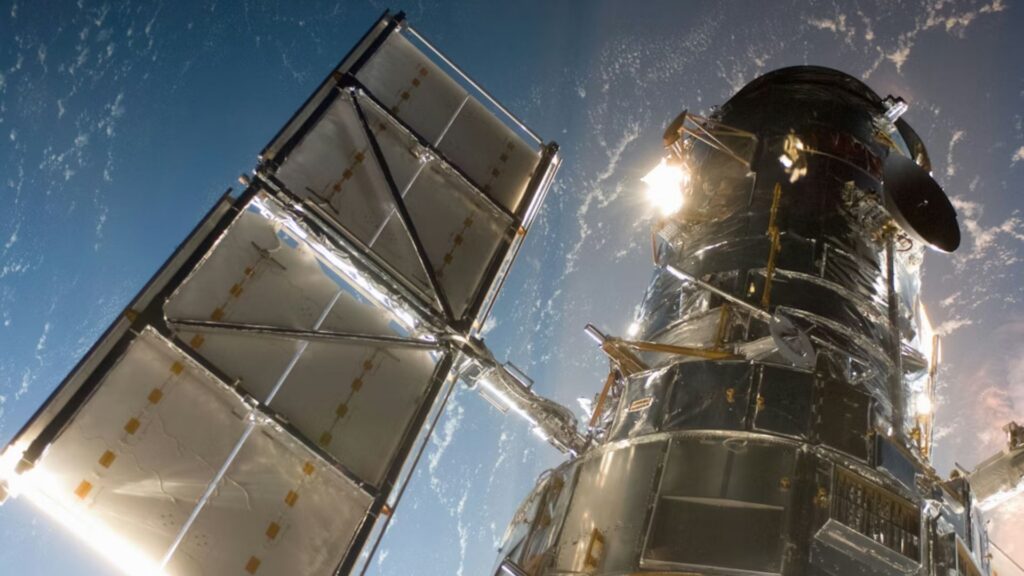
Traditional observations of Jupiter’s lightning relied heavily on visual detection, particularly on the planet’s night side. However, cloud cover often obscured the true intensity of these flashes, making accurate measurement difficult. The introduction of microwave-based detection through Juno has significantly improved precision.
By analyzing microwave emissions, scientists can now estimate lightning power without interference from dense clouds. This approach has revealed a wide range of lightning strengths, from levels comparable to Earth’s to flashes potentially hundreds of times stronger.
To refine these observations, researchers combined data from multiple sources, including the Hubble Space Telescope and ground-based contributions from amateur astronomers. This collaborative effort allowed for the identification and tracking of specific storms, improving the accuracy of energy measurements.
What Jupiter’s Lightning Reveals About Planetary Science

The implications of these discoveries extend beyond Jupiter itself. Understanding how lightning forms under different atmospheric conditions provides valuable insight into the physics of storms across the universe. It also raises new questions about the role of atmospheric composition in shaping electrical activity.
Some estimates suggest that a single lightning bolt on Jupiter could release energy levels far exceeding those on Earth, potentially reaching magnitudes that challenge current models. However, translating these measurements into total energy remains complex, as lightning involves multiple forms of energy, including thermal, acoustic, and chemical components.
Ultimately, this research reinforces the idea that planetary science is deeply interconnected. By examining the extremes of Jupiter’s environment, scientists gain a clearer understanding of Earth’s own atmospheric behavior, while also uncovering new mysteries that continue to drive exploration and discovery.
PetsFanatic Team
Pet Care Expert & Content Creator
Passionate about sharing knowledge and tips for better pet care. Writing about everything from pet health to training techniques.