
Large Animals Reportedly ‘Thriving’ in the Chernobyl Exclusion Zone

One of the most contaminated places on Earth has quietly become one of its most vibrant wildlife refuges. Wolves, brown bears, lynx, moose, and wild horses now roam the Chernobyl Exclusion Zone, a 1,000-square-mile stretch of northern Ukraine sealed off from humans since a reactor explosion in 1986. A sweeping new scientific study suggests the reason these animals are doing so well may surprise you.
The Disaster That Created a Forced Wilderness

On April 26, 1986, Reactor No. 4 at the Chernobyl Nuclear Power Plant, about 65 miles north of Kyiv, Ukraine, exploded during a failed safety test. The blast sent a massive plume of radioactive material across Europe and forced the evacuation of more than 100,000 people. Entire towns were abandoned within days. The resulting contaminated radius, now known as the Chernobyl Exclusion Zone, has been strictly off-limits to permanent human settlement ever since.
Scientists Set Out to Count What Moved In

Researchers wanted to know exactly what had taken hold in the zone’s decades of human absence. Led by ecologist Svitlana Kudrenko of the Albert Ludwig University of Freiburg in Germany, the team deployed camera traps across a 60,000-square-kilometer study area in northern Ukraine between 2020 and 2021. The area included the Exclusion Zone, four nearby nature reserves, two nature parks, and surrounding unprotected regions. The results, published in the Proceedings of the Royal Society B, were striking.
Over 31,000 Animal Sightings Recorded

The camera traps logged more than 31,200 wildlife detections across the entire study area, capturing 11 mammal species including Eurasian lynx, moose, red deer, wild boar, and gray wolves. Of those detections, nearly 20,000 occurred inside the Exclusion Zone alone, the area with the lowest human activity. According to Kudrenko, the animals use the full breadth of the zone and its neighboring reserve as a continuous habitat where they can move, feed, and rest without interference.
The Real Driver Is Humans Staying Away

The study’s central finding is that the absence of people, rather than any ecological feature of the land, explains the zone’s wildlife abundance. Human disturbances like hunting, road traffic, and agriculture have well-documented effects on where large mammals choose to live. According to Kudrenko, food availability, habitat quality, and access to resting cover matter most to these animals. The Exclusion Zone, with virtually no such pressures, offers all three in abundance across an unusually large, connected area.
A Lesson in What Protected Areas Can Do

Tim Mousseau, a professor of biological sciences at the University of South Carolina who has studied Chernobyl for over two decades, called this the most comprehensive survey of large mammal ecology ever conducted in the region. According to Mousseau, large contiguous protected zones like the Exclusion Zone give animals like wolves, moose, and deer the space to escape hunting pressure and other disruptions. The findings add weight to a broader scientific argument: effective wildlife conservation depends on the size and enforcement of protected areas.
The Wild Horses That Were Never Supposed to Stay

Among the zone’s most unusual residents are Przewalski’s horses, widely regarded as the world’s last truly wild equine species. Declared extinct in the wild by 1969, the breed survived only through captive breeding before reintroduction programs helped rebuild a global population of around 3,000. In 1998, 31 horses were released into the zone as part of a conservation program. The program was later halted, but the horses stayed, and their population has since grown to around 150 within the Ukrainian side of the zone.
What About the Radiation?
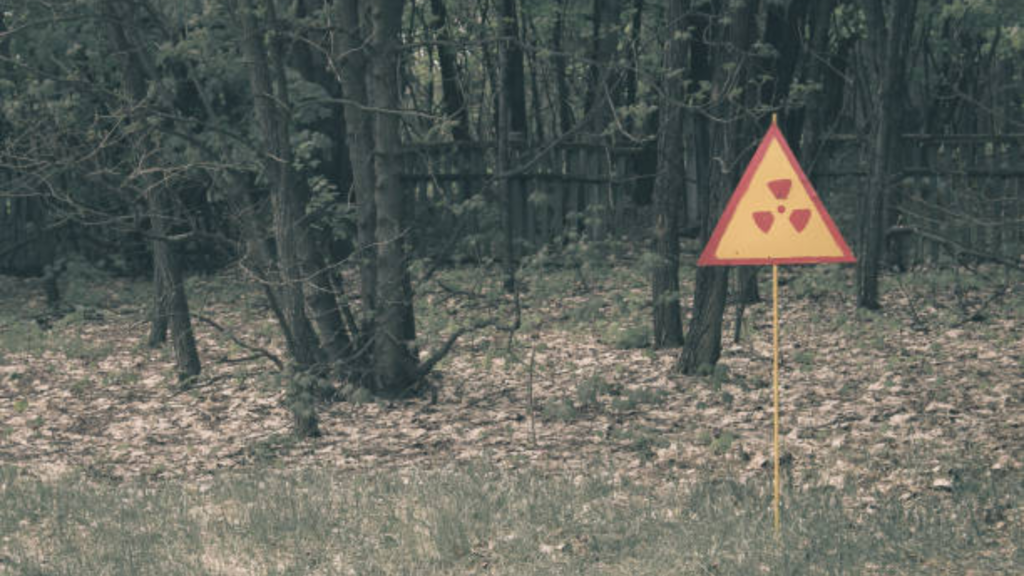
The new study did not directly examine whether the animals are harmed by residual radioactivity from the 1986 disaster. However, Kudrenko noted that past research has largely found wildlife is not deterred by contaminated areas. A 2016 University of Georgia study using camera traps across zones of varying radioactive contamination found no evidence that animals avoided higher-radiation areas. Mousseau added that the mammals appear to be doing well overall, even though high radioactivity has documented negative effects in species living in the most contaminated pockets of the zone.
Wolves, Bears, and a ‘Mesmerizing’ Field Experience

Kudrenko and her team were granted rare access to the Exclusion Zone during fieldwork. They witnessed Przewalski’s horses grazing at twilight and spotted deer moving through the Chlosky Forest. Wolves and brown bears never appeared in person, but the camera traps confirmed their presence throughout the zone. According to Kudrenko, the experience of entering a landscape reclaimed so fully by wildlife left a lasting impression. “It was a really mesmerizing experience to go there,” she said. The data they collected backs up what their eyes were telling them.
Chernobyl’s Unintended Conservation Experiment

Four decades after one of history’s worst industrial disasters, the Chernobyl Exclusion Zone stands as an accidental proof of concept: remove human pressure from a landscape, and wildlife returns. The zone was never designed as a nature reserve, yet it now outperforms many intentional ones. For conservationists and policymakers debating how to protect large mammals globally, the lesson from Chernobyl is blunt. The animals did not need a perfect environment. They needed one without people in it.
PetsFanatic Team
Pet Care Expert & Content Creator
Passionate about sharing knowledge and tips for better pet care. Writing about everything from pet health to training techniques.