
Kīlauea Erupts and Sends an Ash Plume 30,000 Feet Into the Sky Over Hawaii

One of the world’s most active volcanoes put on a dramatic and dangerous display on Tuesday, March 10, when Kīlauea’s summit erupted with lava fountains soaring over 1,300 feet into the air. For comparison, that’s roughly the elevation of the Empire State Building’s top floor. The U.S. Geological Survey quickly raised its volcano alert to its highest level, Warning, and set the Aviation Color Code to Red.
The eruption, designated Episode 43 of the ongoing Halemaʻumaʻu summit eruption cycle, began at approximately 9:17 a.m. Hawaii Standard Time. Activity built rapidly at the crater’s north vent before the south vent joined in just before 10 a.m., according to the Hawaiian Volcano Observatory. Lava flows eventually blanketed roughly one-third of the Halemaʻumaʻu crater floor before the episode concluded that evening.
An eruption plume climbed as high as 30,000 feet above sea level, according to the Hawaiian Volcano Observatory. Southerly winds pushed the column of ash and volcanic gas northward, spreading hazards well beyond the crater itself. The National Weather Service responded by issuing an Ashfall Warning for portions of Hawaii Island, cautioning residents about reduced visibility and respiratory risks.
Ash, Lava Fragments, and Road Closures Disrupted Life Across the Big Island
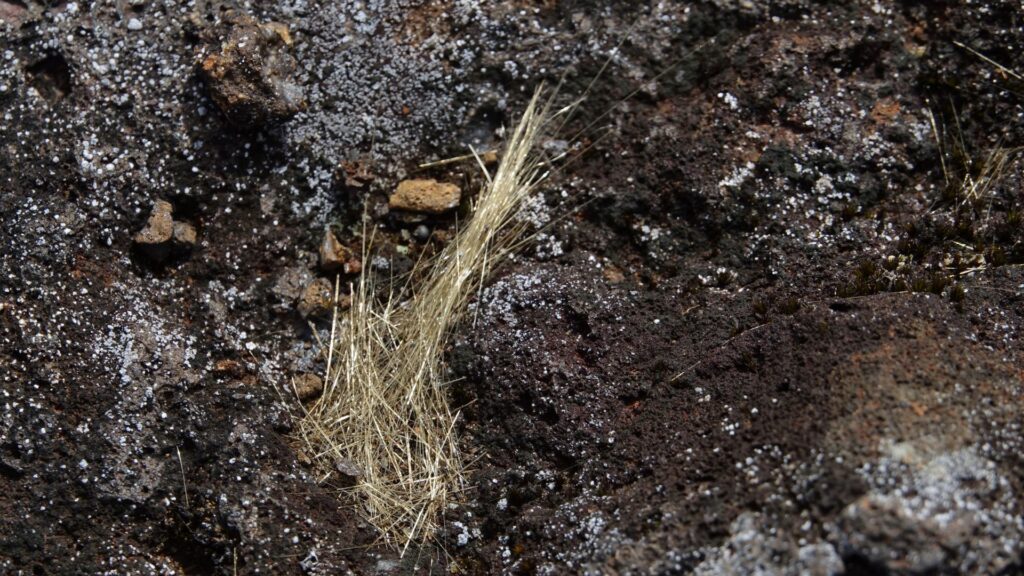
Tephra, a blanket term for volcanic debris that includes ash, pumice, and glassy fragments, rained down across Hawaiʻi Volcanoes National Park and surrounding communities throughout Tuesday. Residents in Volcano Village and Mauna Loa Estates reported fragments up to three inches in size, while lighter material, including Pele’s hair, drifted as far as Royal Hawaiian Estates, according to USGS reports.
Hawaii County Civil Defense closed Highway 11, the main road connecting the region to Hawaiʻi Volcanoes National Park, between mile markers 24 and 40 due to hazardous tephra fall. The park itself was placed under temporary restrictions, with most visitors turned away from Kīlauea’s summit. An exception was made for lodging guests already staying at Volcano House and Kīlauea Military Camp, officials said.
A USGS livestream of the eruption drew thousands of viewers as lava arched in glowing bands above the crater. On the ground, park webcams captured hazardous conditions at scenic overlooks and on the Volcano Golf Course, where tephra had accumulated. The National Weather Service extended its ashfall warning through 11 p.m. local time, advising those in affected areas to seal windows, stay indoors, and keep electronics away from outside air.
Volcanic Gas and Falling Debris Posed Serious Health Risks for Nearby Residents

Beyond the visual spectacle, the eruption carried real health consequences for people nearby. USGS cautioned that volcanic gas, ash, and Pele’s hair can irritate the skin, eyes, and respiratory system with even brief exposure. Sulfur dioxide released during and between eruptive episodes reacts in the atmosphere to produce vog, or volcanic air pollution, which can travel far downwind and affect communities well outside the immediate eruption zone.
The USGS update issued Wednesday morning noted that sulfur dioxide emissions from the summit had been averaging between 1,000 and 1,500 metric tons per day during the current pause between episodes. With winds from the southwest at 11 to 16 mph, that plume was being carried to the northeast, meaning communities in that direction remained under the influence of volcanic air pollution even after the lava fountains had stopped.
Additional hazards exist around Kīlauea’s caldera rim that go beyond ash and gas. The USGS warned that crater wall instability, ground cracking, and rockfalls present serious risks, particularly near Halemaʻumaʻu, an area that has been closed to the public since late 2007. Tephra deposits along the crater rim are also prone to sudden slumping and small landslides that can expose hot or molten material just beneath the surface.
Episode 43 Is Over, but Scientists Say Another Eruption Is Already on the Horizon

Episode 43 came to an end at 6:21 p.m. HST on Tuesday after roughly nine hours of fountaining from both vents, the Hawaiian Volcano Observatory confirmed in its Wednesday morning update. By the following day, both vents had quieted, though a bright glow remained visible overnight, and lava on the crater floor continued to spread slowly along the southeastern margin, covering an additional 5 to 10 percent of the crater floor.
Kīlauea has been erupting episodically since December 23, 2024, cycling through bursts of activity separated by pauses that can stretch over two weeks. Most episodes last less than 12 hours. Preliminary USGS models suggest that Episode 44 fountains are likely to occur sometime between the end of March and the first half of April.
The rapid recovery of ground tilt following Episode 43, measured at nearly 3.9 microradians of inflation since fountaining stopped, signals that another fountaining episode is likely, according to USGS. Officials said the alert level has since been lowered to Watch with an Orange Aviation Color Code, but monitoring continues around the clock. Residents and visitors are advised to follow updates from Hawaiʻi Volcanoes National Park and Hawaii County Civil Defense.
PetsFanatic Team
Pet Care Expert & Content Creator
Passionate about sharing knowledge and tips for better pet care. Writing about everything from pet health to training techniques.