
Kentucky Faces ‘Full-Blown Invasion’ of Pest That Wipes Out Fruit Trees

The invasive spotted lanternfly has spread to 16 Kentucky counties as of early 2026, marking a significant expansion since the insect was first detected in Gallatin County in October 2023. State entomologists confirmed the pest in eight additional counties during 2025, including Fayette, Franklin, Harrison, Pendleton, Robertson, Scott, Trimble, and Woodford. The moth-like bug, native to China and first introduced to Pennsylvania in 2014, now poses a threat to orchards, vineyards, and logging facilities across the commonwealth.
Jonathan Larson, an entomologist at the University of Kentucky, told Lex18 that the rapid spread indicates Kentucky is facing a “full-blown invasion.” The insects had expanded from a single county in 2023 to include counties such as Boone, Campbell, Carroll, Grant, Henry, Kenton, and Owen by 2024. All affected counties are located north of Fayette County. Residents across the commonwealth have reported seeing massive populations, with one commenter noting “we saw hundreds of them” in Monterey on the Kentucky Office of the State Entomologist’s Facebook post.
The spotted lanternfly poses a major threat to orchards, vineyards, and logging facilities across Kentucky. The insects feed on plants and excrete a sticky substance called honeydew that attracts mold, according to the Department of Agriculture. Fruit trees face the highest risk and can be completely wiped out. The pests attack grapes, raspberries, blackberries, apples, and peach trees, affecting not only farming economies but also residential yards where homeowners grow fruit.
The Insects Travel on Everything from Packages to Moving Trucks
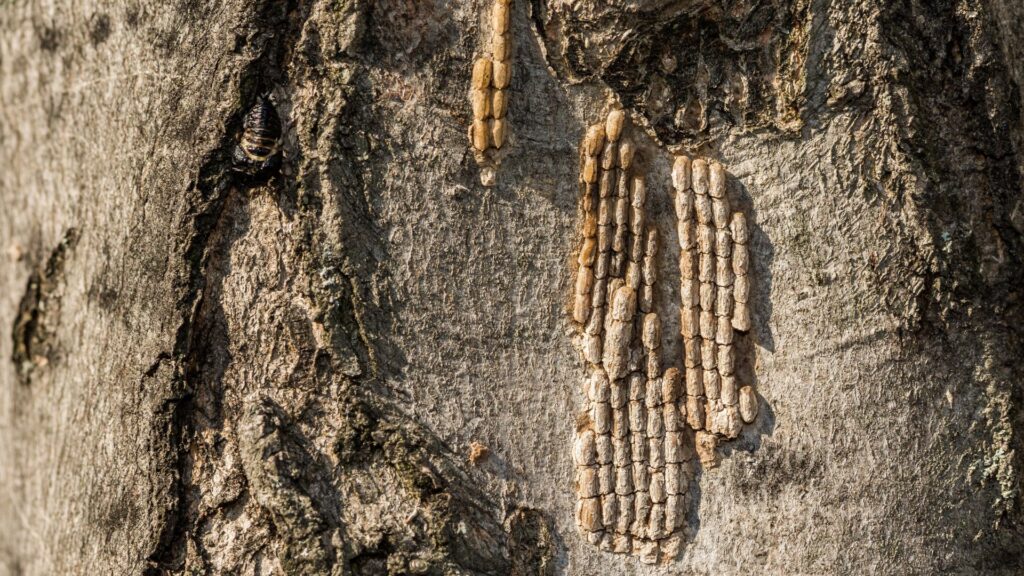
What makes spotted lanternflies particularly risky as an invasive species is that their eggs are thought to travel well, hitching rides on shipped packages, moving boxes, and other transported items, according to the USDA. This has enabled the insects to spread from their 2014 detection in Pennsylvania throughout the Northeast and Mid-Atlantic, and into neighboring states, including Indiana, Ohio, and West Virginia.
The bugs lay eggs on surfaces ranging from mailboxes to cars and trains, expanding their territory beyond traditional plant hosts. Warmer winters are making it easier for spotted lanternflies to reproduce and establish populations in new areas. The insects are usually only active from July through December, but changing climate conditions are extending their breeding season. Residents should inspect boxes holding holiday decorations and other outdoor items that sit unattended, according to the USDA.
Kentucky residents have reported seeing the insects in overwhelming numbers along roadways and on various surfaces. “There are so many along the roadways,” one Facebook commenter noted on the Kentucky Office of the State Entomologist’s post. The thick populations make the invasion highly visible once established in an area. “They populate things very thickly, and then once they’re in an area, they become very noticeable,” Larson explained, describing the density of infestations across affected counties.
Multiple Invasive Species Are Threatening Kentucky’s Ecosystems

Invasive species disrupt ecosystem balance by outcompeting native species for food, space, and nutrients. Without natural predators, these organisms spread rapidly and reduce natural biodiversity that helps regulate disease and protect food supplies. The spotted lanternfly’s honeydew waste attracts molds and other bugs that cause additional damage to plants. The USDA reports that the insects threaten almonds, apples, hops, maple trees, oak trees, pine trees, and numerous other agricultural and forestry resources across affected regions.
Signs that a plant may be infected include oozing, mold development, or a fermented odor. Property owners may also notice a buildup of sticky fluid beneath infected plants. The USDA recommends inspecting trees, plants, and other surfaces around dusk, when the bugs tend to congregate and become easier to spot. While plants or trees may not be completely destroyed by the pest, fruit trees face the most severe risk of total loss from spotted lanternfly infestations.
Spotted lanternflies aren’t the only invasive threat facing Kentucky. Invasive carp have a bounty on their heads in the state, while kudzu vines are climbing over trees and telephone poles across the region. “They aren’t good for the environment because they are an invasive species,” Larson said, referring to the lanternflies. The insects populate areas thickly, he explained, and once they establish themselves in a county, they become highly visible and difficult to control.
State Officials Urge Residents to Report Sightings and Destroy the Bugs

State entomologists continue monitoring the spread of the invasive pest and have urged residents in counties where the bug hasn’t been seen to remain vigilant. Sightings can be submitted to the UK Office of the State Entomologist through their webpage or by emailing [email protected]. Reports can also be filed with the Kentucky Division of Forestry and UK Forestry. Officials particularly want reports from counties not yet known to have infestations.
If residents spot a spotted lanternfly, Harper advised that “it doesn’t need to exist anymore” and urged people to “try to prevent that spread if possible.” The USDA recommends specific procedures for handling egg masses discovered on property. Residents should scrape egg masses into a plastic zippered bag filled with hand sanitizer, then zip the bag shut and dispose of it. This method prevents eggs from hatching and establishing new populations in previously unaffected areas.
Property owners should inspect various surfaces beyond plants and trees, including outdoor furniture, vehicles, and storage containers that often sit unattended for much of the year. The USDA recommends checking items before moving them, especially when traveling through or from affected counties. Residents who spot spotted lanternflies should destroy them on sight to help slow the spread. Counties not yet known to have infestations are particularly important for monitoring, as early reports help officials track how the insects move and which pathways they use.
PetsFanatic Team
Pet Care Expert & Content Creator
Passionate about sharing knowledge and tips for better pet care. Writing about everything from pet health to training techniques.