
Just Four Golden Mussels Found on a Boat Nearly Triggered a Major Environmental Disaster

Four golden mussels, each barely the size of a sunflower seed, were clinging to the underside of a boat bound for Lake Tahoe. They had traveled from the Sacramento-San Joaquin Delta, more than 150 miles away, holding on with hair-thin threads strong enough to survive the entire journey. Inspectors at the Meyers, California station caught them before the boat ever touched the water. This is the story of how close it came.
Inspectors Found the Mussels Hidden on the Transom and Trim Tabs

The four mussels were attached to the outside of the vessel’s transom and trim tabs, shells closed, still anchored by their byssal threads. Finding them required flashlights, mirrors, and crawling under the boat on hands and knees. Boat inspectors go through three days of intensive training, and a typical inspection takes between 10 and 15 minutes, covering every nook and cranny of a vessel. This was exactly the kind of intercept the program was built for.
Golden Mussels Are Called “Invasive Species on Steroids”

Golden mussels are not a typical environmental nuisance. Officials describe them as invasive species on steroids, citing their extreme survivability and reproduction rates. They can decimate native species, damage infrastructure such as water intake pipes, and drastically alter ecosystems because far fewer natural checks exist to limit their growth. In Lake Tahoe, an infestation would trigger algae blooms, coat every hard surface in sharp shells, and turn the lake’s famous blue water green.
Golden Mussels Reached the US in 2024 and Have Already Spread to San Diego
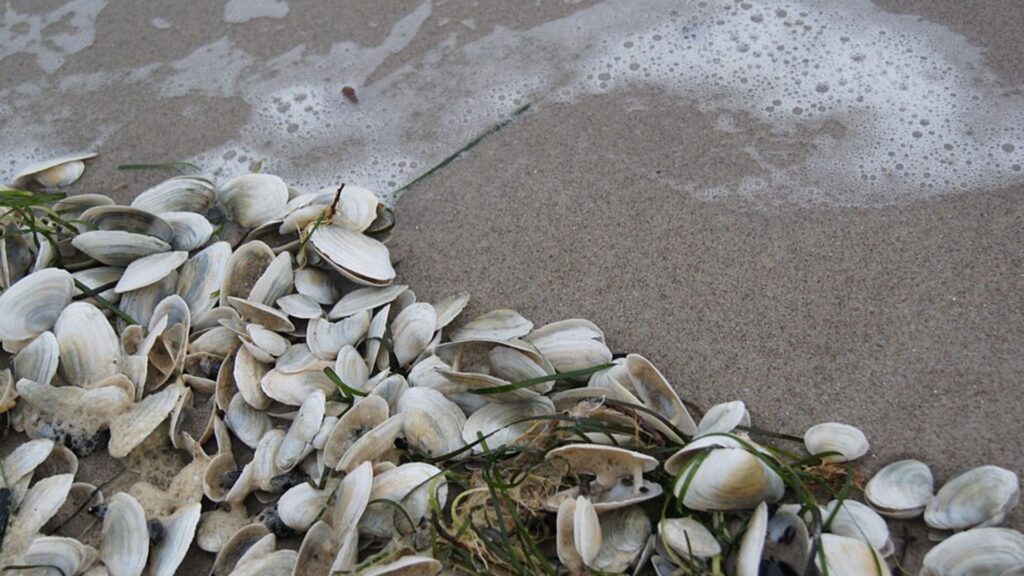
Golden mussels were discovered for the first time in North America in 2024 in California’s Sacramento-San Joaquin River Delta. In less than two years, they have already been detected as far south as Silverwood Lake near San Bernardino. The speed of their spread across California’s waterways caught officials off guard. Lake Tahoe sits just hours from the original detection zone, making every boat arriving from the Delta a potential carrier.
Tahoe Made Decontamination Mandatory in 2025 After the Delta Discovery
In March 2025, the Tahoe Regional Planning Agency enacted mandatory decontaminations on top of the mandatory inspections already required since 2008. That decision pushed decontaminations to more than 4,700 in 2025, a 60% increase from the previous year. The process involves blasting 120-degree water through every compartment, from the bilge to the anchor locker, to kill anything that survived the inspection. The workload for two dozen inspectors across three stations essentially doubled overnight.
A $22 Million Annual Threat That Is Spreading Faster Than State Policy

The economic stakes are severe. A 2014 study estimated that damage from aquatic invasive species to Tahoe’s recreation, tourism, property values, and water infrastructure could reach $22 million a year — figures calculated before golden mussels existed in the United States. Even as the threat grows, California recently dropped inspection and decontamination requirements at Lake Oroville, shifting the burden onto lakes with fewer resources and less experience managing invasives.
Floaties and Paddleboards Are the Inspection Program’s Biggest Loophole

Motorized boats must stop at a station. A paddleboard rolled up wet in a car trunk does not. Anyone who used gear in the Delta and drove straight to Tahoe could unknowingly carry golden mussels to the beach. Agencies and partner organizations rallied to expand non-motorized outreach and stewardship programs, reducing the risk posed by kayaks, paddleboards, and fishing equipment. The 2023 discovery of New Zealand mud snails in Tahoe proved the threat is real: they almost certainly arrived on fishing gear that bypassed inspection entirely.
Roving Inspectors Talked to 17,000 Beachgoers This Summer

Four roving watercraft inspectors fanned out across Tahoe’s beaches, making contact with 17,000 recreators to explain how to Clean, Drain, and Dry their gear. Solar-powered CD3 cleaning stations were also deployed at popular launch points including Fallen Leaf Lake, Sand Harbor, Meeks Bay, and the Tahoe Keys Marina, each equipped with a blower, brush, and vacuum. The stations offer free decontamination for non-motorized equipment, no appointment required.
More Than 8,400 People Have Taken the Tahoe Keepers Training Course

The Tahoe Keepers online training program saw one of its biggest years of growth, adding more than 800 new registrants in 2025 alone. Over 8,400 people have now completed the course, which covers aquatic invasive species identification and responsible water recreation. Volunteers trained through the program walk Tahoe’s beaches on weekend mornings, talking to swimmers and paddlers. The pitch lands easily, according to Keep Tahoe Blue’s Laura Patten: people come for the clarity of the water and want to protect it.
Tahoe’s Defenses Work, But One Undetected Floatie Could Undo All of It

The intercept at Meyers confirmed that Tahoe’s inspection program is the most rigorous in the country. The vessel was placed in a 30-day quarantine and flagged for a mechanical inspection to check for adult mussels in internal compartments. But the program’s own officials acknowledge that inspectors cannot be everywhere. Golden mussels are irreversible once established. The lake’s future depends as much on individual beachgoers cleaning their gear as it does on the inspectors crawling under boats with flashlights.
PetsFanatic Team
Pet Care Expert & Content Creator
Passionate about sharing knowledge and tips for better pet care. Writing about everything from pet health to training techniques.