
“It Was a Miracle That None of Them Broke,” Worker Says After Rescuing Duck Eggs From a Sewage Works
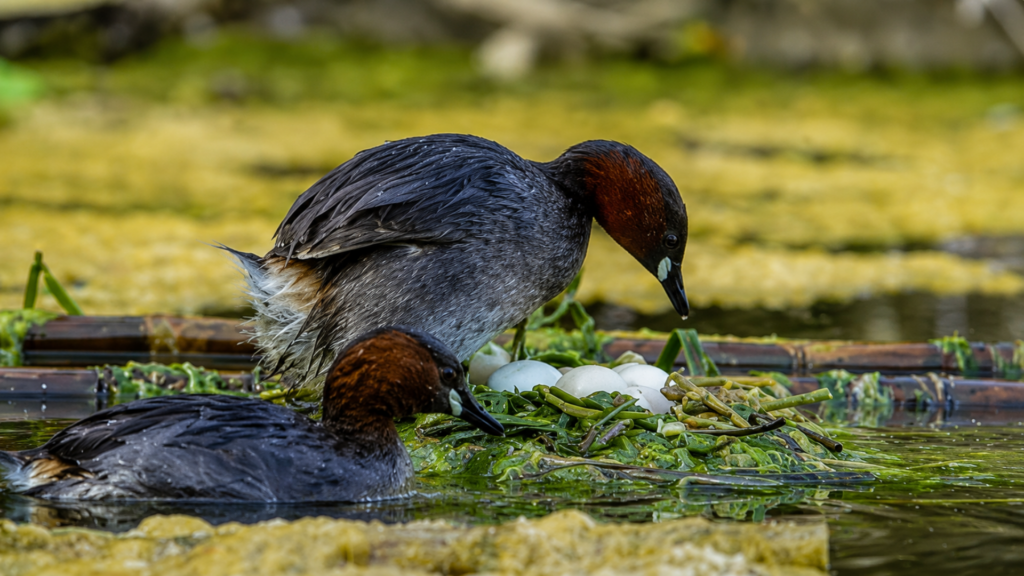
Seven duck eggs were floating inside a sewage treatment tank in Devon when two utility workers spotted them during what should have been a routine maintenance shift. The nest was perched on debris, tipping toward the surface, and seconds from being lost forever.
James Blakesley, a catchment technician with South West Water, and Josh Corderoy, a wastewater treatment operator, were beginning a routine cleaning job at the Totnes Sewage Treatment Works in Devon when they spotted an unexpected sight: a duck nest floating on the surface of one of their tanks. The eggs were resting on floating debris that can accumulate inside treatment facilities, and the whole nest was moments from capsizing. There was no time to call for backup or consult a manual.
According to Blakesley, the situation demanded immediate action. “We had just got our equipment out to get started with our maintenance works and were shocked when we saw it floating there,” he said. “It was resting on some floating matter which can make its way into our tanks and was at risk of toppling over and being destroyed so we knew we needed to act quickly to save the eggs.” Two men, a handful of tools, and seven fragile eggs — the improvisation was about to begin.
An Improvised Rescue With No Room for Error
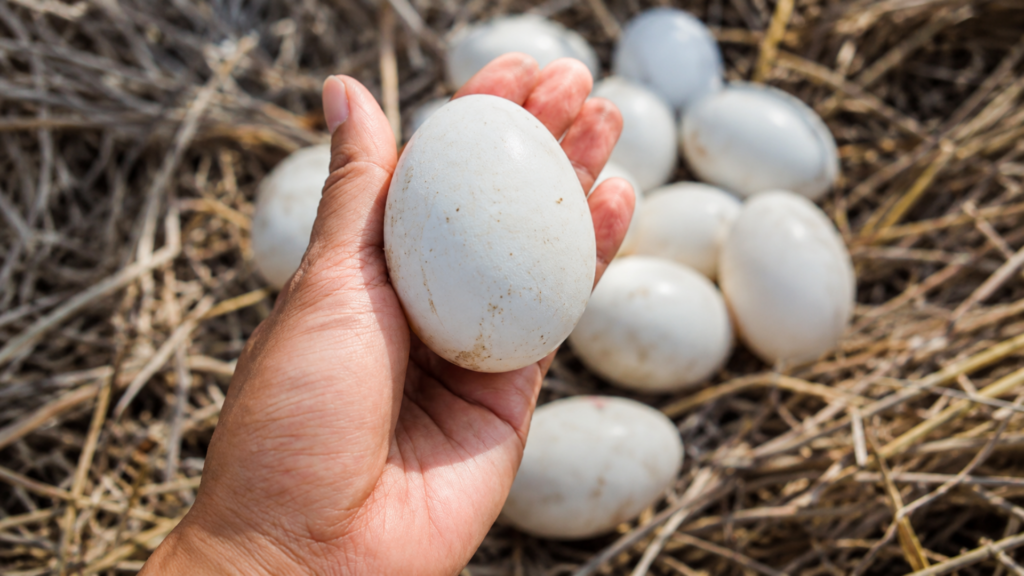
With no specialist wildlife equipment on hand, the pair worked with what the job site had. Blakesley and Corderoy padded out one of their rubber sacks and tethered it to rope so it would float, then used a sample pole to gently nudge the eggs out of the nest and into the bag. Each egg had to be coaxed slowly, without cracking the shell or disturbing its position, while both men kept the floating bag steady. Duck eggs are notoriously fragile during transit, and handling them at the wrong angle risks killing the embryo inside.
All seven eggs were successfully recovered from the tank. Looking back on the operation, Blakesley said the outcome easily could have gone the other way. “It was a miracle that none of them broke,” he said.
With the eggs secured and undamaged, the next challenge was keeping them alive. Duck eggs require consistent incubation at precise temperature and humidity levels, typically around 99.5°F in a forced-air incubator, for approximately 28 days before hatching. Blakesley took the eggs home and set up an incubator, managing conditions carefully over the following weeks. The hardest part of the rescue was only just beginning.
Six Eggs Hatch and a Family Gains Five New Members
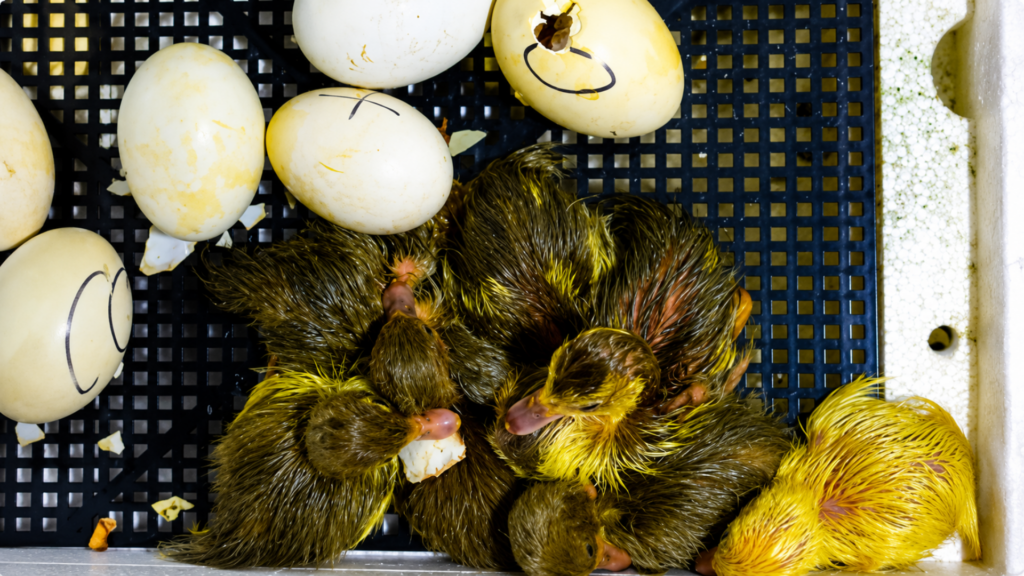
Six of the seven eggs ultimately hatched, and five of the ducklings survived, developing well and settling quickly into life at the Blakesley home. For eggs that had been floating unsupervised inside an active sewage works, then physically nudged into a makeshift floating bag with a long pole, the outcome was remarkable. Even under controlled conditions, hatch rates of 60 to 70% are generally considered good for non-shipped duck eggs — six out of seven cleared that bar comfortably. The five survivors were thriving.
The ducklings adjusted to domestic life faster than anyone expected. “They have been swimming in our paddling pool and settling into their new surroundings where they’ve quickly waddled their way into family life,” Blakesley said. Ducklings instinctively take to water within days of hatching, and the paddling pool gave them a safe, contained space to develop those skills while staying close to their new caretakers. The family, by this point, had already decided they were keeping them.
The Blakesley household reorganized itself around the new arrivals. “My daughter loves them and wanted to give them a home in her playhouse, so we repurposed it to let them roam outside during the warmer weather,” Blakesley said. But the ducks still had more growing to do.
The Long Game
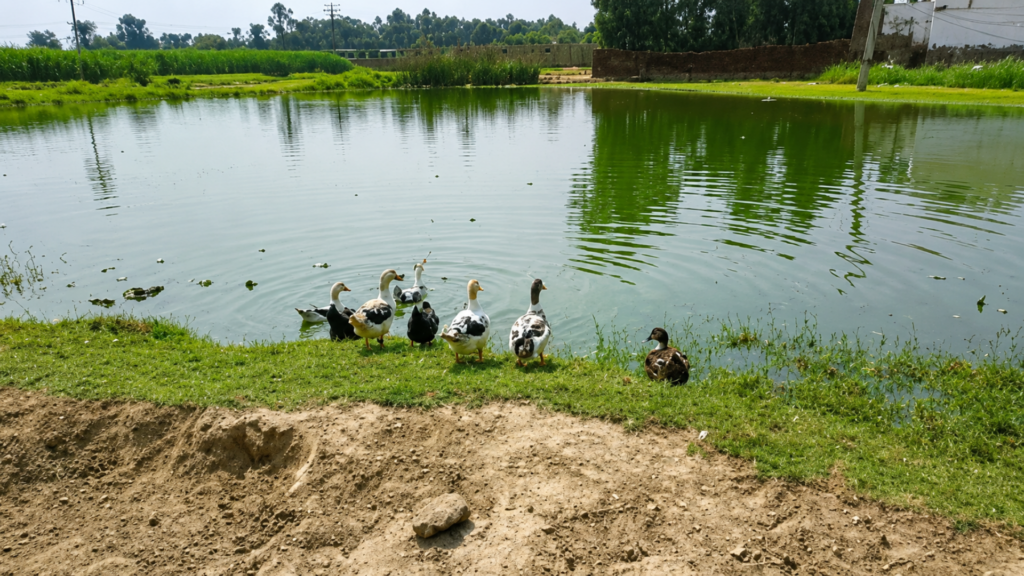
The Blakesleys already have a plan for what comes next. “When the ducklings are older, we’ll move them into a larger indoor enclosure before eventually settling them into an old chicken coop next to our stream and pond,” Blakesley said. “We’re hoping they’ll make full use of the streams and ponds around our garden as they continue to grow and be right at home by the water.”
For South West Water, the story became something worth sharing. The company confirmed the ducklings were developing well and that the family had decided to keep them permanently, describing how the birds had taken up a place in daily home life. It is the kind of outcome that tends to travel — a feel-good footnote attached to a sector that rarely generates warm headlines. Two workers showed up to clean a tank and ended up giving five animals their first shot at life.
Blakesley’s own words put it plainly: “It’s amazing to see how far they have come in the last few weeks.” The ducklings that started as seven eggs floating in debris inside a sewage works, nudged one by one into a padded rubber bag with a sample pole, are now swimming, growing, and preparing for a life beside a garden stream. The miracle he mentioned was surviving the rescue. Everything after that was the result of someone choosing not to walk past.
PetsFanatic Team
Pet Care Expert & Content Creator
Passionate about sharing knowledge and tips for better pet care. Writing about everything from pet health to training techniques.