
Is Your Dog Sending You a Message? 10 Behaviors That Actually Mean Something

Dogs rely heavily on body language to express themselves, yet many owners overlook the subtle cues their pets use daily. While people excel at verbal communication, dogs signal their feelings through head position, ear placement, eye contact, body posture, and tail movements. Small gestures like a yawn, head shake, or ear flick all reveal how your dog is feeling in the moment. Recognizing these signals can strengthen your bond with your pet and prevent behavioral issues from emerging over time. From tail wags to lip licks, your dog is constantly communicating, and interpreting these messages requires careful observation of their physical cues.
That Tail Wag Might Not Mean What You Think

Most people interpret a wagging tail as a sign of friendliness, which is often accurate. However, the meaning varies based on the tail’s motion, accompanying body language, and situation. When held high with rapid, broad sweeping movements, the tail signals excitement and joy, particularly during greetings or before walks. In contrast, a high, stiff tail wagging in short, quick bursts indicates aggression, especially alongside a rigid body, raised hackles, and intense eye contact. The tail’s position and movement pattern are essential for understanding your dog’s emotional state.
The Play Bow Is an Unmistakable Invitation

When a dog drops its front end to the ground with elbows down while keeping its rear elevated, this distinctive pose is called a play bow. The gesture serves as a clear invitation to play and ranks among the most recognizable friendly signals in canine communication. Dogs may also extend a paw toward another dog or person as a playful invitation. During active play, open mouths and visible teeth can appear threatening to people, but this is standard play conduct as dogs gently bite each other’s necks and legs, grapple, and chase.
Lip Licking Without Food Means Discomfort
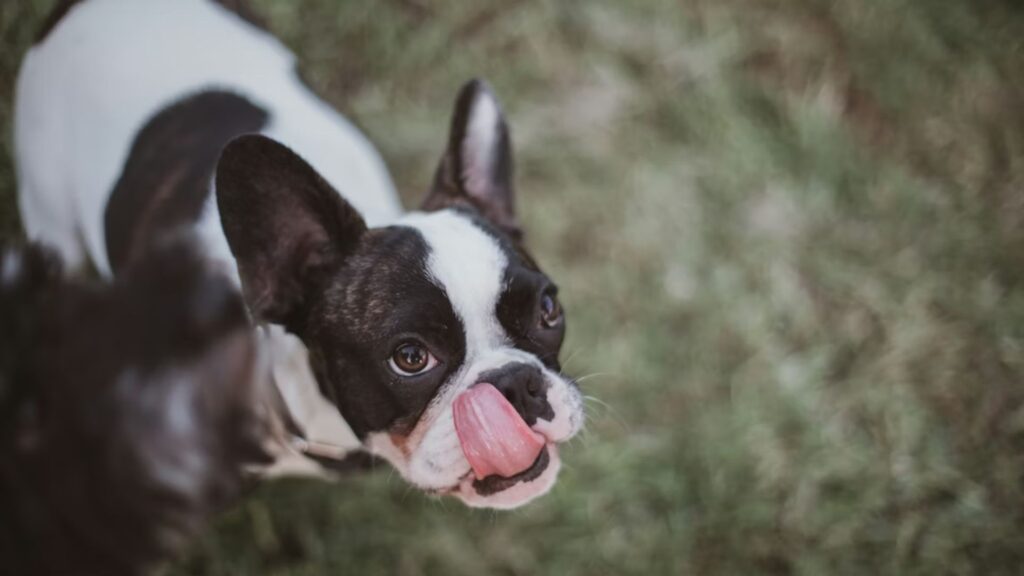
When your dog licks its lips despite no food being present, this subtle gesture reveals stress or uncertainty. Lip licking belongs to calming signals dogs employ to de-escalate situations and minimize potential conflict with other dogs, people, or household animals. Consider a scenario where a stranger approaches and extends a hand toward your puppy. If the puppy yawns and looks away, these reactions show discomfort with the encounter. Should the stranger persist and the puppy licks their hand, your pet is demonstrating peaceful intentions and discouraging any threatening response.
Yawning Isn’t Always About Being Tired

A yawn from a dog that isn’t tired actually functions as a stress response and self-soothing mechanism. Dogs possess an elaborate system of calming signals, with yawning being among the most frequent. The true meaning depends entirely on the circumstances. Picture yourself at a café when a stranger walks up to your puppy. If the puppy yawns and averts its gaze, these behaviors clearly indicate stress about the interaction. Beyond yawning, additional calming signals include glancing away, moving in slow motion, sniffing the ground without apparent reason, and choosing to sit or lie down when feeling unsafe.
Sniffing the Ground Can Signal Overwhelm

Imagine asking your dog to sit as a bus pulls up, but instead your dog drops its nose to the pavement and sniffs despite nothing interesting being there. This behavior often indicates your dog feels overwhelmed by the situation. Unable to comply with the sit command because it doesn’t feel secure enough, the dog resorts to distracted sniffing as a coping mechanism. This displacement behavior resembles a person scrolling through their phone during an uncomfortable conversation rather than engaging. Walking in circles and adopting deliberately slow movements are additional indicators that your dog is attempting self-soothing.
Showing the Belly Isn’t Always an Invitation

When a dog flips onto its back or side to expose its stomach to another dog, this action conveys submission and a non-threatening demeanor. The dog essentially communicates that it poses no danger and welcomes investigation through sniffing. This submissive display may be accompanied by face licking as another peaceful gesture. By opening itself up this way, the dog establishes friendly intentions. Context is crucial, however. While belly exposure during play with trusted companions signals comfort and joy, the same position in uncertain circumstances reveals vulnerability and a preference for avoiding confrontation over seeking attention.
Whale Eye Is a Warning Sign You Shouldn’t Miss

When your dog displays the whites of its eyes, this expression, called whale eye signals stress, discomfort, or brewing aggression. Combined with other warning signs like flattened ears, a tail tucked beneath the body, ears pressed against the head, and abnormally enlarged-looking eyes, whale eye reveals fear or unease. In potentially aggressive encounters, whale eye manifests alongside pronounced white areas in widened eyes, typically paired with a tense body, raised fur along the back, and an unwavering stare. These combined signals warn that the dog feels threatened and may escalate its defensive response if the situation persists.
A Stiff, Frozen Body Precedes Aggression

When a dog becomes rigid or motionless, this aggressive warning tells others to cease their current actions or face a defensive response. Additional aggressive indicators include bared teeth, ears either flattened against the skull or pointing sharply forward, bristled fur along the spine, an intense fixed gaze, a lowered head position, retracted or curled lips, and a tail held vertically that quivers or extends straight without wagging. Misreading these clear warning signs and responding inappropriately can trigger a physical attack. Dogs may bite people they love, and most incidents involving children occur with familiar family pets.
Turning Away Means Your Dog Needs Space

When a dog redirects its head or body away from someone or something, this avoidance tactic expresses stress and a need for distance from an uncomfortable encounter. Looking away and turning away serve as calming signals that dogs use to convey discomfort without resorting to aggression. Watch for additional stress indicators, including pulled-back ears, panting unrelated to temperature or exercise, and scratching. These peacekeeping signals differ markedly from aggressive displays. People frequently overlook or misinterpret these communications, particularly in homes with young children. Dogs prefer not to bite, but may do so as a final option after repeatedly signaling unhappiness.
Early Socialization Determines Communication Skills

Puppies begin learning body language from birth, absorbing lessons from their mother, littermates, and other dogs until adoption typically occurs between eight and ten weeks old. Education continues through supervised play and puppy classes ideally between eight and sixteen weeks of age. In these classes, puppies develop communication skills with dogs of different appearances and temperaments, which proves essential for future interactions. Dogs that miss these formative experiences often struggle to interpret or send proper body language signals later in life.
PetsFanatic Team
Pet Care Expert & Content Creator
Passionate about sharing knowledge and tips for better pet care. Writing about everything from pet health to training techniques.