
Iowa Restores 200 ‘Vanished’ Lakes To Save Endangered Fish And Filter Farm Runoff

Can a tiny, finger-sized minnow help heal an entire state’s heavily altered agricultural landscape? Across the rolling fields of Iowa, a quiet ecological revival is taking root as a massive coalition of farmers, federal agencies, and conservationists works to bring back hundreds of “vanished” lakes. These ancient, horseshoe-shaped bodies of water are being systematically brought back to life, reversing over a century of environmental degradation while simultaneously creating an innovative defense mechanism against agricultural water pollution.
The targeted restoration effort focuses on oxbow wetlands, which are the naturally winding, U-shaped curves of rivers and prairie streams that became isolated when the main water currents shifted channels. Over generations of intensive farming, regular soil erosion filled these quiet, slow-moving pools with massive layers of deep sediment, flattening the landscape and causing the lakes to disappear into ordinary corn and soybean fields. To date, the Iowa Topeka Shiner Recovery Partnership has successfully excavated and restored more than 200 of these historical wetlands across the state.
The initial catalyst for the entire project was the urgent survival of the Topeka shiner, a diminutive silver and orange prairie minnow that was officially placed on the federal Endangered Species List in 1998. Decades of stream channelization, wetland drainage, and rapid agricultural expansion had wiped out roughly 90 percent of the fish’s native habitat across the Great Plains. Now, the massive resurgence of these pools is providing the exact shallow, slow-moving aquatic environment the sensitive minnow needs to recover its population numbers.
Engineering Natural Filters to Catch Agricultural Nutrients

While the project began as a targeted wildlife rescue mission, researchers quickly discovered that the newly dug pools offer an extraordinary secondary benefit for water quality. Iowa has lost more than 95 percent of its original, pre-settlement wetlands, leaving the heavily modified landscape without its natural capacity to filter out chemical impurities. The newly restored oxbows act as highly effective edge-of-field traps, intercepting subterranean agricultural tile drainage lines before the heavy runoff can dump into open public rivers.
Comprehensive water monitoring data has revealed that these restored wetlands remove an average of 62 percent of the harmful nitrate carried in farm runoff. Nitrate pollution from fertilizer usage is a persistent problem throughout the American Midwest, leading to toxic algae blooms in local rivers and directly contributing to the massive “dead zone” downstream in the Gulf of Mexico. By trapping the water in shallow, heavily vegetated pools, natural biological processes break down the chemicals before they can travel any further.
The concrete data reflects a significant turnaround for the Topeka shiner. In survey tracking, the endangered minnow was documented in 60 percent of the historical Iowa watersheds they once occupied, a massive jump from a meager 32 percent occupancy recorded between 2010 and 2011. The continuous, steady population rebound was so pronounced that federal wildlife officials officially recommended downlisting the species’ conservation status from endangered to threatened, providing a powerful victory for the Endangered Species Act.
A Cost-Free Conservation Model for Private Landowners
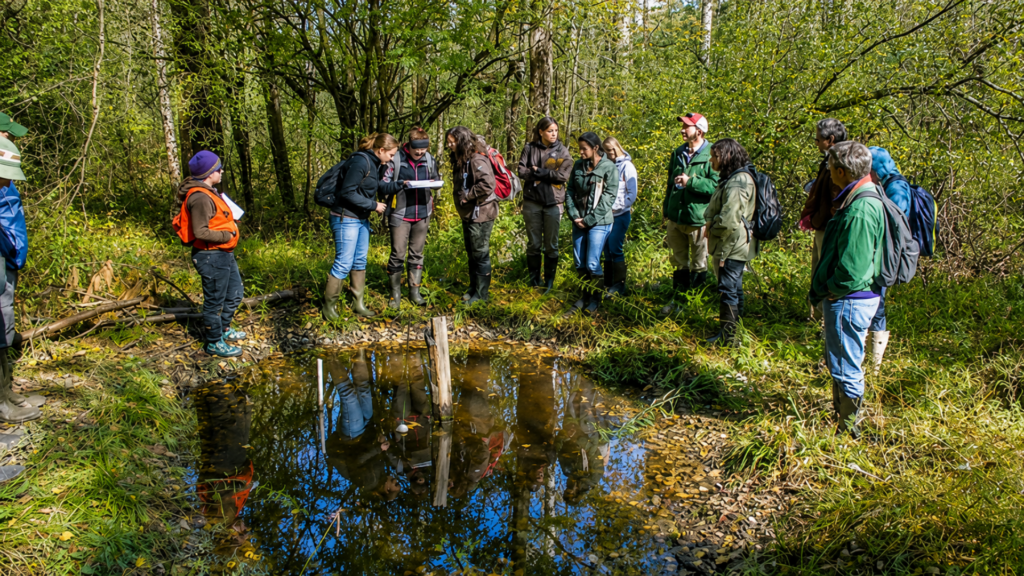
The unique success of the Iowa model relies entirely on a highly collaborative framework that aligns the financial interests of corporate agriculture with federal conservation budgets. Because more than 97 percent of all land in Iowa is under private ownership, any large-scale environmental initiative is completely dead on arrival without direct, enthusiastic cooperation from local farmers.
While excavating a single acre of compressed sediment costs approximately $20,000, participating landowners do not pay a single cent out of pocket. “It shows we can do things that don’t cost us any money, and try to make a difference,” shared Kathy Law, a Carroll County landowner and attorney who successfully restored five distinct oxbows on her family’s property.
Funding for the heavy equipment and engineering is entirely covered by a diverse mixture of state grants, federal funds from the U.S. Fish and Wildlife Service, and private contributions from organizations like The Nature Conservancy and the Iowa Soybean Association. The water-clearing benefits are so widely recognized that the initiative was formally integrated into Iowa’s official Nutrient Reduction Strategy, allowing the state Department of Agriculture and Land Stewardship to completely subsidize any project that links directly into active field tile lines.
Bringing Biodiversity Back to the Heartland

For everyday families living throughout the rural Midwest, the return of the water has triggered a rapid, dramatic rewilding effect that goes far beyond a single minnow species. Field surveys conducted by conservation biologists have documented at least 57 distinct fish species and 81 separate bird species actively utilizing the restored wetlands. Within months of the heavy excavators completing their work, long-absent populations of chorus frogs, painted turtles, migratory waterfowl, muskrats, and even river otters naturally reclaim the space.
The rapid transformation illustrates the resilient nature of the local ecosystem when given a proper chance to heal. Many farmers find that the projects allow them to convert flood-prone, marginal sections of their properties into beautiful community spaces where children can catch tadpoles and watch ducks without impacting their overall crop yields. This balance of working agricultural land with functional wilderness is offering a modern blueprint for regional conservation.
The ongoing revival of Iowa’s oxbows proves that environmental restoration and production agriculture do not have to exist in a state of permanent conflict. As the 2026 conservation season advances, teams have mapped out thousands of additional historical coordinates across the state that are prime candidates for future excavation. By looking to the natural past and restoring the ribbon-like bends of the prairie streams, the heartland is discovering a practical, self-sustaining path toward cleaner water and a richer ecological future.
PetsFanatic Team
Pet Care Expert & Content Creator
Passionate about sharing knowledge and tips for better pet care. Writing about everything from pet health to training techniques.