
The Chemicals That Helped Save the Ozone Layer May Have Created a New Environmental Problem
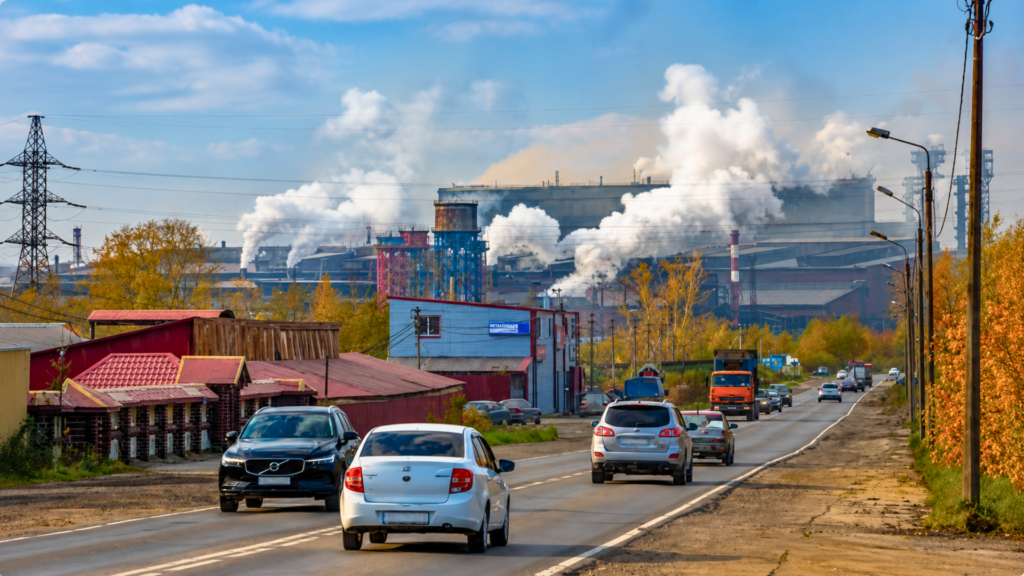
Every time you turn on your car air conditioner to escape summer heat, you are experiencing a modern luxury that carries an invisible environmental cost. Lead researcher Lucy Hart realized that corporate decisions to protect our atmosphere were simultaneously triggering a silent crisis on the ground. The global effort to heal the sky has accidentally released a toxic legacy, establishing a dangerous systemic pattern that directly threatens pristine ecosystems across the entire North American continent.
Scientists at Lancaster University recently analyzed atmospheric chemical transport models to investigate how these modern refrigeration replacements behave after leaving factory floors. By tracking the path of chemical gases like hydrofluoroolefins, investigators revealed that these substances break down into highly stable toxins before returning to Earth via rain. Compounding data from multiple environmental surveillance networks, the team proved that these artificial residues now contaminate regions thousands of miles away from any major industrial manufacturing facility.
The actual volume of this pollution is staggering, with roughly 335,500 tonnes of trifluoroacetic acid deposited between 2000 and 2022. This enormous quantity represents a weight greater than eighty-three thousand fully loaded highway semi-trucks actively dumping chemical waste onto land and water. This microscopic threat belongs to the notorious perfluoroalkyl and polyfluoroalkyl substances family, meaning these foreign molecules possess an indestructible chemical structure that guarantees they will remain in the environment permanently.
How Atmospheric Fixes Shift the Toxic Burden to Our Waters

The regulatory framework established by the Montreal Protocol forced global markets to phase out older chlorofluorocarbons rapidly. Consequently, auto manufacturers embraced a specific chemical replacement called HFO-1234yf for vehicle climate control units. Atmospheric modeling confirms this substitute degrades into trifluoroacetic acid within days of emission. Every single driver utilizing modern air conditioning unknowingly contributes to an expanding blanket of toxic precipitation, forcing the abstract concept of climate regulation directly into local municipal watersheds.
Corporate entities and international regulators have historically defended these chemical substitutions as essential measures to prevent atmospheric collapse. However, independent academic researchers have begun offering sharp pushback against the institutional reliance on these compounds. Environmental tracking groups argue that the immediate benefits to the ozone layer are being systematically offset by long term continental poisoning. This conflict highlights a deep systemic failure where fixing one global emergency systematically lays the groundwork for a completely different ecological disaster.
The physical consequences of this deposition manifest as a steady accumulation within public water reservoirs and agricultural soil. Because these chemical chains are completely unbreakable by natural processes, standard household water filters cannot remove them. Families across the nation now face the reality of consuming untreatable chemical residues with every glass of tap water they pour. Ultimately, our reliance on modern cooling systems has permanently altered the underlying chemical composition of the American water supply.
Why the Cost of Clear Skies Is Being Paid in Human Blood

Institutional regulatory bodies have failed to anticipate how quickly these replacement chemicals would accumulate in biological systems. While early safety assessments focused strictly on atmospheric breakdown, the secondary consequences have spilled directly into public health sectors. European monitors officially classify the compound as highly hazardous to aquatic life, while medical screening teams have detected these exact molecules inside human blood and urine. This systemic exposure means an ordinary citizen absorbs indestructible toxins during routine daily activities.
In response to these findings, regional water authorities and independent scientific panels have intensified their scrutiny of industrial chemical standards. Local communities are demanding immediate transparency from federal agencies regarding the safety of their local municipal infrastructure. Environmental advocates are calling for an immediate overhaul of chemical substitution policies to prevent corporations from swapping one hazard for another. This grassroots pushback forces the conversation away from distant scientific abstractions and directly onto the local utility bills of everyday Americans.
“Their results showed that nearly all of the TFA detected in the Arctic could be attributed to these CFC replacement chemicals, even though the region is far from major emission sources. Our study shows that CFC replacements are likely to be the dominant atmospheric source of TFA. This really highlights the broader risks that need to be considered by regulation when substituting harmful chemicals such as ozone-depleting CFCs.”
Why Long-Term Contamination Erases the Line Between Progress and Pollution

The systemic fallout of this chemical accumulation forces a massive regulatory reckoning for modern manufacturing sectors. Scientists estimate that annual trifluoroacetic acid production from these consumer sources may peak sometime between 2025 and 2100. This extended window of rising toxicity means future generations will inherit a highly compromised planet with elevated baseline pollution. As regulatory bodies struggle to address this crisis, ordinary families will face skyrocketing water purification expenses on their monthly household utility bills.
This unfolding dilemma fits a historical pattern of industrial enforcement failures where short sighted environmental solutions introduce long term structural hazards. Decades ago, the phase out of original ozone depleting substances was celebrated globally as a monumental triumph for corporate and political cooperation. However, compounding evidence demonstrates that hasty replacements frequently bypass comprehensive biological screening protocols. This historical cycle directly penalizes modern consumers who must constantly adapt to corporate products that unintentionally compromise basic public safety standards.
Conclusively, the reality of global environmental engineering remains a deeply precarious equation with no simple answers. Society cannot easily abandon essential cooling technologies in an era of intensifying global heatwaves, yet the environmental accumulation of these indestructible chemicals continues unabated. Every attempt to regulate the atmosphere seems to extract a heavy toll from our land and water. This leaves communities trapped in an inescapable loop where the price of a healed sky is a permanently poisoned earth.
PetsFanatic Team
Pet Care Expert & Content Creator
Passionate about sharing knowledge and tips for better pet care. Writing about everything from pet health to training techniques.