
Grand Canyon Ranger Claims He Found What the Smithsonian Denied for Over 100 Years

For more than 100 years, one of the strangest stories in American archaeology has refused to disappear. In 1909, a newspaper claimed explorers found a hidden underground complex inside the Grand Canyon filled with carvings, metal weapons, and mummified remains that looked nothing like anything tied to Native American history. The Smithsonian denied it. Historians dismissed it. Case closed, or so everyone thought. Now, a Grand Canyon ranger says he may have stumbled upon something eerily similar in a remote, restricted section of the canyon. No official confirmation. No released photos. Just a claim that matches a legend the establishment has brushed aside for generations. And suddenly, the old questions are back.
The 1909 Story That Sparked a Legend

In April 1909, the Arizona Gazette published a front-page article describing explorer G. E. Kincaid’s alleged discovery of a vast cavern system carved into canyon rock. According to the report, the site contained copper weapons, statues resembling Egyptian deities, and rows of mummified bodies. The entrance was described as high up on a cliff face, nearly inaccessible. The article even claimed a connection to the Smithsonian. Then, nothing. No follow-up expedition. No cataloged artifacts. Just silence. Yet the vivid detail of that single report embedded itself in American folklore and never quite faded away.
The Smithsonian’s Firm Denial
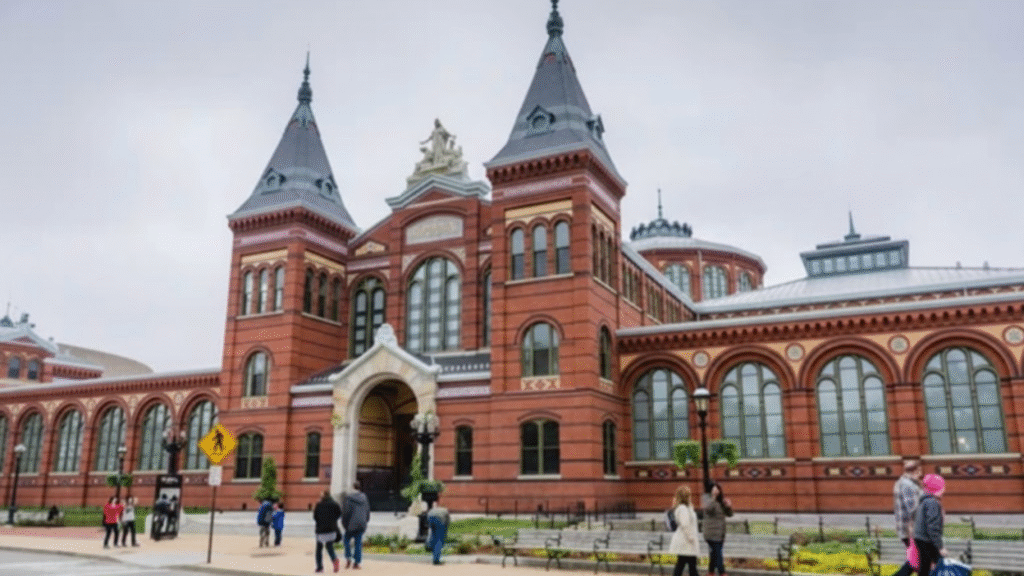
When researchers later asked the Smithsonian about the expedition, the institution stated it had no record of Kincaid, no Professor S. A. Jordan, and no such Grand Canyon excavation. Archivists emphasized that no Smithsonian-backed team had conducted work in that area tied to the claims. For many scholars, that denial effectively ended the debate. Without records, without artifacts, without documentation, the story looked like classic early 20th-century newspaper sensationalism. But for conspiracy-minded observers, the denial only deepened suspicion. Why did such a detailed story vanish so completely?
A Ranger’s Claim Reignites the Fire

In 2024, a Grand Canyon ranger reportedly discovered what he described as an unusually smooth, oval-shaped opening in Marble Canyon, a remote section rarely accessed by visitors. According to accounts circulated online, he found carved walls and small alcoves inside, some containing weathered stone figures that did not resemble known regional styles. He allegedly documented coordinates and reported the site to superiors. The area, he claims, was sealed pending investigation. No official statement has confirmed this. But the similarities to the 1909 report are difficult to ignore.
The Restricted Zone Problem

The alleged site lies within a restricted research zone controlled by the National Park Service. These areas are off-limits to the public due to safety risks and preservation policies. That detail cuts both ways. On one hand, it means random hikers could not fabricate the discovery. On the other, it makes independent verification nearly impossible. When preservation rules block public access, mystery thrives. Without open investigation, speculation fills the void.
Why Archaeologists Are Skeptical

If authentic, artifacts like hieroglyph-like carvings or Old World-style statues in the Grand Canyon would challenge established archaeological timelines. There is currently no widely accepted evidence that ancient Egyptian or similar Old World civilizations reached the American Southwest. Extraordinary claims require extraordinary proof. That means carbon dating, material analysis, peer review, and transparent excavation records. None of that exists yet. For mainstream scholars, without physical evidence, the ranger’s story remains anecdote, not archaeology.
Could Nature Be Playing Tricks?

Geologists note that erosion can carve remarkably geometric shapes into canyon rock. Volcanic formations and sediment layers can create smooth openings and shadow effects that look artificial at first glance. Anthropologists also caution that Indigenous rock art or ceremonial structures, if misinterpreted, could appear foreign to an untrained eye. The canyon is vast, ancient, and visually deceptive. Human brains are wired to detect patterns, even when they are natural. That alone could explain much of what is being described.
Why This Story Refuses to Die

Most newspaper hoaxes fade. This one did not. The idea that a powerful institution might suppress a discovery taps into a deeper cultural tension between authority and hidden truth. In the digital age, that tension spreads faster than ever. Videos, podcasts, and forums have resurrected the Grand Canyon legend for a new generation. The story is no longer just about caves and mummies. It is about secrecy, trust, and whether official narratives always tell the full story.
The Stakes of Being Right or Wrong

If the ranger’s claim were verified, it could rewrite part of North American history. It would spark global debate about ancient travel, cross-continental contact, and the limits of current archaeological understanding. If it proves false, it becomes another chapter in America’s long tradition of lost civilization myths. Either outcome carries weight. That is why the demand for transparency is growing louder.
The Only Thing That Can End the Mystery

There is only one way this story moves forward. Independent research, documented excavation, and collaboration between scientists, Indigenous leaders, and federal agencies. Until then, the Grand Canyon keeps its silence. Its cliffs remain unchanged. Its shadows keep their secrets. Whether this is the rediscovery of a buried truth or simply another legend carved by time, one thing is certain. The canyon has a way of holding onto its mysteries far longer than anyone expects.
PetsFanatic Team
Pet Care Expert & Content Creator
Passionate about sharing knowledge and tips for better pet care. Writing about everything from pet health to training techniques.