
Former Kindergarten Teacher Grows World’s Only Continental King Penguin Colony From Eight Birds to Nearly 200

On a wind-battered bay at the southern tip of Chile, a species that almost never sets foot on a continent has built a home, and one person made sure it could. Cecilia Durán Gafo, a 72-year-old former kindergarten teacher, turned part of her family farm into the only continental king penguin reserve in the world, growing the colony from a handful of birds to nearly 200.
Useless Bay Has Always Had a Way of Keeping People Out

The colony calls Useless Bay home, a stretch of coastline in Chile’s Tierra del Fuego region named by early explorers who found its shallow shores impossible to land boats on. That same inaccessibility likely made it attractive to king penguins for centuries, offering a natural buffer from fishing vessels and human interference. Even so, a permanent colony never formed there until 2010, according to reporting by The Guardian.
The Colony Nearly Disappeared Before It Could Begin
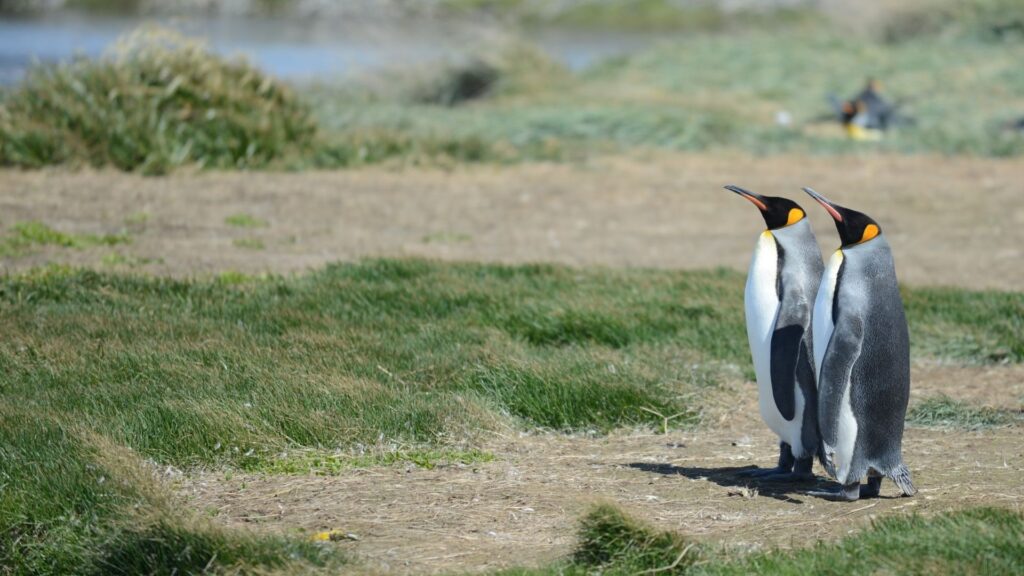
When penguins first reappeared at Useless Bay in 2010, the threats arrived almost immediately. Eggs were stolen, and birds were handled and disturbed by visitors. Within a year, a group of roughly 90 penguins had been reduced to just eight. At that point, Durán called a family meeting. Her two daughters, she recalled, answered her question about who would take responsibility before she could finish asking it.
She Spent Her Days on the Beach With a Thermos and a Sandwich

Durán made the beach her daily post, watching over the birds through long, cold stretches to make sure no one came too close. The following year, she fenced off 30 hectares of her nearly 1,000-hectare farm as a formal protected area. Visitors were still welcome, but only at a distance. That boundary, physical and legal, became the foundation of what the reserve is today.
Invasive Predators Posed a Threat the Penguins Had Never Faced

King penguins have no natural land predators, which made the minks and gray foxes introduced to Tierra del Fuego in the 20th century a novel and dangerous threat. The minks, in particular, targeted chicks and eggs rather than adults, and in the early years, only one or two chicks survived each season. Durán and her team recognized the predator problem as something they would have to manage year after year.
Meat Scraps and Midnight Shifts Helped Protect the Chicks

The reserve’s strategy for managing predators was practical rather than lethal. The team sourced food scraps from local butchers and distributed them far from the reserve during overnight shifts, conditioning foxes and minks to hunt elsewhere. The effort was most critical in winter, when adult penguins head out to sea for weeks, leaving chicks behind. Durán took her share of the 3 a.m. shifts alongside the rest of the team.
Dogs Helped Keep Predators Away From the Colony

As an additional layer of protection, the reserve introduced dogs to patrol the perimeter each morning and afternoon. The scent left behind was enough to deter foxes and minks from approaching. The combination of scent deterrence and the overnight baiting program gradually shifted predator behavior away from the colony, allowing more chicks to survive into adulthood each breeding season.
The Reserve Is Now a Professionally Run Conservation Operation

What started as a solo effort on a cold shoreline is now a 12-person team that includes biologists, veterinarians, and ecotourism specialists. Around 15,000 visitors pass through annually, and the revenue funds the reserve’s operations. In 2011, Durán began the legal process of protecting the 30 hectares for the next 100 years, with the condition that whoever inherits the land must continue the conservation work.
Penguins From Colonies Thousands of Kilometers Away Are Arriving at Useless Bay

Ongoing research with university partners has produced an unexpected finding: king penguins from colonies thousands of kilometers away are arriving at Useless Bay and quickly adapting to the local food supply. Scientists describe this as exceptional foraging plasticity, and Dr. Klemens Pütz, scientific director at the Antarctic Research Trust and lead author of the foraging research, says this behavioral flexibility could help the species weather significant climate-driven changes to its habitat in the years ahead.
Last Year, 23 Chicks Survived, a Record for the Colony

The clearest sign of progress at Useless Bay is the number of chicks that now survive each season. In the most recent count, 23 made it to fledging, the highest on record. The reserve now draws researchers from universities across the region, contributing data on penguin behavior and plant life alongside the conservation work. For Durán, what started as a daily vigil on a cold beach has become a project written into the land itself, legally protected for the next 100 years.
PetsFanatic Team
Pet Care Expert & Content Creator
Passionate about sharing knowledge and tips for better pet care. Writing about everything from pet health to training techniques.