
Florida Health Dept. Says ‘Do Not Consume’ Python After Testing 487 Snakes

Florida tested 487 pythons for one specific danger, and the results were bad enough to end any talk of eating the invasive snakes into extinction. The state health department has now issued a blunt advisory: do not consume python, regardless of the snake size. That message closed the door on a plan that once sounded almost too clever to fail. What actually showed up in all that testing to change the state’s mind so completely?
The Advisory Applies No Matter How Big the Snake Is

Florida’s advice on python meat is now about as clear as it gets. The Florida Department of Health issued a “do not consume python” advisory that applies no matter how big or small the snake is. That guidance closed the door on an earlier idea from 2020, when officials hoped eating pythons might help thin out the population. The plan sounded clever at the time. The mercury levels had other ideas.
487 Snakes Were Tested Before This Advisory Was Issued

Real testing sits behind this advisory, not just caution for caution’s sake. A March 2024 letter from the health department to state wildlife officials showed that 487 snakes had been reviewed specifically for mercury levels. Since no official meal size exists for snake meat, researchers borrowed the standard 8-ounce portion normally used for fish. The results were uncertain enough that officials decided the safest answer was simply not to recommend eating it at all.
It’s Not Illegal, Just Strongly Discouraged

None of this actually makes eating python illegal, just strongly discouraged. Python hunter Dusty Crum, known as Python Wildman, built an entire business around the snakes anyway, including a restaurant called Wildman’s Pizza, Pasta and Pythons. He sells python-themed merchandise like soap and earrings, but he does not sell python meat itself, since it is not federally approved for human consumption. The demand, though, is clearly still there.
Somewhere Between Alligator and Mystery Meat

People who have actually eaten python describe a fairly specific flavor and texture. Crum compares the taste to alligator, just less fishy and more gamey overall. He says it works well sauteed simply in garlic and butter using a cast iron pan. Other python cooks lean toward curry instead, since the strong spices help cover up the meat’s natural flavor entirely. Preparation, it turns out, matters just as much as the meat itself.
“One or Two People a Day” Still Ask for Python Pizza

Crum says curiosity about python meat shows up almost every single day at his restaurant. According to Crum, “at least one or two people ask if I serve it on pizza and want to try it.” That steady stream of questions suggests plenty of people are genuinely open to trying python, mercury advisory or not. Legal restrictions, in this case, have not managed to fully dampen public curiosity about the invasive snake.
Even a Researcher Who’s Tried It Calls It “Mystery Meat”

Not every python expert is actually enthusiastic about eating one. Eric Suarez, a research coordinator who studies invasive species, has tried it himself but does not seek it out. According to Suarez, “the curry kind of masks the flavor so it’s like a mystery meat.” He also noted that python is a pain to clean, with a poor meat to effort ratio. He personally prefers eating iguana instead.
“Almost Fully Muscle,” One Chef Says of the Tough Meat

Chef Valerie Claunch has cooked python multiple ways, including curry and a Cuban style mojo marinade. According to Claunch, “python is moving around all the time, it’s almost fully muscle” which makes the meat naturally tough to work with. She believes barbecue could actually solve that problem, since long slow cooking might shred the meat like pulled pork. Different cooking methods clearly produce very different results with this particular ingredient.
For One Champion Hunter, It’s the Smell, Not the Mercury
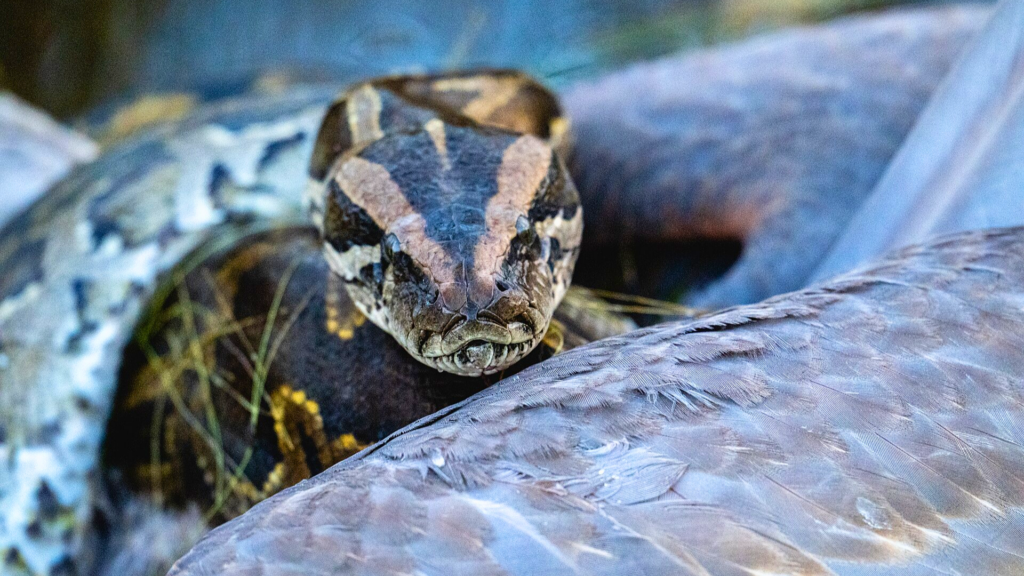
Not everyone’s hesitation comes down to mercury or taste at all. Taylor Stanberry, the first woman to win the Python Challenge grand prize after catching 60 snakes in 2025, has her own reason for staying away from snake meat. According to Stanberry, “I’ve been musked on by so many pythons and the smell is not appealing.” That defensive musk, released near the tail to scare off predators, apparently leaves a lasting impression.
Eating Them Into Extinction Still Looks Unlikely

The mercury risk itself is not spread evenly across the state either. Snakes caught in southwest Florida tend to carry lower mercury levels than those found in Everglades National Park, where sulfur from upstream farms feeds a process that creates methylmercury in the food chain. Even so, Florida keeps fighting the python invasion through efforts like the annual Python Challenge, which has removed over 21,000 snakes since 2017. Eating this invader into extinction, though, still looks unlikely.
PetsFanatic Team
Pet Care Expert & Content Creator
Passionate about sharing knowledge and tips for better pet care. Writing about everything from pet health to training techniques.