
‘We Don’t Fully Know Why This Is Happening,’ Scientists Say After Large Fireballs Hit at Nearly Double the Normal Rate

In March 2026, a space rock weighing roughly one ton broke apart 30 miles above Houston, unleashing a blast equivalent to 26 tons of TNT. A fragment punched through a residential roof and bounced around a bedroom. Stunning on its own; except it was far from the only one. Over just a few weeks, fireballs blazed across the skies of Texas, California, Ohio, and Europe. Scientists are now asking a question they can’t yet answer: why?
What Exactly Is a Fireball and Why Should You Care?

A fireball is simply a meteor bright enough to outshine the stars and sometimes even the sun. When space rocks slam into Earth’s atmosphere at speeds up to 160,000 miles per hour, friction causes them to vaporize in a blaze of light. If one explodes mid-flight, it becomes a bolide. These events happen regularly and are generally harmless. What made early 2026 unusual wasn’t that they happened. It’s how many happened, how big they were, and how many people heard the boom.
The Numbers That Caught Scientists’ Attention

The American Meteor Society logged 2,046 fireball events in the first quarter of 2026. The highest total on record. On its face, that’s only slightly above 2022’s count of 2,037. But the raw number is almost beside the point. What stands out is the cluster at the top: 38 events drew more than 50 witness reports each, more than double the quarterly average of 18. Fourteen events crossed the 100-report threshold. Something wasn’t just increasing, it was scaling up at the extreme end.
March 2026: An Unprecedented Concentration
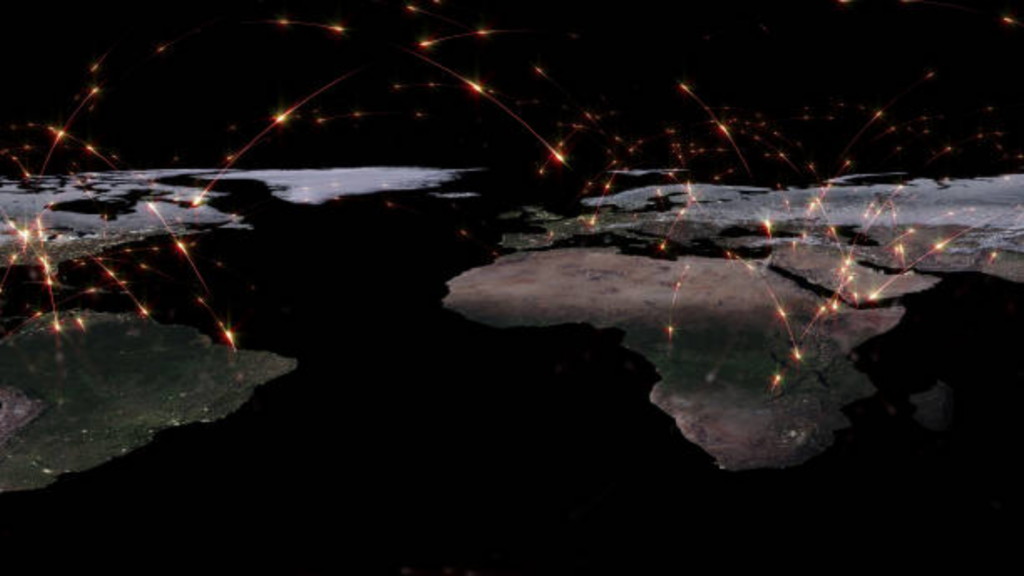
The activity didn’t build slowly. It erupted. After a major fireball lit up Western Europe on March 8, drawing over 3,200 reports, a sustained wave followed from March 11 through March 24. France, Spain, Ohio, Houston, California, Michigan, and Georgia all recorded significant events within days of each other. Several produced confirmed meteorite falls, physical rocks recovered from the ground. According to AMS researcher Mike Hankey, the data had been flat and consistent for over five years before this sudden burst.
The Sonic Boom Clue

One detail in the data stands out: the sound. When a meteor produces a sonic boom, it signals that the object was large and dense enough to survive deep into the atmosphere before breaking apart. In normal years, sonic booms accompany only a fraction of reported fireballs. In early 2026, nearly four in five high-witness events produced them. That physical evidence; sound waves rattling homes across multiple states, is something no reporting quirk or smartphone trend can manufacture. The rocks themselves were getting bigger.
Ruling Out the Obvious Explanations

Scientists methodically tested every ordinary explanation and eliminated them one by one. No major meteor shower was active in the first quarter. The events didn’t match any known seasonal pattern. The surge wasn’t concentrated in any single time zone or region that would suggest a geographic reporting bias. And while more people do carry smartphones, that effect would lift all fireball counts equally, not just the largest ones. The anomaly existed specifically at the high end, which is the opposite of what a reporting boost would produce.
Where the Fireballs Are Coming From

Tracing each fireball’s path backward, researchers identified two suspicious clusters in the sky. The most prominent is the Anthelion source; the region of space directly opposite the sun, where objects essentially catch Earth from behind as they move deeper into the inner solar system. A second cluster appeared at unusually steep orbital angles, which the AMS described as one of the more intriguing unresolved features of the quarter. Both clusters represent known regions of space but their activity in early 2026 far exceeded any historical baseline.
What About AI, Aliens, or Interstellar Debris?

The AMS addressed speculation directly. These are natural rocks from the inner solar system. No anomalous flight paths, no unexplained materials, no evidence of anything beyond ordinary meteoroids. Recovered meteorites from Ohio and Germany tested as eucrites, a well-understood type linked to asteroid Vesta. As for aliens, the society was blunt: there is no evidence. The AMS also dismissed theories linking the surge to the interstellar comet 3I/Atlas. AI chatbots routing curious witnesses to reporting platforms may have boosted witness counts, but cannot explain the physical evidence.
The Honest Answer: We Don’t Know

The AMS did not soften its uncertainty. According to its published report, the most honest answer to why this is happening is that scientists don’t fully know. The data points to a genuine increase in large objects entering Earth’s atmosphere, but whether that reflects a real change in the near-Earth environment, a statistical fluctuation at the extreme end of normal variance, or an uncharacterized debris population has not been determined. What the society was clear about: this is not an impact threat. None of these objects posed danger beyond localized effects. But the question deserves a real answer.
A Cosmic Blind Spot We Can No Longer Ignore

The fireball surge of early 2026 revealed something beyond the science: a monitoring gap. When the seven-ton object exploded over Ohio, the only AMS-affiliated all-sky camera in the state was offline. Scientists are now calling for expanded camera networks, deeper meteorite lab analysis, and better cross-referencing with radar, satellite, and infrasound data. Earth is constantly moving through a cosmic shooting gallery. Most of the time, the rocks are small and the sky stays quiet. Whether March 2026 was an anomaly or a preview of something larger, we don’t yet have the tools to know for certain.
PetsFanatic Team
Pet Care Expert & Content Creator
Passionate about sharing knowledge and tips for better pet care. Writing about everything from pet health to training techniques.