
Farmers Spread Sheep’s Wool Across Barren Fields, But Crops Respond Unexpectedly

Across New South Wales and Western Australia, agricultural land that spent years shedding topsoil and repelling rainfall is showing signs of recovery, and the material driving that shift is wool. Not the fine-grade fiber destined for export, but the coarse, stained, low-grade clips that shearing sheds have long treated as a disposal problem. Field trials running from 2022 through 2025 are now documenting what that material can actually do.
The Soil Problem Started Long Before
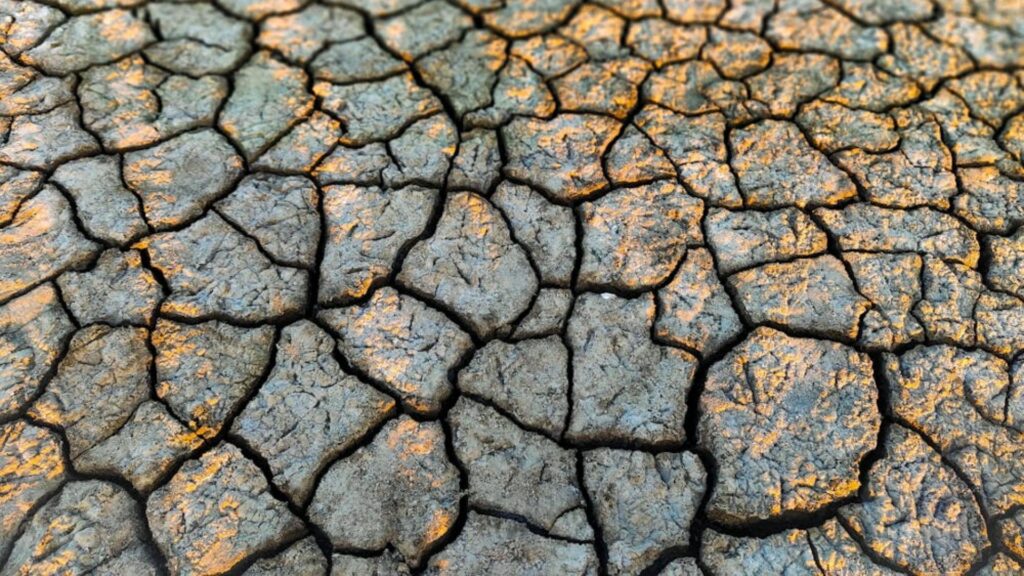
For decades, agricultural pressure stripped organic matter from Australian soils, leaving behind ground that compacted under rainfall and crusted over between seasons. In parts of Western Australia, soil particles developed a waxy coating that caused water to bead off the surface rather than soak in, a condition that made even heavy seasonal rain ineffective. The landscape, in some areas, took on the appearance of land that had never been farmed at all.
An Estimated 200,000 Tons of Surplus Wool Accumulates Across Australia Every Year

The surplus was not a shortage of sheep. Australian production reached 279 million kilograms in the 2024 to 2025 season, and an estimated 200,000 tons accumulate annually as unsellable material. Belly pieces, stained locks, and short coarse fiber cost more to transport than they returned at market. Farmers burned or buried the material. Some paid for storage. The wool and the damaged soil existed as separate, unconnected problems for years.
A University of Melbourne Researcher Saw the Connection Others Missed

Dr. Mary-Jane Rogers of the University of Melbourne began examining whether discarded wool fiber could address the physical and chemical deficiencies found in Victoria’s degraded soils. Her early laboratory work indicated the raw material could modify soil texture while releasing nutrients steadily over time. She later collaborated with researchers at Zootechnical to develop a method for compressing loose fibers into dense, manageable pellets compatible with standard farming equipment.
The Chemistry Inside Wool Fiber Lines Up Closely With What Depleted Soil Lacks

A February 2025 review published in the journal Agronomy by researchers from Italy’s National Research Council documented wool’s chemical makeup in detail. Wool fibers contain approximately 16 to 17 percent nitrogen, 3 to 4 percent sulfur, and 50 percent carbon, all bound within keratin, a protein structure that breaks down slowly. Unlike synthetic fertilizers, which can leach into groundwater within weeks, keratin releases its nutrients gradually across an entire growing season.
Wool Absorbs Water, Then Holds It Where Roots Can Reach

Beyond nutrients, the Agronomy review documented wool’s hygroscopic properties, meaning its structural capacity to absorb and retain moisture. Wool fibers can hold between 1.5 and 2 times their own weight in water, keeping it near the root zone rather than allowing it to evaporate from the surface. The fibers also create micro air pockets when mixed into compacted soil, improving aeration, an effect that most single-amendment approaches to soil restoration cannot replicate.
Field Trials Measured a 35 Percent Drop in Evaporation
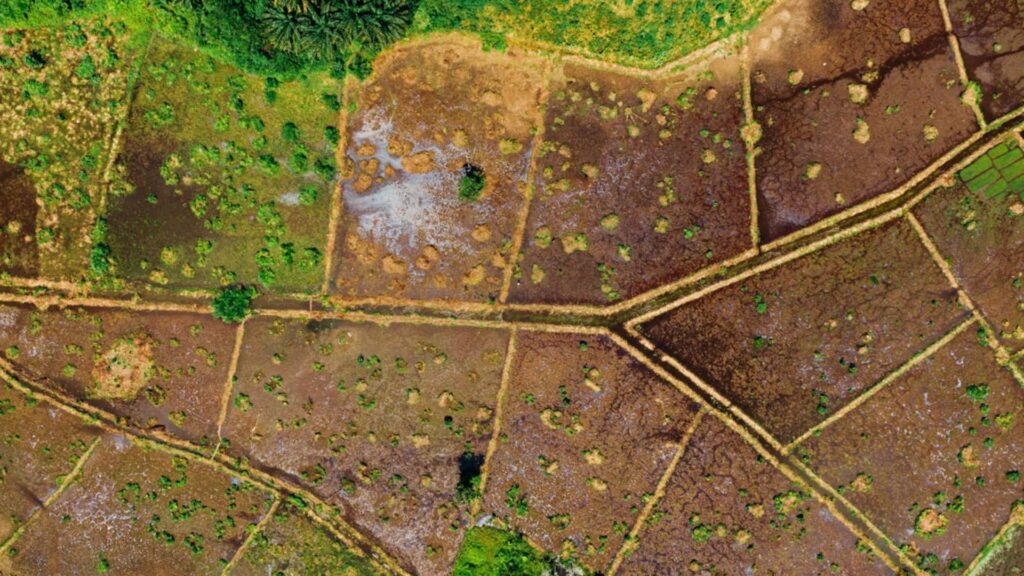
Records from the 2022 to 2025 New South Wales trials showed that a wool layer several centimeters thick reduced evaporation by up to 35 percent compared to untreated plots. Soil moisture held for nearly twice as long as with conventional organic mulch, measured across multiple drying cycles. A separate Agronomy analysis found pellet application produced a 40 percent increase in pasture growth on degraded plots. In Queensland, abandoned fields regained measurable cohesion after a single dry season.
Microorganism Counts Rose Between 30 and 50 Percent Within Months

Sampling data from the trials showed microbial density increased 30 to 50 percent within months of wool application. Dr. Paul Sharpe, a lead researcher at Zootechnical, has tied that recovery to wool’s protein structure, which works against the hydrophobic layers that typically seal degraded soil and block water from moving through it. As microbial populations recover, they begin cycling nutrients and rebuilding the physical structure that supports root penetration and sustained plant growth.
A Waste Material Is Becoming a Rural Industry

The economic case is shifting alongside the agricultural one. In Victoria during 2024, more than 40 wool recycling startups began operations, generating roughly 2,500 jobs in rural areas. From each ton of surplus wool, processors can produce nearly 900 kilograms of pellets, which carry a market value approximately three times that of raw wool. Research indicated that 500 kilograms of pellets per hectare measurably improved soil organic carbon content. As Dr. Rogers put it: “We can turn a waste management problem into a valuable resource for land restoration.”
Other Countries Are Doing Their Own Trials

Australia is not the only country with surplus coarse wool and damaged farmland. European researchers are testing wool-based mulches and soil amendments in Germany, Austria, and Italy, where dairy and meat breeds produce fiber too coarse for textiles. In Poland, trials using wool from mountain sheep documented improved rooting depth, taller stems, and higher yields in winter wheat. The breadth of active trials across four countries indicates that researchers are no longer asking whether wool improves degraded soil, but how widely the approach can scale.
PetsFanatic Team
Pet Care Expert & Content Creator
Passionate about sharing knowledge and tips for better pet care. Writing about everything from pet health to training techniques.