
Farmer Abandoned 5 Cows in 1871, They Built a 2,000-Strong ‘Wild Empire’

Amsterdam Island sits alone in the southern Indian Ocean, a 21-square-mile volcanic dome battered by wind, rain, and relentless isolation. In 1871, a French farmer from Réunion abandoned five cattle there after a failed settlement attempt. What followed defied almost every rule of population biology. Those five animals multiplied into a herd of roughly 2,000, becoming one of the rarest feral cattle populations ever recorded.
The Odds Were Stacked Against Them
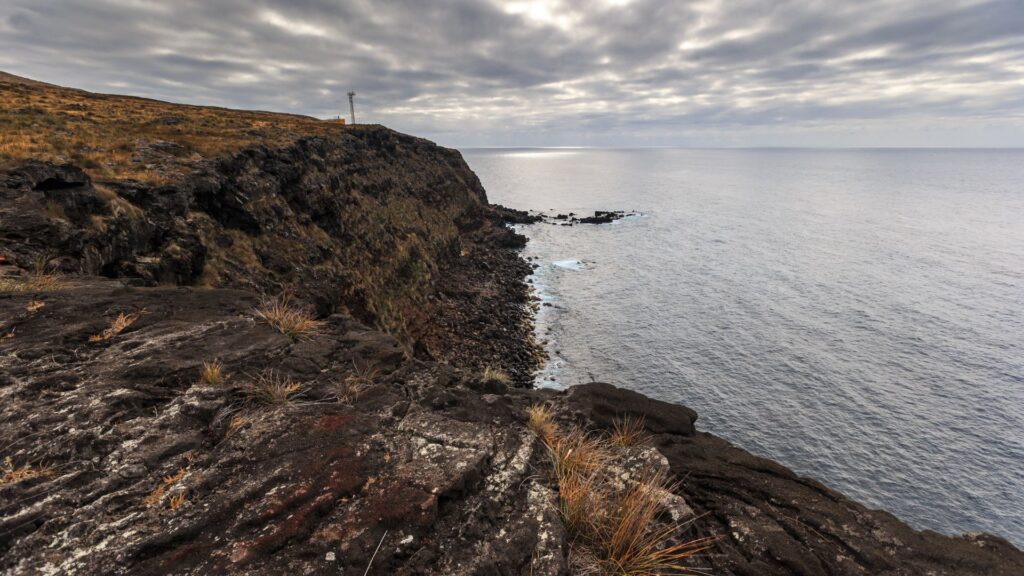
Nothing about Amsterdam Island was hospitable. The climate was persistently cool and damp, resources were scarce, and the terrain was unforgiving. By conventional biology, five cattle with a shallow gene pool had almost no path to survival. A small founding group typically collapses from inbreeding alone. Yet, aside from a brief disease-related population dip, the herd grew rapidly over more than a century.
Their Ancestry Was the Secret Weapon

A study published in Molecular Biology and Evolution analyzed DNA from 18 preserved Amsterdam Island cattle and traced their genetic roots. About 75 percent of their ancestry came from European taurine cattle related to today’s Jersey breed, and roughly 25 percent from hardy Indian Ocean Zebu. Jersey Island’s climate closely mirrors Amsterdam Island’s, so these animals were already equipped for what awaited them.
A Genetic Bottleneck That Should Have Ended Everything

The DNA analysis confirmed the island’s founding legend. Genetic data showed a sharp population bottleneck approximately 22 generations back, aligning precisely with 1871. Normally, that kind of squeeze is an evolutionary dead end. But researcher Laurence Flori of France’s National Research Institute for Agriculture, Food and Environment told Discover that “mutations already present in the genome of these founding animals played a role in the Amsterdam Island cattle population’s rapid adaptation to life in the wild within a few generations.”
The Herd Stopped Acting Like Cattle

The Amsterdam Island herd didn’t stay domesticated for long. Observers recorded social structures typical of wild bovids rather than farm animals. Females and young males formed stable groups, while adult males gathered separately, with mixed herds appearing only during the breeding season. Their temperaments also shifted noticeably, with the animals becoming more aggressive than domestic cattle. Coat colors diversified, another trait commonly seen in feral mammals but rarely documented in cattle.
Evolution May Have Rewired Their Nervous Systems

The behavioral changes went deeper than survival instinct alone. The genomic study found some of the strongest signals of recent natural selection in genes tied to the nervous system and behavior, suggesting that temperament and stress response were actively shaped by survival pressure. In other words, natural selection wasn’t just favoring physical toughness. Over generations, it was shaping a different kind of animal altogether, one wired for survival in a world without human presence.
Did the Island Shrink Them? Researchers Disagree

One longstanding debate concerns the cattle’s body size. A 2017 Scientific Reports paper argued the Amsterdam Island cattle shrank to roughly three-quarters of their normal size, citing the “island rule,” the tendency for large mammals in isolated environments to evolve smaller bodies over time. Flori’s team pushes back, suggesting their modest stature was likely inherited from the original breeds rather than driven by genetic selection toward dwarfism.
The Herd Became an Ecological Crisis

The herd reached around 2,000 animals twice, once in the 1950s and again in the 1980s, and by then the damage was undeniable. Grazing and trampling destroyed native plant life and threatened the endangered Amsterdam albatross, a species found nowhere else on Earth. Conservation authorities eventually fenced sections of the island and made the controversial decision to cull the entire herd. By 2010, the cattle were gone, and the island’s native ecosystem had a chance to recover.
A Scientific Opportunity Lost Forever

Ecologically, the culling made sense. For science, it was an irreversible loss. The eradication was carried out without systematic biological sampling, meaning a rare, real-world experiment in mammalian feralization was erased before it could be fully studied. Flori described the Amsterdam cattle to Discover as “a very interesting genetic resource for studying this complex process,” referring to how domestic animals revert to wild behaviors across generations. That resource no longer exists.
Five Cows, One Island, and What It Reveals About Life’s Persistence

Few abandoned animals have left a mark on biology quite like the Amsterdam Island cattle. Five abandoned animals, the right genetic ancestry, and more than a century of isolation produced a population that rewrote its own nature. The case continues to inform how scientists think about invasive species survival and the so-called genetic paradox, the puzzle of how small founding groups sometimes beat the odds entirely.
PetsFanatic Team
Pet Care Expert & Content Creator
Passionate about sharing knowledge and tips for better pet care. Writing about everything from pet health to training techniques.