
Experts Reveal Why Viral Baby Monkey Punch Was Abandoned and Targeted by Other Monkeys
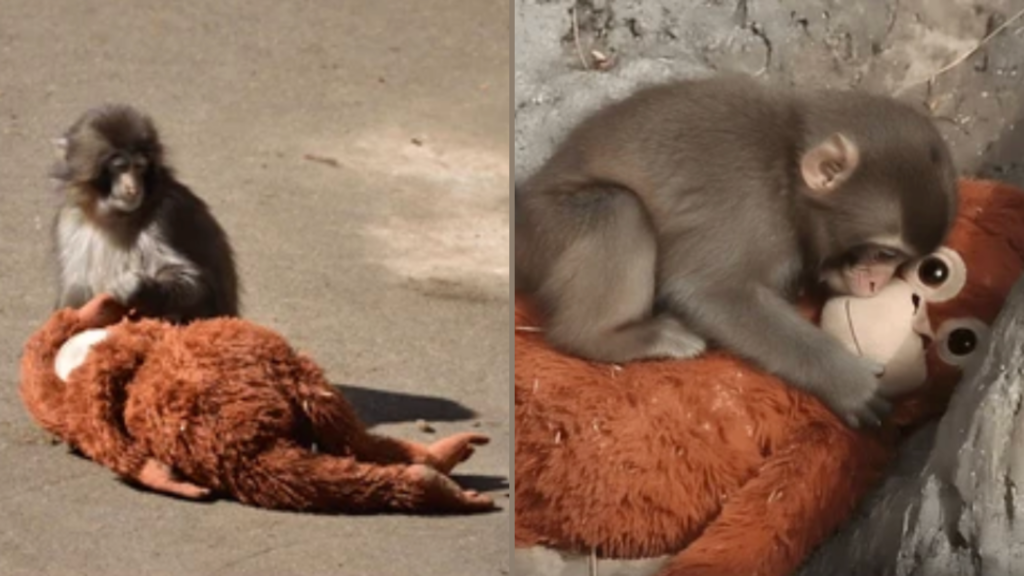
A tiny Japanese macaque named Punch became a global sensation after clinging to a stuffed orangutan for comfort. The heart-wrenching footage from Ichikawa City Zoo shows the infant treating the toy as a surrogate parent. However, the viral fame masks a complex biological struggle that began the moment he was born.
Punch’s mother abandoned him shortly after his birth in July, leaving the infant to navigate a high-stakes social hierarchy alone. Zookeepers intervened by providing soft materials, but Punch consistently chose the primate-like plush. This behavior echoes famous 1950s psychological studies where infant monkeys chose soft cloth “mothers” over wire ones for security.
While the images of a baby monkey hugging a toy are undeniably cute, they reveal a deeper crisis in primate welfare. Experts are now weighing in on whether Punch can ever truly integrate into his troop. The answer lies in the brutal, yet natural, social laws of the macaque world.
Heatwaves Can Be One Such Example

Primatologist Zanna Clay explains that maternal rejection often stems from extreme environmental stress. Punch was born during an intense heatwave, which can deplete a first-time mother’s physical resources. When a mother lacks the energy to provide, she may instinctively prioritize her own survival over the needs of her offspring.
Beyond the weather, parenting is a skill that must be learned through observation. Jessica Mayhew notes that in captive environments, first-time mothers often lack the “social roadmap” provided by experienced elders. Because Japanese macaques live in strict matrilineal hierarchies, a mother’s low social rank can also make raising an infant feel like an impossible task.
The stuffed toy provides a physical anchor for Punch’s natural instincts. Baby macaques must cling to their mothers to build muscle strength and emotional security. Without the plush, Punch would have lacked the sensory input required for early development. While the toy offers comfort, it cannot teach him the nuances of monkey “language.”
This Shouldn’t Be Seen as Bullying

Recent videos showing Punch being chased or dragged by older monkeys have sparked outrage among his millions of online fans. Viewers often label this behavior as bullying, but experts clarify it is standard macaque discipline. In their society, dominant families use aggression to remind lower-ranking individuals of their place in the social order.
Alison Behie points out that even with a mother, Punch would have faced these rough interactions. The difference is that he currently lacks a protector to intervene when things get too intense. High-ranking females seize the opportunity to assert dominance over the vulnerable infant, while others in the troop may occasionally show nurturing traits.
This lack of a real partner affects his grooming habits, which function as “social glue” for the species. Punch is often seen grooming his toy, but the plush cannot reciprocate. This one-sided relationship could potentially slow his social development, as grooming is how macaques reduce stress and repair bonds after a conflict.
Monkeys Belong With Other Monkeys

Despite his rocky start, zookeeper Kosuke Shikano describes Punch as “mentally strong” and resilient. He quickly bounces back after confrontations with older macaques, showing signs that he may still successfully integrate. Experts suggest that a “foster” troop mate might eventually adopt him, which would drastically improve his long-term social prospects.
However, conservation psychologist Carla Litchfield warns that Punch’s viral fame has a dark side. There is a risk that his “cuteness” could fuel the illegal exotic pet trade. People often forget that monkeys grow up quickly. In four years, Punch will be a powerful adult, and his needs will far exceed what any human home can provide.
Punch’s story is a reminder of how climate change and habitat loss impact animal welfare even within zoo walls. His journey from a rejected infant to a resilient survivor continues to fascinate the world. For now, he remains a symbol of survival, still clutching the toy that saved him during his darkest hours.
PetsFanatic Team
Pet Care Expert & Content Creator
Passionate about sharing knowledge and tips for better pet care. Writing about everything from pet health to training techniques.