
Experts are Still Puzzled by a Mysterious Mountain in Peru that Has the Perfect Shape of a Pyramid
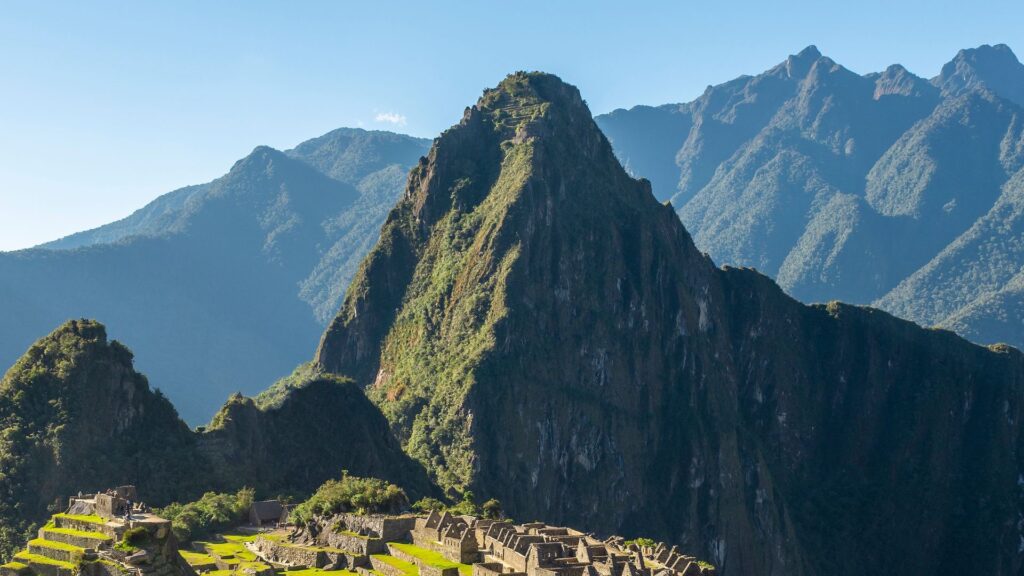
Deep within the Peruvian Amazon, a singular geological formation interrupts the otherwise uniform horizon. Known as Cerro El Cono, this steep-sided mountain reaches approximately 1,300 feet in height and stands alone in a vast, flat landscape, immediately drawing attention for its near-perfect pyramid shape.
Its striking silhouette can be seen from miles away, even from parts of the Andes on clear days. Unlike the surrounding terrain of the Sierra del Divisor, Cerro El Cono appears isolated and sharply defined, a visual contrast that has intrigued scientists and explorers alike for decades.
Despite ongoing research, its origin remains uncertain. Some experts suggest it may be an ancient volcanic remnant, while others view it as an unusual product of long-term geological processes. Each explanation offers clues, yet none fully accounts for its symmetry and solitary presence.
A Sacred Mountain in Living Tradition

Beyond scientific debate, Cerro El Cono holds profound meaning for local Indigenous communities. In Andean cosmology, the mountain is regarded as an Apu, a sacred and protective spirit believed to watch over the land and its people.
Apus are more than symbolic landmarks, they are living entities within Andean belief systems. They represent strength, balance, and guidance, and are often central figures in rituals that seek harmony between human life and the natural world.
This spiritual connection has endured for generations, reinforcing cultural identity and a deep respect for the surrounding environment. For these communities, Cerro El Cono is not a mystery to be solved, but a presence to be honored.
Between Myth, Archaeology, and Unanswered Questions

Adding to the intrigue is a hypothesis that occasionally resurfaces, the idea that Cerro El Cono could be an ancient human-made structure. While this theory lacks physical evidence, it continues to circulate in local media and popular discussion, fueled by the mountain’s geometric appearance.
Reports such as those published by La República have amplified speculation, blending archaeology, mythology, and curiosity. So far, no excavations or findings support the existence of a constructed monument, yet the absence of proof has not diminished public fascination.
This intersection of science and storytelling reflects a broader human tendency to search for meaning in unusual natural forms. Cerro El Cono remains a reminder of how much of the Amazon, both culturally and geologically, is still not fully understood.
A Fragile Ecosystem Under Growing Pressure

Cerro El Cono lies near the Ucayali River, within the Sierra del Divisor, one of the most biodiverse regions in South America. Its remote location and varied landscapes have allowed rare and vulnerable species to thrive, including apex predators and little-studied mammals.
In recognition of its ecological value, the Peruvian government established Sierra del Divisor National Park in 2015. This designation marked an important step toward conservation, aiming to protect both wildlife and Indigenous territories.
However, threats persist. Illegal deforestation, poaching, and resource extraction continue to put pressure on the region. Preserving Cerro El Cono and its surroundings now depends on sustained conservation efforts, stronger enforcement, and a shared understanding that natural heritage and cultural legacy are deeply interconnected.
PetsFanatic Team
Pet Care Expert & Content Creator
Passionate about sharing knowledge and tips for better pet care. Writing about everything from pet health to training techniques.