
Divers Found Cannons in Ocean, 15 Years Later They Learned They Belonged to Blackbeard
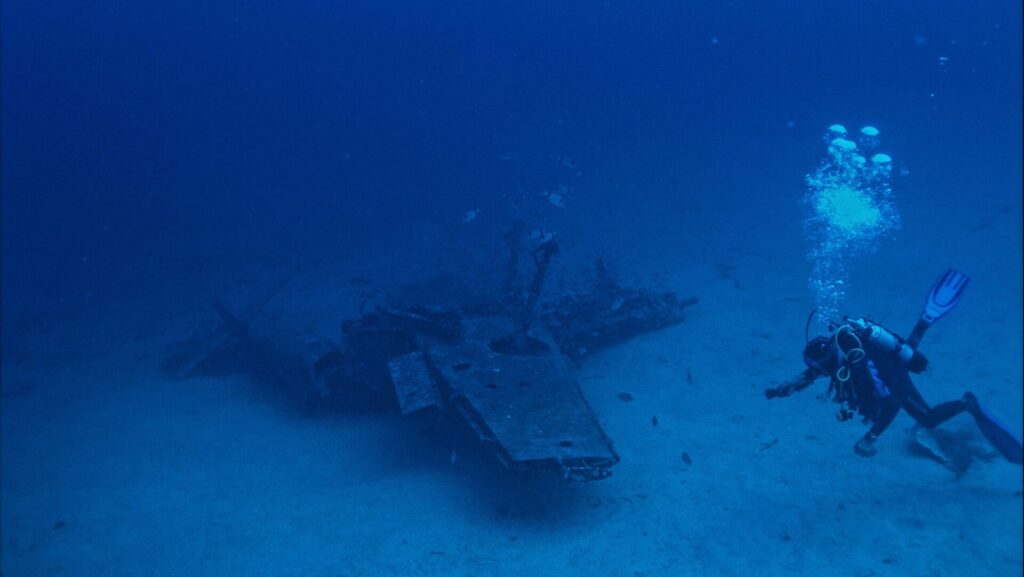
In 1996, a team of divers made an unexpected discovery just off the coast of North Carolina. Resting in only 20 feet of water were a dozen heavy cannons, partially buried beneath sand and sediment. At first glance, the find seemed improbable given the shallow depth and proximity to shore. The divers immediately suspected the cannons were part of a long-lost shipwreck. What they could not yet prove was whose ship it had been.
A Hunch That Refused to Fade

From the beginning, the divers believed the cannons were not random debris. Their placement suggested deliberate positioning rather than accidental dumping. Marine archaeologists noted that such weaponry was consistent with early 18th-century ships. The team carefully documented the site while avoiding disturbance of the surrounding area. Their theory would take years of research and excavation to confirm.
A Clue Cast in Bronze

Among the artifacts recovered was a bronze ship’s bell dated 1709. This single object provided a crucial chronological anchor for the site. The bell’s age aligned with the height of Atlantic piracy during the early 1700s. Combined with the cannons, it suggested the wreck belonged to a heavily armed vessel. Slowly, speculation began to center on one notorious name.
The Shadow of Blackbeard

Historians soon began linking the wreck to Edward Teach, better known as Blackbeard. Teach was infamous for commanding the Queen Anne’s Revenge, a 103-foot ship armed with roughly 40 cannons. His reputation for brutality and theatrical intimidation made him one of the most feared pirates of his time. Blackbeard’s career ended in 1718 when he was killed by British forces off the North Carolina coast. The location of the wreck matched historical accounts of where his ship ran aground.
A Pirate Built on Myth and Fear

Blackbeard was as much a performer as he was a pirate. Accounts describe him lighting cannon fuses and tucking them into his beard to create a smoke-shrouded, demonic appearance. This cultivated image often frightened victims into surrender without a fight. While some stories exaggerate his cruelty, historians agree he was an effective psychological tactician. These legends helped cement his place in both history and popular culture.
Excavation on an Unprecedented Scale

Following the discovery, excavation efforts expanded significantly. Former North Carolina Governor Jim Hunt announced that up to 30 cannons had been identified at the site. Over time, more than 300,000 artifacts were documented, ranging from weapons to personal items. The scale of the find far exceeded initial expectations. It quickly became one of the most significant maritime archaeological projects in U.S. history.
Years of Careful Confirmation

Despite growing confidence, scientists avoided making premature claims. Between 2006 and 2007, further excavation revealed more structural components of the wreck. By the end of 2007, roughly one-third of the ship had been fully excavated. In 2011, National Geographic officially confirmed the wreck as the Queen Anne’s Revenge. Researchers emphasized that the conclusion was based on accumulated evidence rather than a single defining moment.
Weapons That Told the Story

One of the strongest indicators linking the wreck to Blackbeard was its sheer firepower. Many of the cannons found were still loaded, an unusual and dangerous detail. The number and size of weapons exceeded what was typical for merchant ships of the era. Experts concluded the vessel had been designed for intimidation and combat. This arsenal matched historical descriptions of Blackbeard’s flagship.
A Ship That Still Rests Below

Today, the remains of Queen Anne’s Revenge still lie beneath the Atlantic. Preservation efforts prioritize leaving much of the ship undisturbed to protect its historical integrity. Salvaged artifacts have been carefully conserved rather than removed indiscriminately. Archaeologists continue to study the site using non-invasive techniques. The wreck remains a submerged time capsule of piracy’s golden age.
From Seafloor to Museum

Many recovered artifacts now reside at the North Carolina Maritime Museum in Beaufort. There, cannons, tools, and personal effects offer tangible connections to a legendary pirate past. These items help separate myth from historical reality. What began as a curious underwater find has become a cornerstone of maritime history. Fifteen years after discovery, the divers’ original hunch was finally proven right.
PetsFanatic Team
Pet Care Expert & Content Creator
Passionate about sharing knowledge and tips for better pet care. Writing about everything from pet health to training techniques.