
Discovery of ‘Dinosaur From Hell’ Skull Could Change the Way We See Prehistoric Predators
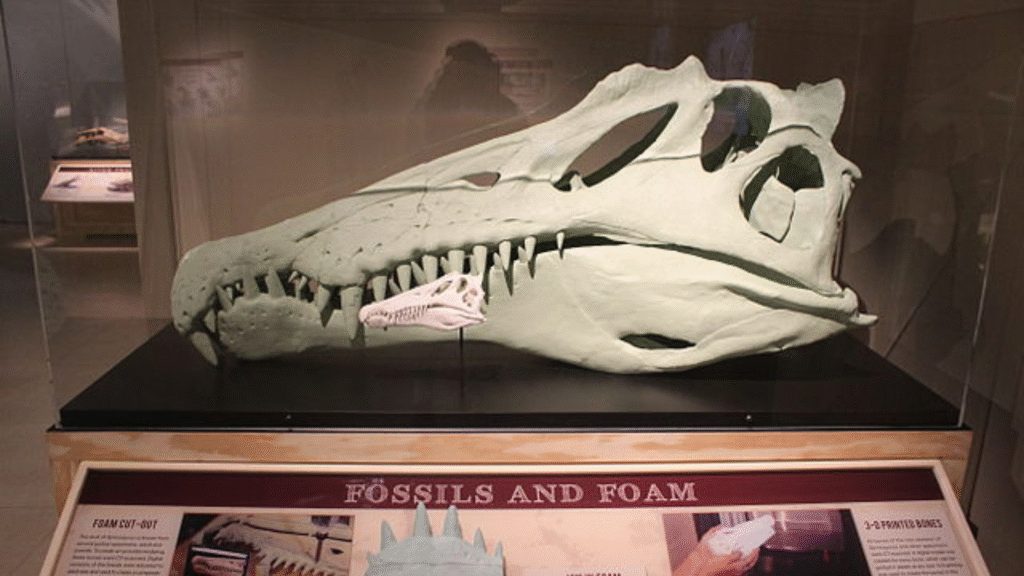
Paleontologists have uncovered the skull of an extraordinary new dinosaur species nicknamed the “dinosaur from hell,” a massive predator now named Spinosaurus mirabilis that lived around 95 million years ago during the mid-Cretaceous period and that challenges long-held assumptions about how these fearsome theropods lived and hunted. This remarkable fossil was unearthed in the Sahara Desert of Niger, far inland from ancient oceans, and was assembled from fragments discovered over multiple expeditions, revealing features unlike those seen in other spinosaurid dinosaurs. The discovery is expected to reshape scientific understanding of spinosaur behavior, anatomy and habitat, offering fresh insight into an iconic group of prehistoric predators and how they adapted to their environments.
A Predator With a Sword-Like Crest

One of the most striking features of the new species is a massive blade-like crest perched atop its skull that curves upward in a way that startled researchers when they first saw it in digital reconstruction, a crest that may have been covered in keratin and brightly colored in life, serving display or social functions rather than hunting tools. Paleontologist Paul Sereno of the University of Chicago and his team described the crest as resembling a scimitar and noted that its unusual shape and structure distinguish this species from other known spinosaurids once thought to be strictly aquatic.
Inside the Sahara Discovery

The fossils were originally noticed in 2019 by a local Tuareg guide and later fully excavated by a research team that returned in 2022 to carefully collect additional bones, revealing a more complete skull and other elements of the skeleton buried in sandstone formed by ancient rivers. The inland location of the find, hundreds of miles from any ancient shoreline, contradicts earlier assumptions that spinosaurids like this one were primarily ocean swimmers and suggests instead that they may have lived in riverine forest environments, hunting fish and other prey along waterways.
A Predator Rewriting the Spinosaur Story

Before this discovery, most spinosaur fossils had been linked to coastal deposits, reinforcing the idea that these animals were highly aquatic predators, perhaps much like crocodiles that dove for fish. The new fossil, however, clearly shows adaptations consistent with wading and hunting in shallow river channels rather than deep swimming, causing scientists to rethink how the lineage evolved and how different spinosaur species might have occupied varied ecological niches across ancient landscapes.
Remarkable Teeth and Feeding Adaptations

Spinosaurus mirabilis’s skull reveals interdigitating upper and lower teeth that form an effective trap for slippery prey such as large fish, a specialization seen in other aquatic animals like ichthyosaurs and crocodilians but rare in dinosaurs. This dental arrangement, where lower teeth extend outward between the upper set, would have helped secure struggling prey and likely made this species a formidable piscivore, showcasing a unique evolutionary strategy among theropods that hunted mostly in freshwater settings.
Rethinking Spinosaur Habitats

The inland nature of the discovery site challenges previous interpretations that spinosaurids were consistently tied to coastal or deep-water environments, supporting the idea that these dinosaurs were more ecologically flexible than thought, able to flourish in freshwater and forested river systems that offered abundant food sources. This revelation broadens scientists’ view of how some prehistoric predators adapted over time to diverse ecosystems and will likely prompt revised models of spinosaur distribution and behavior during the Cretaceous.
The Emotional Moment of Discovery

According to researchers, the moment when the team first assembled the digital skull model in their Saharan camp was especially emotional, with scientists crowded around a laptop in the desert as the skull’s distinctive features came into focus, revealing just how unusual and significant this specimen truly was. The intense excitement reflects both the rarity of such well-preserved spinosaur fossils and how much the new species has to teach researchers about dinosaur anatomy and evolution in the African mid-Cretaceous.
How This Could Change Prehistoric Predator Science

The discovery of Spinosaurus mirabilis and its unusual skull will likely influence future research on dinosaur physiology, behavior and ecology, particularly in how paleontologists reconstruct feeding strategies, display structures and habitat preferences in spinosaurids and other large theropods. By expanding knowledge of how these dinosaurs lived and interacted with their environment, scientists hope to piece together broader patterns of predator diversity and adaptation leading up to the end-Cretaceous mass extinction.
Broader Implications for Dinosaur Evolution

Beyond its own distinct features, the new species contributes to a growing understanding that dinosaurs were far more varied and adaptable than once assumed, with distinct subgroups evolving specialized physical traits that helped them thrive in specific ecological roles, demonstrating once again that the prehistoric world was a dynamic place shaped by competition, environmental change and evolutionary innovation.
Discovery of the ‘Dinosaur from Hell’

In conclusion, the discovery of the ‘dinosaur from hell’ skull of Spinosaurus mirabilis in the Sahara Desert marks a major milestone in paleontology, revealing an inland river-dwelling predator with a blade-like crest and unique dental features that challenge long-established beliefs about spinosaur lifestyles and behavior, offering scientists a rare opportunity to rethink how these extraordinary creatures lived, hunted and adapted millions of years ago in the Cretaceous period.
PetsFanatic Team
Pet Care Expert & Content Creator
Passionate about sharing knowledge and tips for better pet care. Writing about everything from pet health to training techniques.