
Cremations Uncovered in Scotland Point to a Mysterious Catastrophic Event

Archaeologists have uncovered five urns containing the cremated remains of at least eight people buried 3,300 years ago in southwest Scotland. The discovery at Twentyshilling Hill near Twentyshilling Hill Wind Farm stands out because the urns were tightly arranged and buried collectively, then remained undisturbed except for modern plough damage. Organic materials, including charcoal, enabled the team to radiocarbon-date the burial to approximately 1439 to 1287 B.C., placing it firmly in the Bronze Age.
The Urns Sat in a Burial Mound Encircled by Stones
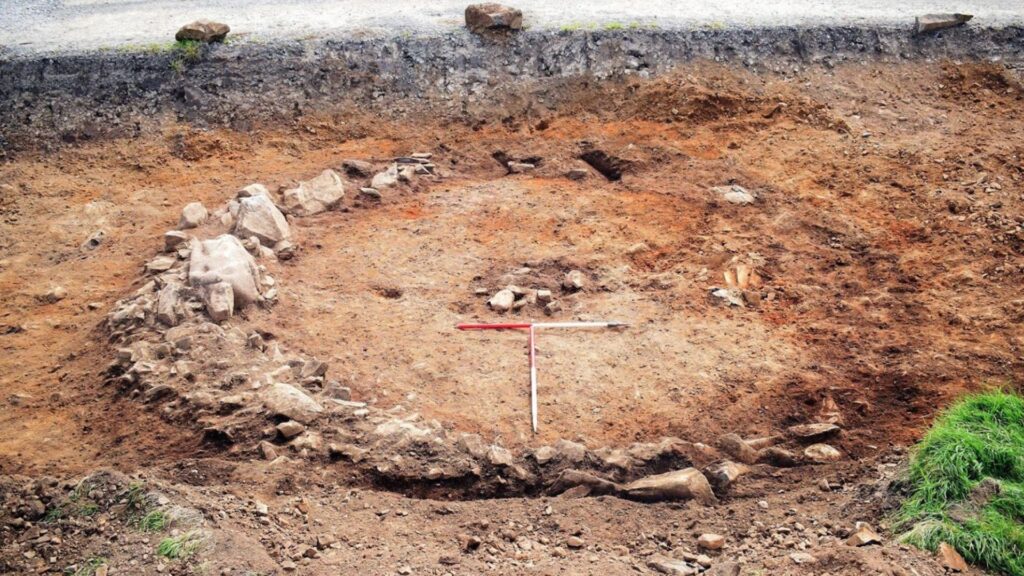
The remains were discovered in a barrow, a burial mound constructed from earth and rocks. The five urns sat in the center of the barrow within a 3-foot-wide burial pit, surrounded by a ring of rocks. Excavations were conducted in 2020 and 2021 by a team from Guard Archaeology, a company that undertakes archaeological excavations during or before construction. The work took place while an access road to the wind farm was being built.
Three Urns Each Hold an Adult and a Juvenile

The distribution of remains follows a specific pattern. Three of the urns each contain the remains of an adult and a juvenile, totaling three juveniles and three adults. The other two urns each hold only one adult. This arrangement of eight individuals across five vessels suggests careful organization during the burial process. The tight packing of the urns in one mass burial event distinguishes the Twentyshilling Barrow from other Bronze Age burial sites discovered throughout Scotland.
Most Bronze Age Burials in Scotland Were Reused Over Time
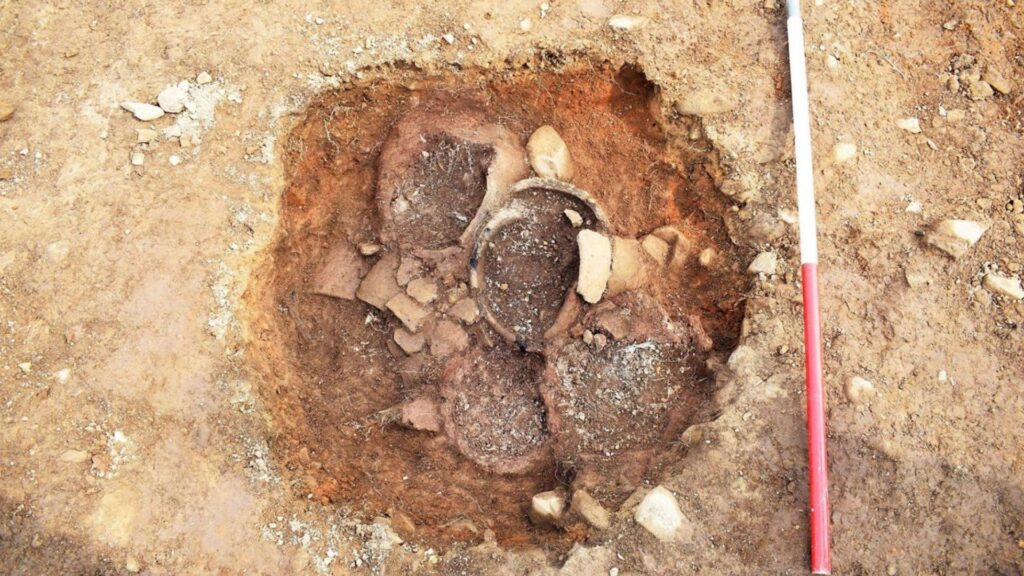
According to the study published in Archaeology Reports Online, this finding is unusual because many Bronze Age burial spots in Scotland were reused over the years. The Twentyshilling Hill site, however, shows no evidence of reuse. The urns were buried collectively in what appears to be a single event. The researchers noted that the discovery of five urns tightly packed together in one mass burial event is very rare and distinguishes this barrow from others in Scotland.
The Eight People Likely Died During a Catastrophic Event
The team suspects these individuals likely died around the same time during a terrible event. It’s unclear what that event was, but it could have been a famine, disease, or war, Ronan Toolis, CEO of Guard Archaeology, told Live Science. The team suspects the individuals died around the same time because the urns appear to have been made by the same craftsperson, Toolis said. This consistency suggests the vessels were created specifically for this mass burial rather than collected over time.
The Bodies Were Cremated While They Still Had Flesh

The cremation process reveals another unusual detail. During that time, it was common for deceased people in this region to be left out long enough for their flesh to decompose before they were cremated. In this instance, however, the team found that the individuals still had some of their flesh when the cremation was done, which indicates that they had to be cremated in a hurry, the team noted. This supports the theory of a sudden event requiring immediate burial.
The Buried Individuals Were Likely Farmers

These people would have been farmers, Toolis noted. They likely lived near the burial spot, though their settlement has not been found. The agricultural lifestyle was common in this region during the period from 1439 to 1287 B.C., when these individuals lived and died. Finding the settlement could provide crucial context about their daily lives, social structure, and what catastrophic event might have claimed all eight lives at once.
Few Archaeological Remains Have Been Found in This Part of Scotland

The area sits in a part of Scotland where few such archaeological remains have been discovered so far, according to Toolis. This makes the find particularly significant for understanding Bronze Age life in southwest Scotland. The region’s archaeological record remains relatively sparse compared to other parts of the country, leaving many questions about the people who inhabited these lands thousands of years ago. The barrow’s discovery opens new possibilities for research in this understudied area.
Modern Plough Damage Affected the Site But Didn’t Destroy It

Despite remaining undisturbed for over three millennia, the burial site did suffer some modern agricultural damage. The researchers noted that ploughing broke some of the urns, scattering fragments that archaeologists had to carefully piece together. However, the damage wasn’t extensive enough to destroy the site’s archaeological value. The central arrangement of the urns and the surrounding rock ring remained largely intact, allowing researchers to reconstruct the original burial configuration and extract the cremated remains for analysis.
Future Research May Reveal the Barrow’s Full Context

Future research may reveal much more about the context of this barrow, Toolis said. The discovery raises numerous questions about Bronze Age Scotland that remain unanswered. What catastrophic event killed these eight people at the same time? Where was their settlement? As archaeological work continues in this previously understudied region, the Twentyshilling Barrow may prove to be just the beginning of new insights into Scotland’s ancient past.
PetsFanatic Team
Pet Care Expert & Content Creator
Passionate about sharing knowledge and tips for better pet care. Writing about everything from pet health to training techniques.