
Coyotes Are Here to Stay. Scientists Say It’s Time to Learn How to Live Alongside Them

They’ve quietly made themselves at home in America’s cities, suburbs, and parks, and scientists say the challenge is no longer how to get rid of them. It is how to live alongside them safely. Once associated mainly with open country, coyotes have become remarkably successful urban residents, and researchers say their presence is not a passing trend. The question now is how communities can reduce conflict while sharing space with one of North America’s most adaptable predators.
Cities Have Become Coyote Territory

Coyotes now live in 49 U.S. states and have expanded their range across much of North America. For more than two decades, researchers with the Urban Coyote Research Project in the Chicago area have tracked over 1,450 coyotes, discovering that many spend their lives surprisingly close to people without being noticed. According to wildlife ecologist Stanley Gehrt, most urban coyotes actively avoid humans and have become experts at moving through neighborhoods while remaining largely unseen.
Stanley Park Became a Wake-Up Call

Scientists point to Vancouver’s Stanley Park as an important case study for understanding what happens when coexistence breaks down. Between December 2020 and August 2021, the park experienced 45 coyote attacks involving bites or scratches and another 63 aggressive encounters, an unprecedented spike that ultimately led to the removal of 11 coyotes. Researchers say the goal was not simply to explain what happened in one park, but to identify warning signs that could help other communities avoid similar situations.
Feeding Wildlife Can Change Their Behavior
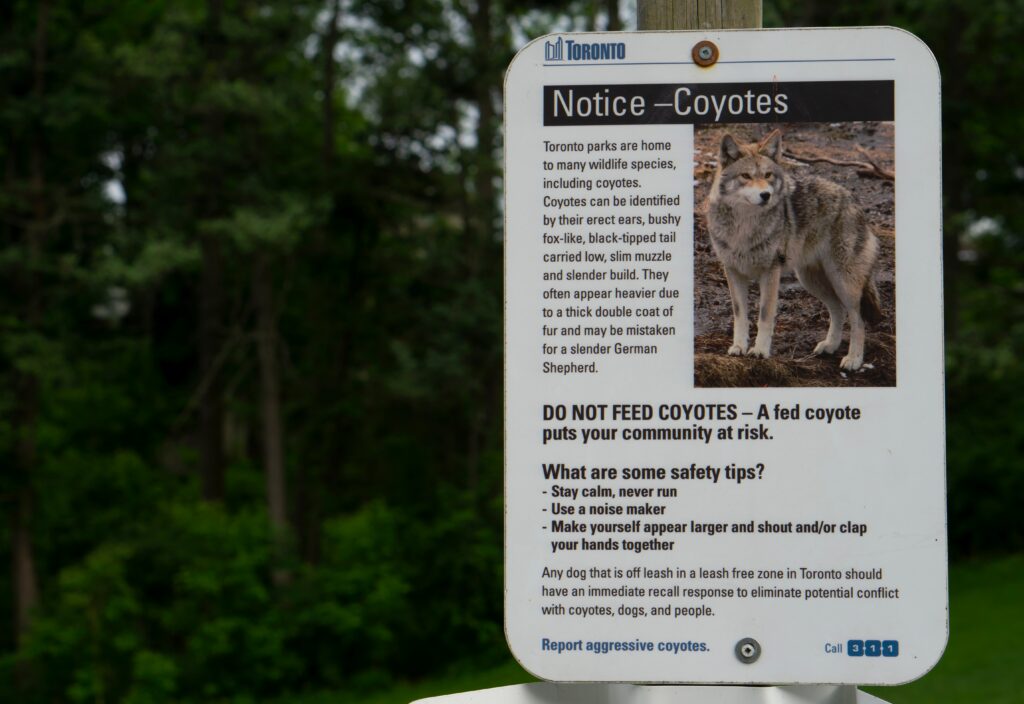
One of the clearest lessons from the Stanley Park research is that feeding coyotes, intentionally or accidentally, can have lasting consequences. Researchers found evidence that repeated exposure to people and food sources likely caused some coyotes to lose their natural fear of humans, a process known as habituation. Once animals begin associating people with food, they may become bolder and more likely to approach or challenge humans. That’s why experts urge people never to feed coyotes and to secure garbage, compost, pet food, and other attractants.
Certain Situations Increase the Risk of Encounters

The research also identified patterns in when aggressive encounters were more likely to occur. Attacks tended to happen closer to coyote dens, along trails with heavier foot traffic, and during quieter times of day when fewer people were around. People who were running alone appeared to face a slightly higher risk than walkers or groups. Researchers believe these situations may trigger defensive or predatory responses in some coyotes, particularly during pup-rearing season.
Most Coyotes Aren’t Looking for Trouble

The stories that make headlines usually involve conflict, but they aren’t what most people experience. A 2021 study in the Journal of Urban Ecology analyzed nearly 400 first-hand reports of human-coyote encounters and found that about 90% were described as calm, with the animals simply watching from a distance or moving on. The same pattern shows up in countless community reports. On Reddit, hikers and neighborhood residents often describe coyotes quietly observing them from trails or slipping into nearby brush the moment they notice they’ve been seen. One person wrote about encountering the same suburban coyotes during regular walks, noting that although they watched from a distance, “When they spotted me, they booked it,” adding that they loved seeing the animals while respecting “their place in our suburban/urban ecosystem.”
Coyotes Play an Important Role in Cities

Living alongside coyotes also brings ecological benefits. They help control rodent populations, prey on young deer in some regions, and contribute to healthier urban ecosystems. Researchers note that removing coyotes does not necessarily solve long-term conflicts because the animals reproduce efficiently and vacant territories are often filled by newcomers. In many cases, maintaining stable coyote populations while reducing opportunities for conflict produces better outcomes than repeated removals.
Pets Need Some Extra Protection

Pet owners can also reduce the chances of negative encounters with a few simple precautions. Stanley Park Ecology advises keeping cats indoors because free-roaming cats face many outdoor dangers, including coyotes. Dogs should remain on a leash, especially in natural areas, and owners are encouraged to walk during daylight in busier locations while avoiding dense vegetation. Experts note that pets account for less than 2% of an urban coyote’s diet, but smaller animals can still be vulnerable in certain situations.
Coyotes May Be More Complex Than People Think

Recent studies are also changing how scientists view coyotes themselves. Research has shown that they form lifelong pair bonds and display behaviors resembling grief after losing a mate, including prolonged howling, reduced appetite, and returning to places associated with their partner. Scientists hope understanding these social bonds will not only improve wildlife conservation but may even provide insights into how grief affects the human brain.
Coexistence Starts With Understanding

Researchers say the future of urban wildlife management will depend less on removing coyotes and more on changing human behavior. Avoiding wildlife feeding, respecting denning areas, keeping pets under control, and giving coyotes space can dramatically reduce the chances of conflict while allowing these highly adaptable animals to continue playing their role in city ecosystems. As coyotes continue expanding into urban landscapes, learning to live alongside them may become an increasingly important part of everyday life.
PetsFanatic Team
Pet Care Expert & Content Creator
Passionate about sharing knowledge and tips for better pet care. Writing about everything from pet health to training techniques.