
Conservation Experts Promote Eating Invasive Species to Combat Ecological Crisis Across the US

A growing movement called invasivorism is taking a different approach to dealing with invasive species: putting them on the menu. The National Wildlife Federation says the idea is to help restore ecological balance by eating the plants and animals that don’t belong. A 2023 United Nations Environment Programme report estimates that invasive species cost the global economy as much as $423 billion annually in crop losses, habitat destruction, and native species extirpation. Chefs, scientists, and local communities are testing whether creating demand for these species as food can help subsidize their removal.
Lionfish Spread From Florida to North Carolina in Four Decades

Lionfish, native to the Indo-Pacific, were first spotted off Dania Beach, Florida, in 1985, likely escapees from the aquarium trade. Since then, the fish with candy-striped spines have spread through the Caribbean, the Gulf of Mexico, and as far north as North Carolina, with scientists suspecting their range will continue expanding. Alex Fogg, natural resources chief for Destin–Fort Walton Beach in Florida, began studying lionfish 14 years ago. He believes Florida now has densities higher than anywhere outside their native range, based on his extensive diving and research in the region.
Female Lionfish Release 50,000 Eggs Every Three Days

Lionfish populations explode rapidly because females reproduce year-round, releasing 50,000 eggs every three days. The fish feed voraciously on adults of small species and juveniles of larger fish, while their venomous spines deter most predators. In a study published in PLOS One, researchers examining reefs off the Bahamas found that an increase in lionfish numbers led to a 65 percent decline in biomass of 42 native fish species in just two years. This combination of rapid reproduction, aggressive feeding, and lack of natural predators makes them particularly destructive.
Florida Launched Lionfish Restaurant Week in 2019 to Create Year-Round Demand

The nonprofit REEF began hosting lionfish fishing tournaments in the Florida Keys in 2010, awarding cash prizes to reduce populations. Recognizing the need for sustained effort beyond tournaments, Fogg and the Emerald Coast Open, the world’s largest lionfish tournament, partnered with local chefs to launch Lionfish Restaurant Week in Destin–Fort Walton Beach in 2019. Nine restaurants participated in 2025. For the first event, Fogg offered restaurants 20 to 30 pounds of filleted lionfish at no cost and suggested pricing it like grouper, which commands premium prices. The restaurants sold out every night.
Invasive Species Linked to 60 Percent of All Recorded Extinctions

A 2023 United Nations Environment Programme report found that invasive plants and animals are linked to 60 percent of all recorded species extinctions worldwide. These nonnative species that become invasive share common traits: they adapt easily to new environments, resist predation, reproduce or spread quickly, and tolerate temperature or habitat changes better than native species. Manual removal and chemical controls have traditionally been used to manage invasive populations, but these labor-intensive approaches are expensive. Advocates like Fogg argue that turning problem species into sought-after food can help offset eradication costs.
More Than 20 Invasive Species Now Appear on Restaurant Menus
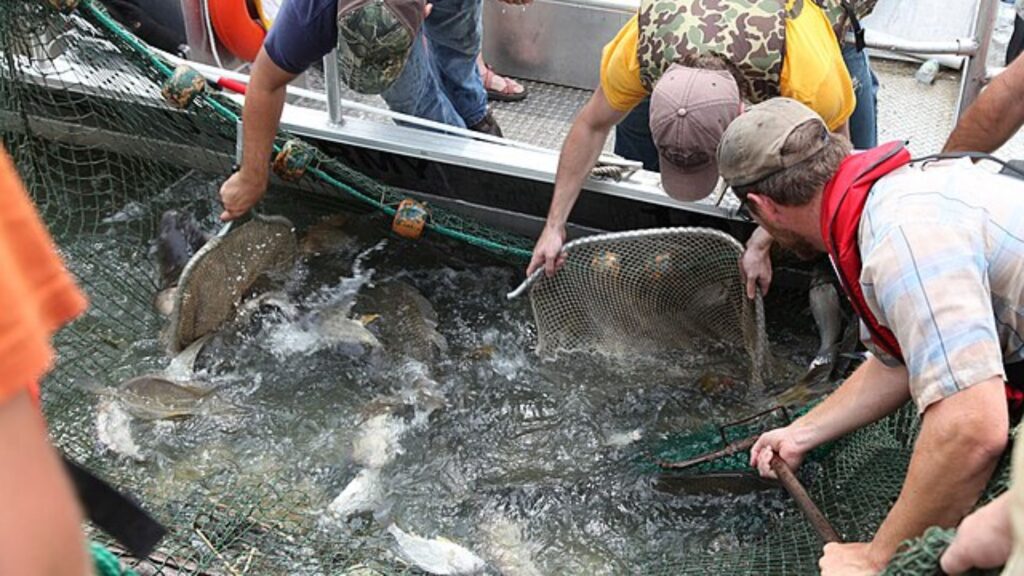
Joe Roman, a University of Vermont conservation biologist who founded and edits the Eat the Invaders website, lists more than 20 edible invasive plant and animal species. The roster includes kudzu, garlic mustard, lionfish, European green crab, Asian carp, periwinkle snail, and feral pig. “This is not Fear Factor,” Roman told National Wildlife magazine. “You want something tasty.” In the Great Lakes region, Asian carp has been smoked and rebranded as “copi,” appearing on restaurant menus as fish and chips or sushi to overcome negative associations with the word “carp.”
European Green Crabs Devour Juvenile Lobsters and Uproot Storm Buffers

European green crabs were first recorded off southern Massachusetts in 1817, likely arriving as stowaways on ships crossing the Atlantic Ocean. The small crustaceans, roughly half the size of prized native blue crabs, now wreak havoc across New England by devouring bivalves and crustaceans, including juvenile lobsters. They also uproot native plants such as Spartina and eelgrass, destroying fish nurseries and weakening natural storm buffers. Roman, who has worked to popularize the consumption of green crabs, says their small size has limited menu appearances to a handful of gourmet restaurants.
More Than 6 Million Feral Pigs Roam at Least 35 States

Feral pigs rank among the country’s most destructive invasive animals. The animals are either escaped domestic pigs, descendants of wild boars brought by Spanish explorers in the 1500s, or hybrids of both. More than 6 million feral pigs now roam at least 35 states, primarily across the South, and their range continues expanding. The federal Animal and Plant Health Inspection Service reports that feral pigs have hastened the decline of nearly 300 U.S. native plant and animal species, with ground-nesting birds and reptiles suffering particularly severe impacts from the animals’ destructive rooting behavior.
Austin’s Dai Due Named Restaurant of the Year While Serving Feral Pig
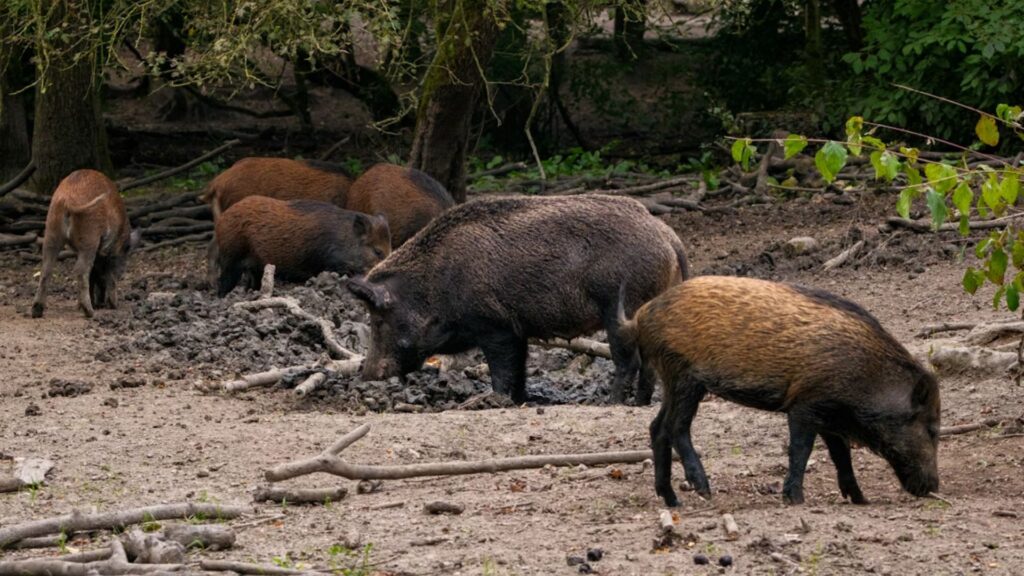
In Texas, where feral pig populations exceed 2 million, several restaurants serve the animals as an alternative to conventional pork. Dai Due in Austin, which sources only local foods, regularly features feral pig on its menu. Chef and co-owner Jesse Griffiths authored The Hog Book: A Chef’s Guide to Hunting, Butchering and Cooking Wild Pigs and believes the meat offers environmental advantages. “Every pound of feral hog replaces a pound of meat from an otherwise broken food system,” he says. In 2025, USA Today named Dai Due Restaurant of the Year.
Reducing Populations to Functional Extinction Gives Native Species a Fighting Chance

While invasivorism advocates acknowledge that dining alone cannot eradicate invasive species, research suggests the approach provides meaningful ecological benefits. A 2014 study published in Ecological Applications examined 24 patch reefs off the Bahamas over 18 months and found that reducing lionfish numbers correlated with a 50 to 70 percent increase in native fish biomass, matching results from complete eradication. Jackson Landers, author of Eating Aliens, notes that this level of population reduction remains ecologically valuable. Fogg reports that every time he harvests lionfish, local demand allows him to sell them easily.
PetsFanatic Team
Pet Care Expert & Content Creator
Passionate about sharing knowledge and tips for better pet care. Writing about everything from pet health to training techniques.