
CDC Plan to Move 160 Lab Monkeys to Texas Sanctuary Sparks Welfare Concerns
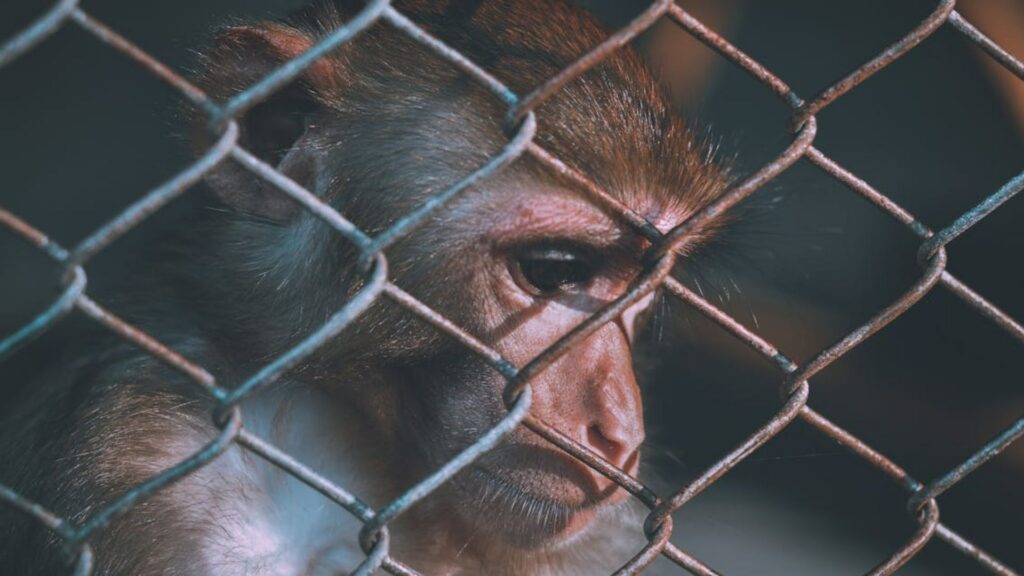
More than 160 monkeys used in federal disease research could be dead within months, and the plan meant to save them may be the very thing that puts them at risk. The CDC quietly posted notice on a government procurement website that it intends to transfer up to 162 rhesus and pigtail macaques to Born Free USA, a primate sanctuary in Cotulla, Texas, with an infrastructure buildout window of just 12 weeks. Primate experts say that timeline borders on reckless.
The decision follows the CDC’s November 2025 order to phase out all of its nonhuman primate research, the first time a US government agency had shut down an in-house monkey program entirely. The animals had spent years at the CDC’s Atlanta headquarters, primarily used in studies on HIV and hepatitis. Researchers who worked with them had hoped the monkeys would be transferred to other biomedical facilities or placed in one of the seven established National Primate Research Centers. That is not what happened. What the agency chose instead caught the scientific community off guard.
The CDC posted its transfer plan on Sam.gov, a federal contracting site, stating it would send the macaques to Born Free’s 70-hectare brushland sanctuary near the Texas-Mexico border. The site currently houses about 250 primates of various species. Despite framing the posting as a “contract opportunity,” the CDC indicated it was not seeking competing bids. The agency cited “unusual and compelling urgency” as its rationale for speed, and gave outside parties only 15 days to respond. Critics argue the process was designed to reach a conclusion, not conduct a genuine search.
The Sanctuary No One Else Was Asked About

The most striking complaint from the scientific community is not about the destination chosen. It is about the process used to choose it. Scott Kubisch, head of the Peaceable Primate Sanctuary in Winamac, Indiana, one of North America’s largest monkey refuges with an extensive record of retiring former lab animals, was contacted by CDC in October 2025. He prepared a detailed proposal estimating the transfer would cost $14 million and require at least one year of careful preparation. Then he heard nothing more, until he stumbled across the CDC posting by chance.
Kubisch told Science that neither his facility nor other primate centers he knows were approached in any formal process. “I’m not saying Born Free is the wrong choice,” he said. “But CDC didn’t give anyone else a chance to make a reasonable proposal.” The Washington National Biomedical Research Center (WNBRC) in Mesa, Arizona, where many of the CDC monkeys originated, also offered to take them into its outdoor breeding facility. Melissa Berg, WNBRC’s associate director of animal resources, said her center never received a call. “No one who cares about monkeys would propose this plan,” said WNBRC’s Matthew Novak.
CDC defended its choice by stating Born Free was the only Global Federation of Animal Sanctuaries-accredited facility that met its combined criteria for species expertise, capacity, and speed. Valerie Taylor, executive director of GFAS, backed that assessment, calling Born Free an “exemplary facility” that her organization has accredited repeatedly since 2009. “Born Free is the largest GFAS-accredited sanctuary in the US that houses monkeys,” Taylor said. “I feel very confident in the care they can offer.” The facility itself describes providing “large, free-ranging environments” allowing monkeys to live with “minimal human interference.” The dispute, then, is less about Born Free’s quality than about whether the animals can survive the transition itself.
The Problem With Throwing Strangers Into a Troop

The core welfare concern among primate experts comes down to a fundamental behavioral reality: these monkeys have spent their lives in isolation or in pairs. Born Free’s existing residents live in large social troops of dozens of animals. Integrating solitary or pair-bonded animals into established primate groups is one of the most dangerous procedures in sanctuary management, requiring months of slow, carefully monitored introductions. The CDC’s plan would compress that process into 12 weeks. Kubisch called that a “ludicrous timeframe.”
“It’s very difficult to incorporate animals into big, stable groups without them getting injured or killed,” Kubisch told Science. Berg was more blunt: “If they’re just going to throw all of these monkeys together, half of them could die.” She notes the Mesa facility, where many of the CDC animals were born, has outdoor enclosures and staff already familiar with the animals’ histories. Moving them to an entirely new environment on an accelerated schedule adds compounding layers of stress, and stress in macaques can trigger fatal aggression. Experts say the urgency the CDC cited does not justify the risk.
A second concern involves oversight. The Peaceable Primate Sanctuary and WNBRC are both subject to regular inspections by the US Department of Agriculture, which enforces federal animal welfare guidelines and makes its inspection reports public. Born Free is not under USDA jurisdiction. Its oversight comes through GFAS, whose inspection reports are confidential. Kubisch pointed out that once the CDC monkeys enter Born Free, there will be no publicly available record of how they are doing. “We’ll have no idea what happens to these animals once they enter Born Free,” he said, a concern that goes beyond this particular transfer.
A Decision That Could Reshape How America Retires Lab Animals

The Born Free transfer is not happening in isolation. Thousands of federally funded animals live in research facilities across the country, and broader pressure to end government-sponsored animal testing has been building for years. Health and Human Services Secretary Robert F. Kennedy Jr. has publicly stated his goal of ending all animal research. The FDA began phasing out animal testing requirements in April 2025. Against that backdrop, how the CDC handles these 162 macaques may serve as a template for every future retirement decision at the federal level.
Matthew Novak of WNBRC sees that prospect as deeply troubling. “It sets a horrible precedent for the future,” he told Science. “We need to make it clear that this is not how this should be done.” His concern is that the speed, the lack of consultation, and the opaque selection process will be replicated the next time an agency decides to exit its animal research program, at a scale potentially far larger than 162 monkeys. The CDC’s monkey program was already under pressure before the shutdown order, with proposed budget cuts threatening to zero out its HIV division entirely. The shutdown, in other words, may have been inevitable. What was not inevitable was the way it was handled.
Born Free USA has retired former lab animals before and operates one of the largest primate sanctuaries in the country. The welfare questions surrounding this transfer may yet be resolved if Born Free and the CDC implement the kind of phased, expert-guided introduction protocols that primate behaviorists recommend. But as of now, no public detail on those protocols exists. For the 162 macaques about to make a one-way journey to the Texas brushland, what happens after the 12-week clock runs out is a question only time will answer, and one that no federal inspection report will make public.
PetsFanatic Team
Pet Care Expert & Content Creator
Passionate about sharing knowledge and tips for better pet care. Writing about everything from pet health to training techniques.