
California Woman Says She Thought the Farm Made a Mistake After Finding a Bright Green Chick in Her Duckling Shipment
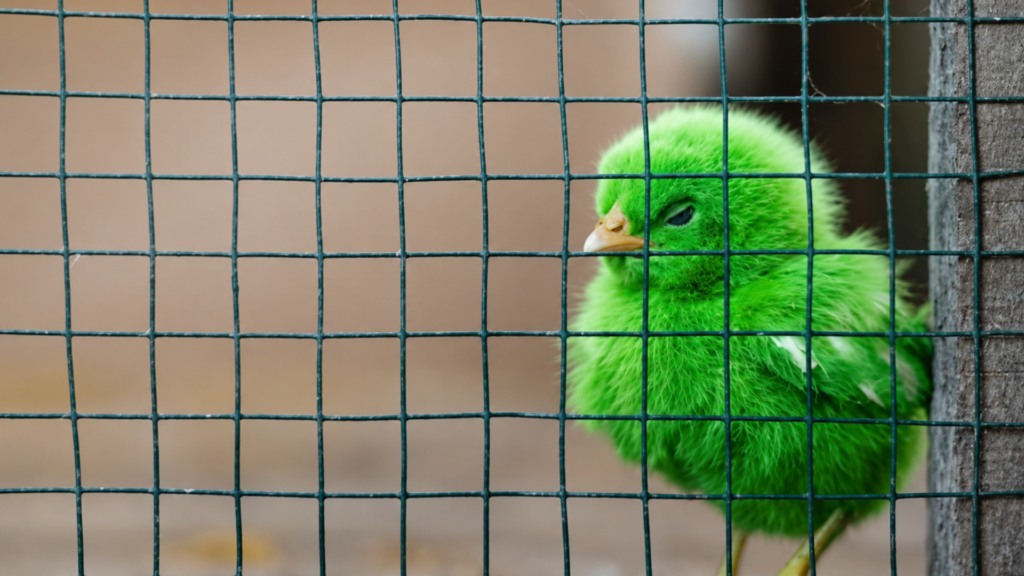
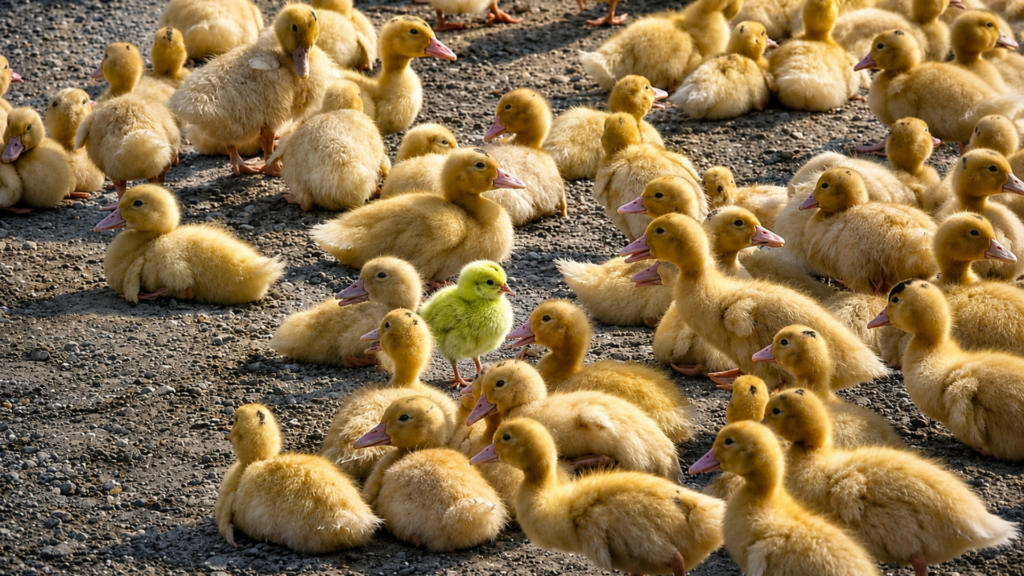
Emily Strand opened a box expecting ducklings. She got them, but something else was inside too: a single bright green chick, sitting among the birds like it had always belonged there. Strand, 28, of California, stared at the little bird and immediately thought the farm had shipped the wrong animal. She had no idea the explanation would be far stranger, and far more deliberate, than a simple mix-up.
“When I saw the chicken, I thought, oh no, the farm we ordered from must have made a mistake,” Strand told PEOPLE exclusively. “But I was also thinking, oh sweet, I got a free chicken!” It was the first time she and her husband, Justin, had ever ordered live animals through the mail. Justin had been raising ducks as pets for about a year, and this was only his second batch of ducklings.
Strand herself was no stranger to animals. She had raised horses, an orphan lamb, and helped care for her parents’ chickens. Still, a bright green bird mixed into a duckling shipment was outside anything she had seen before. She recorded the moment and posted it to TikTok under the account @smky_craftsandleather. The video racked up 2.9 million views before the couple had even figured out what they were actually looking at.
The Green Bird Was No Accident
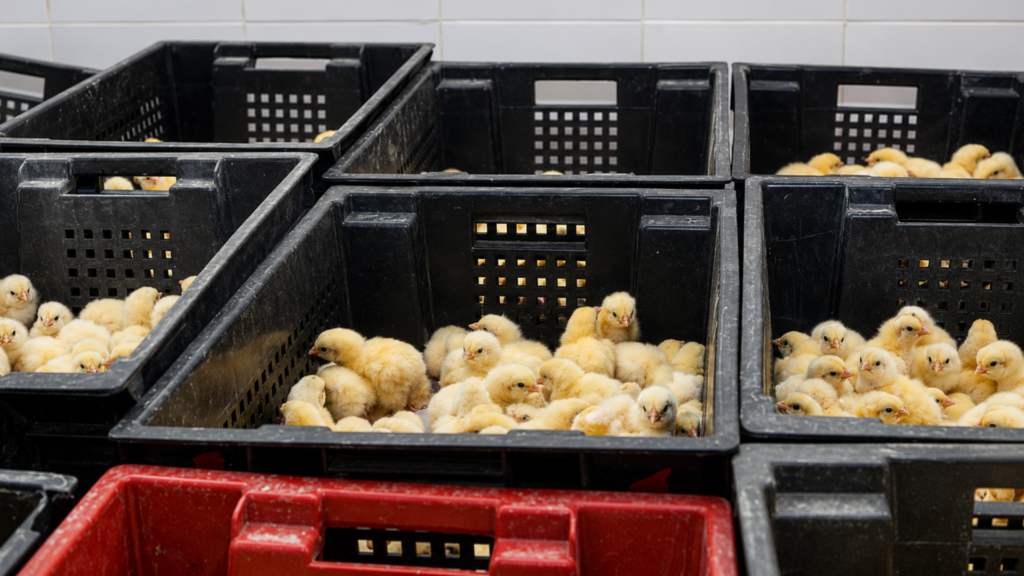
After the video went viral, more experienced bird owners flooded Strand’s comments with an explanation. Hatcheries sometimes tuck an extra chick into shipments of ducklings specifically to maintain warmth during transport. These birds, informally known as “packing peanuts” in backyard poultry communities, serve a practical function: their collective body heat helps keep the more vulnerable ducklings alive across long shipping routes.
The logic is straightforward. Baby birds cannot regulate their own body temperature in the days after hatching, and shipping conditions can turn lethal fast. Ducklings chilled inside a box during transit can weaken and die before they ever reach their new home. Adding a chick raises the ambient temperature inside the container, functioning as a low-tech but effective solution. What looks like a farm error is, in fact, routine practice.
Strand had not asked for an extra bird, and no one at the hatchery had flagged the addition. The couple learned all of this only because they posted the video online. Without the 2.9 million viewers and the flood of responses that followed, they might never have understood why a lone green chick had been sealed inside their duckling box. But the color still needed its own explanation entirely.
The Color Had Nothing to Do With Easter
The chick’s vivid green coloring had nothing to do with holiday novelty or cruelty. Strand learned the bird had most likely received an aerosol vaccination at the hatchery, and the dye was applied to mark it as already treated. This is a documented practice in commercial poultry operations, where spray vaccines are routinely administered to day-old chicks and dyed to confirm which birds have been dosed and which have not.
The marking system prevents accidental double-vaccination and allows hatchery workers to process large volumes of birds efficiently. The dye itself is harmless, temporary, and standard. Strand was clear on this point: the farm had not harmed the chick. The color that sent her comments spiraling into speculation about Easter dyeing or culling was, in reality, a straightforward quality-control measure built into the hatchery’s vaccination workflow.
Online commenters had not held back. Some accused the farm of cruelty. Others speculated the chick had been rescued from being killed, or dressed up for a holiday sale. Strand pushed back on all of it. The chick was healthy, the coloring was functional, and the uproar reflected how few people understand what standard hatchery practice actually looks like, even as millions of people order live birds online every year without a second thought.
The Family Kept the Chick and Named Him Lucky
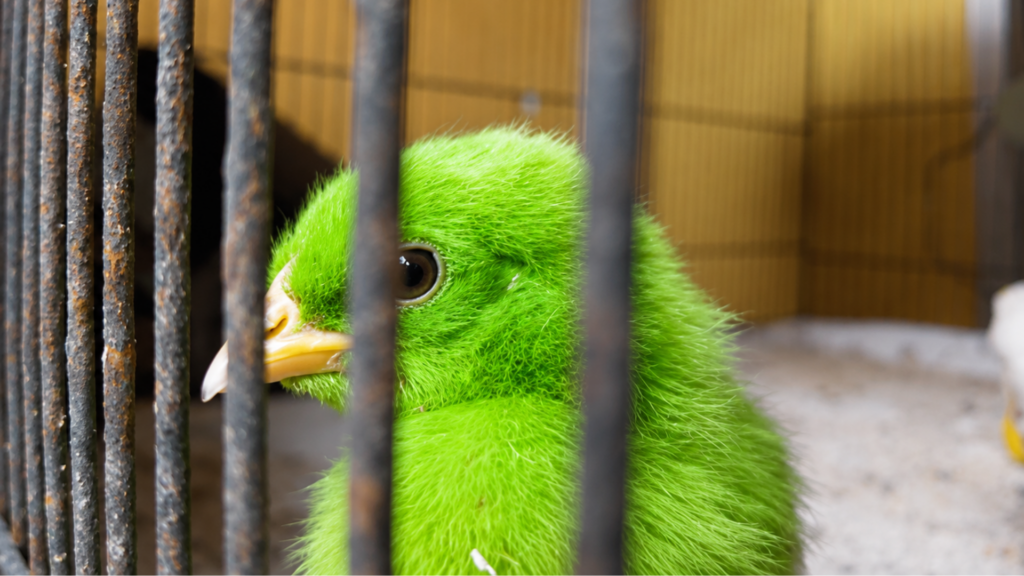
The couple did not return the chick. They did not rehome him quickly or treat him as a logistical inconvenience. “We did keep the chicken and named him Lucky,” Strand told PEOPLE. The name needed no explanation. A bird shipped green inside a box of ducklings, sent without warning, sparking a 2.9-million-view debate about hatchery ethics, had made it through all of it without a scratch.
Lucky now lives at Strand’s parents’ property, integrated into their existing flock. He is, by all accounts, doing fine. The story had started as something that looked like a clerical error, turned into a viral moment that confused millions of people, and resolved into an outcome most animals shipped across the country never get: a permanent home with people who know his name and exactly where he came from.
What the story quietly illuminated is how opaque the supply chain behind backyard poultry has become. Millions of people order live animals through the mail each year, guided by the same hatchery catalogs and overnight shipping guarantees. Few understand the green dye, the extra chicks tucked in for warmth, or the quiet industry logic behind every box that arrives on a doorstep. Lucky got a name. Most packing peanuts never make it that far.
PetsFanatic Team
Pet Care Expert & Content Creator
Passionate about sharing knowledge and tips for better pet care. Writing about everything from pet health to training techniques.