
Archaeologists Unearth a 5,000 Year Old Treasure-Filled Tomb

A recently uncovered megalithic structure in Málaga, Spain, has captured international attention. Dating back 5,000 years, the stone-built tomb is not only a remarkable example of prehistoric engineering but also a cultural time capsule. Archaeologists believe it will transform our understanding of life, death, and society in the Iberian Peninsula during the third millennium B.C.E.
A Monument Hidden in the Landscape

The newly discovered dolmen stretches an astonishing 42 feet in length. Its size immediately sets it apart as one of the most monumental tombs in southern Spain, suggesting the people who built it intended to leave a visible and lasting mark on their environment.
Remarkable Preservation

What makes this tomb especially significant is its pristine state of conservation. Unlike many prehistoric monuments damaged over centuries, this dolmen has survived with most of its structure intact. Archaeologists now have a rare opportunity to study a megalithic site in near-original condition.
Intricate Design and Structure

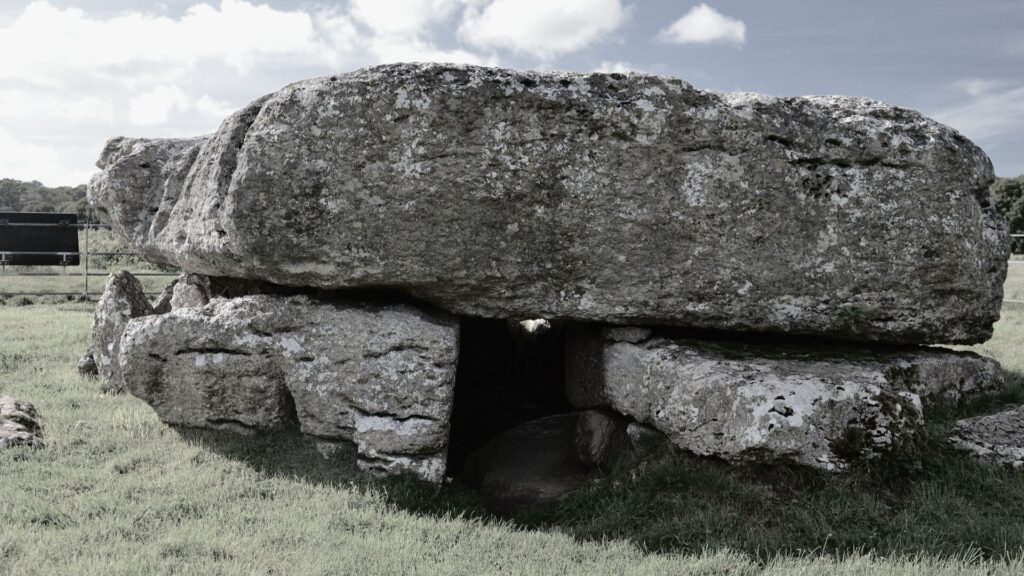
The architecture of the dolmen demonstrates both ambition and planning. Upright orthostat slabs, some rising more than six feet, divide the tomb into distinct chambers. These compartments were carefully arranged, pointing to a deliberate design that served spiritual as well as practical purposes.
The Treasures Within

Inside the chambers, archaeologists found an impressive array of grave goods. The artifacts range from exotic materials like ivory and amber to symbolic items such as seashells and finely crafted flint tools. Among the most striking discoveries was a halberd, an axe-like weapon that reveals the sophistication of local craftsmanship.
A Collective Resting Place

Evidence suggests the dolmen functioned as a collective burial site rather than a tomb for a single leader. Multiple ossuaries, or bone chambers, indicate that members of the same community were buried together over time. This reinforces the theory that such structures were both sacred and communal.
Protection Through Engineering

The builders went to great lengths to safeguard the site. Large horizontal slabs once covered the chambers, and above them, a tumulus made of sand and stones was constructed. This mound protected the tomb from erosion while ensuring it stood out as a significant landmark in the surrounding landscape.
Echoes of Trade and Exchange

The discovery of seashells within the tomb, despite its inland location, provides strong evidence of long-distance exchange networks. These items would have carried symbolic value, reflecting the sea’s prestige in prehistoric societies and the connections that linked inland communities to coastal areas.
Understanding Ancient Beliefs

The care put into the design, the choice of materials, and the deliberate placement of artifacts suggest strong ritual and symbolic motivations. The dolmen not only honored the dead but also reflected how these communities viewed life, death, and their place within the natural world.
A Global Tradition of Megaliths

Dolmens are not exclusive to Spain. Similar monuments exist across Europe and Asia, each serving unique purposes: as tombs, ritual spaces, or territorial markers. Spain’s Dolmen of Guadalperal and England’s Arthur’s Stone are among the most famous examples, connecting this Málaga site to a wider prehistoric tradition.
A Window Into Prehistory

Every new excavation reveals more about the people who lived five millennia ago. This dolmen, with its extraordinary preservation and wealth of artifacts, offers a detailed look into their customs, technology, and worldview. Researchers are confident that continued study will deepen our understanding of how early societies organized themselves and honored their ancestors.
The Legacy of Stone

In the end, the Málaga tomb is more than an archaeological site, it is a message carved in stone, carrying the voices of a community that lived 5,000 years ago. Its survival reminds us that human creativity and reverence for the past can transcend millennia, leaving behind monuments that continue to inspire awe and curiosity today.
The Find and the Team Who Found It

The dolmen, identified as Dolmen I of the La Lentejuela necropolis near Teba, was excavated by a research team from the University of Cádiz working within a long-term project on megalithism in the area. The project combines experienced field archaeologists and students, and the discovery is the result of multiple seasons of systematic excavation that aimed to document the necropolis as a whole.
Scale and Shape in Context

Measuring about 13 meters (roughly 42–43 feet) in length, the tomb stands among the largest documented in Andalusia. Its elongated, compartmentalized plan is part of what makes it so remarkable. That scale implies careful planning and a substantial labor investment, comparable to other monumental tombs in southern Iberia.
Exceptional Preservation and What It Allows

Unlike many megalithic monuments that survive as scattered stones, this dolmen preserves interior divisions, intact orthostats, and traces of the original covering mound, features that allow archaeologists to study construction techniques and use-life in unusually fine detail. The excellent state of conservation also makes it possible to apply modern analytical methods without reconstructing hypothetical layouts.
A Cross-Section of Prehistoric Lives
Inside the chambers, researchers documented several ossuaries and multiple burial deposits rather than a single primary tomb, indicating repeated use over time. The stratigraphy shows distinct episodes of interment, which will let scientists track changes in funerary practice across generations at the same site.
Prestige Goods from Afar

Among the grave goods reported are items fashioned from non-local materials, seashells, amber, and ivory, that would have been prized in inland communities. Their presence supports interpretations of the tomb as a place to display status and connect the dead to distant resources and symbolic worlds.
Evidence of Skilled Craftsmanship

Stone orthostats standing more than a metre high and finely worked flint tools indicate trained artisans and organized labor. The halberd-like weapon and polished implements found in the burial contexts reflect both technical skill and the symbolic importance of certain objects placed with the dead.
Landscape, Visibility, and Memory

The dolmen was deliberately sited to be visible across the surrounding countryside, forming part of a broader ceremonial topography. By erecting a tumulus and maintaining the structure’s prominence, prehistoric communities created durable landmarks that anchored memory and territorial identity in the landscape for centuries.
Ritual Practice Beyond Interment

Pigment traces, aligned chambers, and the selection of exotic offerings point to complex ritual behavior linked to the tomb. These features suggest that the site functioned not only as a place for burial but as a focal point for communal rites, seasonal or life-cycle ceremonies that reinforced social bonds and cosmological beliefs.
Networks and Mobility in the Third Millennium BCE

The mix of local craft and foreign raw materials found at La Lentejuela indicates participation in long-distance exchange networks across the Mediterranean and Atlantic fringes. Such circulation of goods implies routes of contact and movement that connect inland Iberian communities to coastal and foreign sources, enriching interpretations of social and economic interaction in the 3rd millennium BCE.
Conservation, Recording, and Public Value

The excavation team is using photogrammetry, 3D scanning, and drone topography to record the dolmen in high resolution so researchers can analyze the site virtually and the public can access accurate reconstructions. These non-invasive techniques both protect fragile contexts and create resources for education, exhibition, and further scientific study.
PetsFanatic Team
Pet Care Expert & Content Creator
Passionate about sharing knowledge and tips for better pet care. Writing about everything from pet health to training techniques.