
Archaeologists Discover 4,200-Year-Old ‘Zombie’ Grave With 3-Foot Stone Pinning Down Body

Archaeologists uncovered an unusual burial near Oppin, Germany, containing the remains of a middle-aged man with a massive stone pinning down his legs. The stone, measuring over 3 feet long and 1.6 feet wide, was deliberately placed to prevent the deceased from rising. The State Office for Heritage Management and Archaeology of Saxony-Anhalt believes the burial dates back roughly 4,200 years to the Bell Beaker culture period, revealing ancient fears of revenants, the undead who could return to torment the living.
The Stone Weighed Enough to Keep a Body Secured

The stone placed over the man’s legs measured approximately 3.2 feet in length, 1.6 feet wide, and 4 inches thick, according to a Facebook post from the State Office. At that size and thickness, the block represented a substantial weight deliberately chosen for the burial. Archaeologists found the deceased man, aged between 40 and 60 at death, positioned in a crouched posture on his side. The strategic placement on his legs suggests burial practitioners wanted to ensure he remained anchored in place.
Revenants Were Feared Across Ancient Europe

In the folklore of several ancient cultures, revenants referred to individuals who returned from death as spirits or animated corpses, sometimes terrorizing the living. Susanne Friederich, an archaeologist with the State Office for Heritage Management and Archaeology of Saxony-Anhalt and project manager for the excavations, explained the widespread nature of these beliefs. “We know that already in the Stone Age people were afraid of revenants,” Friederich told Newsweek. “People wanted to prevent this with magic.”
Face-Down Burials Were Another Prevention Method

Stone weights were not the only strategy ancient people employed to keep the dead contained. Friederich described an alternative burial practice that involved positioning corpses face down. “Back then, people believed that dead people sometimes tried to free themselves from their graves,” she said. “Sometimes, the dead were laid on their stomachs. If the dead lies on his stomach, he burrows deeper and deeper instead of reaching the surface.” This approach is a defense against any escape attempt.
Some Graves Featured Lances Through the Torso

Historical revenant burials sometimes included even more extreme measures. Some graves from various periods revealed that placing bodies face down was not considered sufficient protection, and featured the addition of a lance piercing through the torso to secure the body in place. These extra precautions indicate varying levels of concern about specific individuals across different eras. The Oppin burial, however, contained no lance, suggesting the massive stone alone was deemed adequate for this particular deceased man.
The Burial Links to Bell Beaker Culture

The State Office believes the tomb was laid during the time of the Bell Beaker culture, as it was discovered near other cultural findings from the same period. This archaeological culture appeared more than 4,500 years ago in Europe and persisted for several centuries during the late Neolithic period and Early Bronze Age. Archaeologists found another Bell Beaker grave nearby, along with additional remains, including a hearth, strengthening the cultural attribution and providing context for understanding this community’s burial practices.
Little Is Known About Bell Beaker Beliefs
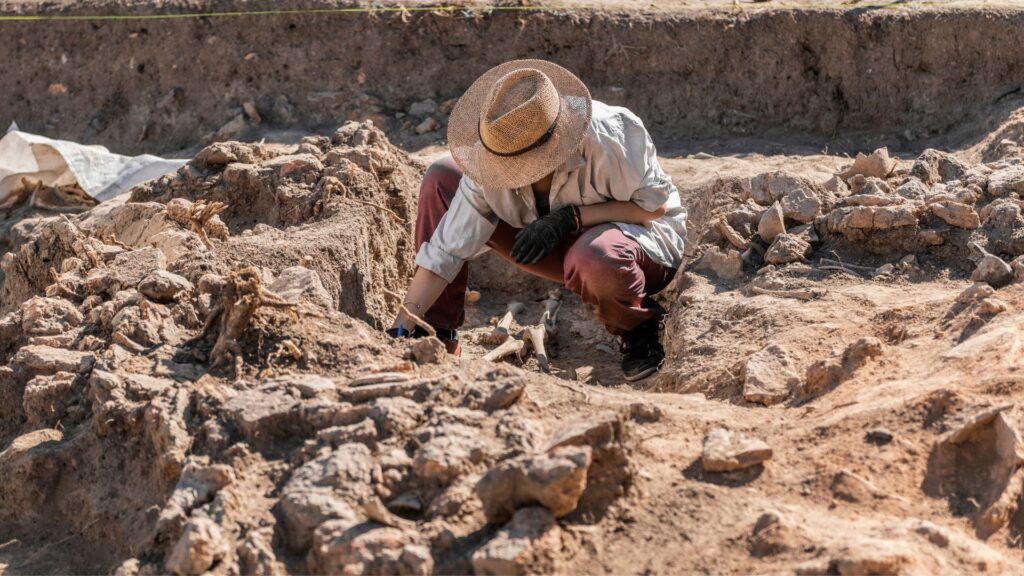
While the Bell Beaker culture left behind distinctive pottery and burial sites across Europe, relatively little is known about their specific religious beliefs and superstitions. The discovery of this revenant grave could provide deeper insight into the fears and spiritual practices of these prehistoric people. The burial could represent the first revenant grave from the Bell Beaker period found in central Germany, which would make it an unusual and valuable archaeological find for understanding this culture’s death rituals.
The Grave Contained Only One Occupant

Unlike some communal burial sites from the period, this tomb contained only the single middle-aged man in his crouched position. The absence of grave goods or additional bodies suggests this was a deliberate, isolated burial focused specifically on containment. The man’s age at death, between 40 and 60 years old, positioned him as a mature adult within his community during the late Neolithic or Early Bronze Age period.
Revenant Graves Span Thousands of Years

While the majority of discovered revenant graves date to the Middle Ages, examples like the Oppin burial demonstrate these practices originated in prehistoric times and persisted across millennia. Revenant graves have been found in various locations throughout Europe, each characterized by evidence of precautions taken to prevent the dead from rising. The consistent use of heavy stones, strategic body positioning, and pierc.ing implements across different time periods and regions reveals how deeply rooted these fears were.
The Discovery Reveals Ancient Power of Belief

The excavation near Oppin, conducted ahead of planned energy infrastructure construction, uncovered what the State Museum of Prehistory called an “extremely interesting” burial. Ancient folklore told of the undead returning to haunt the living, and the discovery of a 4,200-year-old revenant grave demonstrates just how prevalent and powerful these beliefs were throughout human history. The massive stone block was thought to be sufficient to prevent a revenant’s return, an ancient practice that utilized physical barriers against supernatural threats.
PetsFanatic Team
Pet Care Expert & Content Creator
Passionate about sharing knowledge and tips for better pet care. Writing about everything from pet health to training techniques.