
Archaeologists Discover 200-Year-Old Painting in South Africa That May Reveal Long-Lost Ancient Creature

Researchers examining 200-year-old rock paintings in South Africa have identified imagery that predates formal scientific records by more than a decade. The artwork, created between 1821 and 1835, depicts a tusked creature with features that align with no known living animal in the region. The discovery has prompted scientists to revisit long-standing legends from the area’s indigenous San culture, particularly those describing large, extinct animals. The paintings were found near fossil deposits in the Karoo Basin, one of the world’s richest sites for ancient remains.
The Horned Serpent Legend Could Be Based on Real Fossils

The creature depicted in the rock art corresponds to descriptions of the horned serpent, a figure central to San cultural traditions. According to San oral histories, ancestors encountered “great monstrous brutes, exceeding the elephant or hippopotamus in bulk,” according to historical accounts. The painted animal features downward-pointing tusks, a characteristic that distinguishes it from any modern African species. Scientists now hypothesize the imagery may represent dicynodonts, extinct mammal-like reptiles whose fossils are abundant in the region.
The Painting Predates Science by More Than a Decade
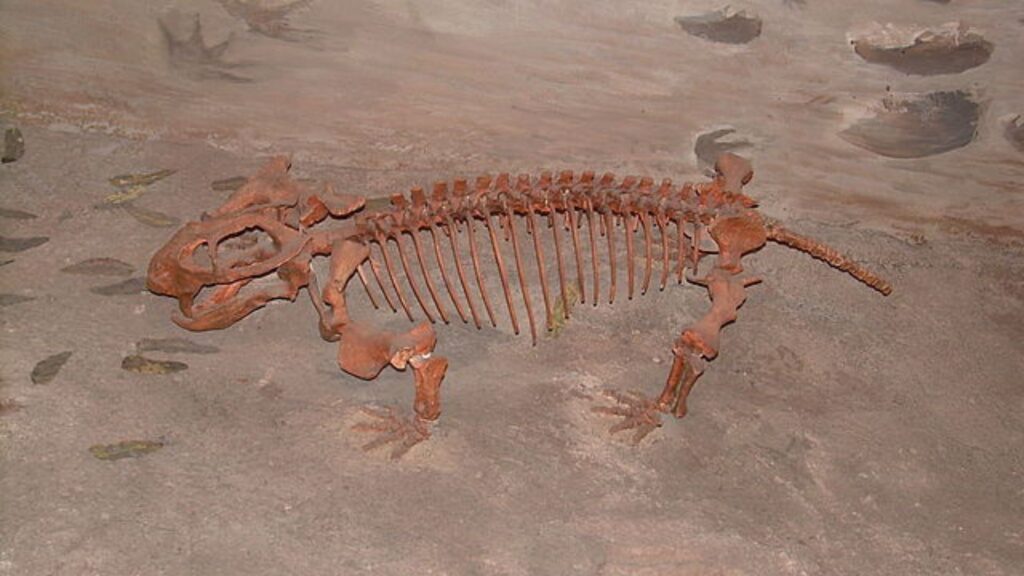
The formal scientific classification of dicynodonts did not occur until 1845, when researchers first documented these extinct creatures in academic literature. The newly analyzed rock art, however, dates to at least 14 years earlier. Julien Benoit from the University of the Witwatersrand examined the artwork’s location alongside tetrapod fossils in the immediate vicinity. The combination of imagery and physical remains pointed to something significant. “Altogether, they suggest a case of indigenous paleontology,” Benoit wrote in the study published in PLOS ONE.
The Karoo Basin Holds Millions of Years of Fossil History

The Karoo Basin in South Africa contains one of the world’s most significant concentrations of dicynodont fossils. These mammal-like reptiles thrived during the Permian period, approximately 260 million years ago, before going extinct. The abundance of exposed fossils in the region would have made encounters with these remains likely for the San people. Researchers believe such discoveries could have shaped cultural narratives and artistic representations, blending paleontological observation with spiritual tradition.
The Tusks Point Downward, Unlike Any Modern Animal

The orientation of the tusks in the rock art offers a key clue for identification. Elephants, warthogs, and other tusked species all display different tusk arrangements. “The downward orientation of the tusks, which doesn’t match any African animal but does match dicynodonts,” Benoit noted in the study. This distinction matters because no living African mammal possesses tusks in this configuration. The extinct dicynodonts, however, featured exactly this type of downward-pointing structure, strengthening the potential connection.
Ceremonies May Have Incorporated Extinct Animal Imagery

“The tusked animal on the Horned Serpent panel was likely painted as a rain-animal, which means it was probably involved in rain-making ceremonies,” Benoit told IFL Science. These rituals were essential to San spiritual practice. The people believed certain powerful creatures, whether living or long-extinct, possessed spiritual significance that could influence natural phenomena when properly honored. Invoking images of formidable animals during drought periods helped encourage the gods to send rain.
The San People Had a Sophisticated Understanding of Fossils

The San people maintained what researchers describe as a sophisticated understanding of fossils. Their spirit world included animals inspired by observable reality, even when those animals were extinct, according to Benoit. This practical approach to weaving paleontological evidence into cultural narratives sets San traditions apart from purely mythological frameworks. The proximity of the rock art to actual fossil deposits supports the idea that the San actively studied and interpreted remains they encountered in their environment.
Several Pieces of Evidence Point to the Same Conclusion

“The ethnographic, archaeological, and paleontological evidence are consistent with the hypothesis that the Horned Serpent panel could possibly depict a dicynodont,” Benoit wrote in the study. The convergence of multiple data sources supports this interpretation, from San oral traditions describing massive extinct animals to the abundance of dicynodont fossils saturating the Karoo Basin. The artwork displays distinctive tusk orientation matching those fossils, suggesting the San people engaged in deliberate paleontological observation and interpretation of the remains they encountered.
Scientists Say More Research Is Needed to Confirm the Link

Scientists emphasize that the connection between the rock art and dicynodonts remains hypothetical at this stage. “Of course, at this point it is speculative,” Benoit acknowledged. Establishing definitive links between 200-year-old paintings and creatures extinct for millions of years requires careful analysis of multiple data sources. Additional research into San cultural practices, fossil distribution patterns, and comparative rock art analysis will be necessary to strengthen or refine the current hypothesis.
The Discovery Could Change How We View Ancient Knowledge

The rock art analysis demonstrates how indigenous knowledge systems blended empirical observation with spiritual tradition. If confirmed, the findings would represent a documented case of paleontological interpretation predating Western scientific classification by over a decade. The study, published in PLOS ONE, suggests that indigenous peoples actively studied and interpreted fossil evidence they encountered. Further examination of San rock art throughout the region may reveal additional examples of this practice, potentially reshaping how researchers understand ancient cultures’ engagement with the fossil record around them.
PetsFanatic Team
Pet Care Expert & Content Creator
Passionate about sharing knowledge and tips for better pet care. Writing about everything from pet health to training techniques.