
Ancient 1,500-Year-Old Landmark Hides Network of Tunnels Below

Restoration crews working on Istanbul’s legendary Hagia Sophia just uncovered a secret that has been buried for over a millennium. Deep beneath the foundations of this architectural marvel, officials discovered a sprawling network of seven interconnected tunnels. The find adds a mysterious new layer to a building that has already survived centuries of empire shifts.
The Hagia Sophia is a structural icon that has served as a cathedral, a mosque, and a museum since the fifth century. While hints of underground passages have surfaced before, this is the first time an extensive system has been publicly revealed. These passages date back roughly 1,600 years to the Byzantine era.
This discovery was no accident, as it emerged during the most comprehensive restoration project in the landmark’s history. Teams were actually working to secure the building against potential earthquakes when they stumbled upon something far more intriguing. The scale of the excavation required to reach these hidden chambers is truly staggering.
1,068 Tons of Soil Cleared
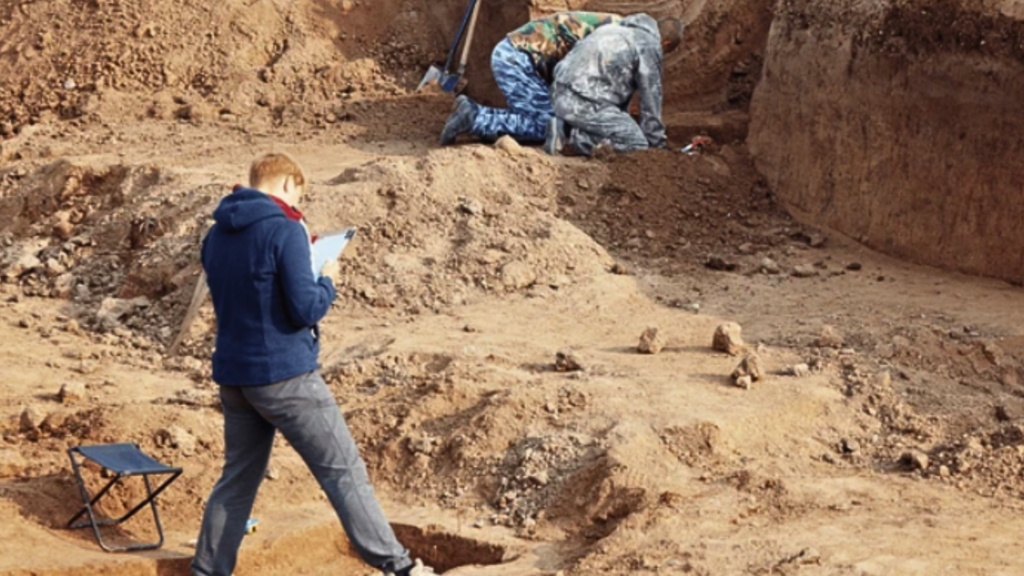
Workers were cleaning and documenting the West Garden and northern façade when they delved into the structure’s foundations. Using a combination of physical excavation and advanced radar mapping, they identified three distinct underground chambers. These rooms acted as hubs for a subterranean web that spans hundreds of feet beneath the former basilica.
The sheer volume of debris removed from these passages highlights the intensity of the work. Turkey’s Culture and Tourism Minister, Mehmet Nuri Ersoy, revealed that crews have cleared 1,068 tons of soil fill from the tunnels so far. This massive effort was necessary just to make the narrow, winding corridors accessible for modern documentation.
“We have documented the seven tunnel lines hundreds of meters long,” Ersoy stated during the reveal. While past excavations found small culverts designed for ancient water management, these new passages suggest a different purpose entirely. They offer a rare, physical map of the original Byzantine-era engineering that has supported the massive dome for centuries.
Clues to Ancient Rituals

The discovery provides more than just a lesson in engineering; it offers a window into ancient life. Researchers believe these spaces were not merely for drainage or support. Instead, the tunnel system likely provided a site for secret ritual and religious activities that took place deep beneath the feet of the public 1,600 years ago.
This find adds a human dimension to the structure built by Byzantine Emperor Justinian I in 537 C.E. It suggests that the Hagia Sophia was designed to be as significant below ground as it was above. Understanding how these spaces were used helps historians piece together the complex daily operations of one of history’s most important religious sites.
Experts believe there are still Byzantine and Ottoman mysteries waiting to be explored in the dark. The current restoration aims to keep original materials alive, even using handmade bricks produced with ancient methods. However, the deeper they dig, the more they realize that the landmark’s true history is written in the soil beneath it.
Protecting a Global Heritage

Despite the massive public interest in the find, these tunnels will remain off-limits to tourists. Officials intend to investigate the passages further to ensure the long-term structural security of the building. The priority remains the preservation of the site so it can “bring all humanity together under its dome for many more centuries.”
The focus on the foundations is especially critical due to Istanbul’s geographic location. By identifying existing risks and revealing these hidden historical layers, the ministry hopes to safeguard the Hagia Sophia against future natural disasters. Every ton of soil removed is a step toward understanding how to keep the ancient walls standing.
As the project continues, the Hagia Sophia proves once again that it is a building that never stops giving up its secrets. From its origins as a wooden cathedral to its current status, it remains a symbol of survival. Some mysteries are meant to be solved, while others are best kept safe beneath the stone.
PetsFanatic Team
Pet Care Expert & Content Creator
Passionate about sharing knowledge and tips for better pet care. Writing about everything from pet health to training techniques.