
Did an Ancient Jewish Historian Verify Jesus’ Existence?

The persistent claim that Jesus of Nazareth was a mythological invention created by a savvy PR team of fishermen falls apart under the cold scrutiny of secular history. While many view the life of Christ through the lens of faith, the academic search for the “historical Jesus” relies on voices that had no interest in starting a religion. Ancient history does not offer high-definition video or signed affidavits, but it does provide the testimony of Flavius Josephus, a first-century Jewish historian who lived in the shadow of the events he recorded. Josephus did not write sermons or join a church, yet his meticulous chronicles of Jewish life under Roman rule contain references that have sparked centuries of debate. The presence of Jesus in these secular texts suggests that erasing the man from history is significantly harder than many skeptics realize, leading to a controversial collision between ancient manuscript evidence and modern doubt.
A Witness Born In The Eye Of The Storm

To understand the weight of this evidence, one must look at the man behind the pen: Flavius Josephus, born in Jerusalem around AD 37. This timing is critical because it places Josephus exactly one generation removed from the crucifixion, living among people who possessed firsthand memories of the era. A man of high priestly lineage and sharp political instincts, Josephus transitioned from a Jewish rebel leader to a Roman citizen under the patronage of Emperor Vespasian. By the time he penned his monumental work, Antiquities of the Jews, in approximately AD 93, he was writing for a sophisticated Roman audience that valued order and factual documentation. Josephus was not a Christian sympathizer; he was a pragmatist recording the cultural markers of his time, and his inclusion of Jesus was likely intended as a matter-of-fact identification rather than a religious endorsement.
The Smoking Gun In Book Twenty

The most resilient piece of evidence for the historical Jesus appears in Antiquities Book 20, where Josephus describes a political vacuum in Jerusalem following the death of the Roman governor Porcius Festus. In the chaotic interim, the High Priest Ananus convened a council to condemn a man named James to death by stoning. To ensure his readers knew exactly which James he was referring to—given that it was a common name at the time—Josephus identified him as “the brother of Jesus, who was called Christ.” This brief, almost throwaway mention is what historians call “accidental evidence,” and it is remarkably powerful. Josephus doesn’t stop to explain who Jesus is or try to convince the reader of his divinity; he simply uses Jesus as a landmark to identify a legal victim, proving that by AD 62, the existence of Jesus was an accepted public fact in Jerusalem.
The Mystery Of The Testimonium Flavianum

While the reference to James is widely accepted, a second, more elaborate passage known as the Testimonium Flavianum remains one of the most contested paragraphs in all of ancient literature. Found in Book 18 of Antiquities, this section explicitly describes Jesus as a “wise man,” a “doer of startling deeds,” and even goes so far as to suggest he was the Messiah who rose from the dead. For centuries, this was hailed as the ultimate proof of Christ’s divinity from a non-Christian source. However, modern scholars have grown suspicious of the glowing, faith-filled language, arguing that it feels out of character for a practicing Jew like Josephus. This has led to a fascinating detective hunt through ancient syntax to determine where the historian’s words end and where later additions might begin.
Detecting The Fingerprints Of Medieval Monks

The controversy surrounding the Testimonium stems from the “manuscript gap” that exists between the first century and the Middle Ages. Because Christian monks were the primary copyists responsible for preserving Josephus’s works through the centuries, many historians believe these scribes “touched up” the text to make it more pious. Phrases like “if indeed one ought to call him a man” or “he was the Christ” strike many as late insertions designed to turn a historical record into a confession of faith. This realization turned the study of Josephus into a linguistic battlefield, with experts attempting to peel back the layers of potential forgery to find the “authentic” Josephus hidden beneath the worshipful adjectives.
Stripping The Text To Find The Truth

Despite the likely edits by later hands, the majority of modern historians do not believe the entire passage was fabricated. When the overtly Christian flourishes are stripped away, a core narrative remains that perfectly matches the writing style of Josephus. This “neutral” version describes a teacher named Jesus who gained a following among both Jews and Greeks, was condemned to the cross by Pontius Pilate, and left behind a tribe of “Christians” who remained active in the historian’s own day. By removing the theological “gold leaf,” scholars have uncovered a sturdy historical frame that confirms the basic outline of the Gospel accounts without relying on the Gospels themselves.
The Political Execution Of James
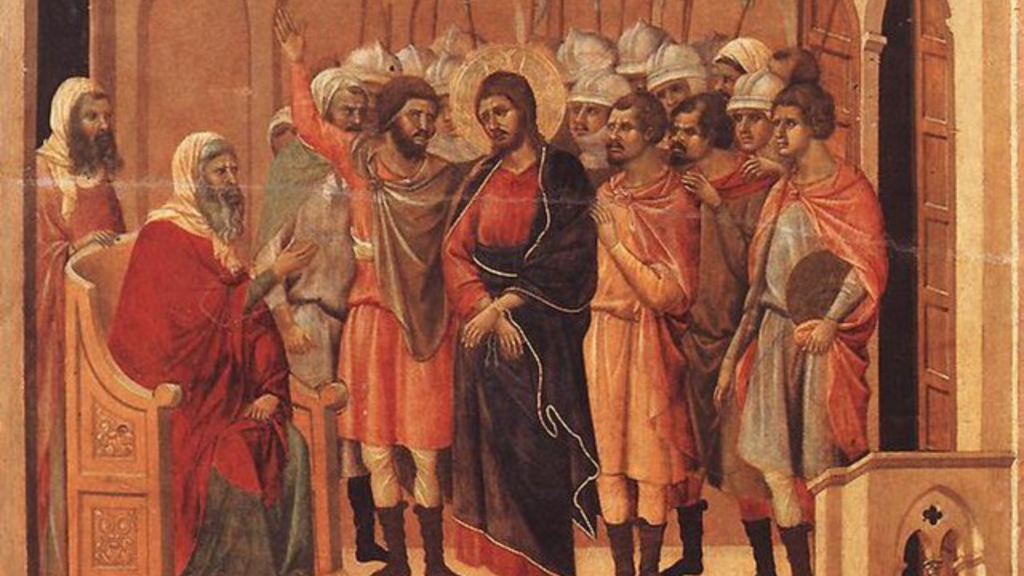
The account of the death of James “the brother of Jesus” provides more than just a name; it offers a vivid look at the brutal power dynamics of first-century Jerusalem. Josephus records that the High Priest Ananus took advantage of a Roman leadership transition to execute James, an act so controversial it led to Ananus being stripped of his position after only three months. This level of detail—naming the specific Roman officials involved and the resulting political fallout—grounds the story of the early Church in concrete reality. It demonstrates that the family of Jesus was not living in a vacuum of myth, but was deeply entangled in the high-stakes politics of the Jewish Sanhedrin and the Roman governorship.
Comparing The Manuscript Traditions

Skeptics often point to the fact that the oldest surviving Greek manuscript of Josephus dates only to the 11th century, suggesting the evidence is too far removed to be trusted. However, historians counter this by pointing to the sheer volume of supporting traditions. Josephus exists in over 120 Greek manuscripts and roughly 170 Latin translations, some of which date back to the 6th century. By comparing these various versions, including an Arabic version discovered in the 20th century that lacks the suspicious Christian “touch-ups,” researchers can triangulate the original text. The consistency across these diverse geographical and linguistic traditions makes it highly unlikely that the references to Jesus were a wholesale invention by a single rogue editor.
Why Secular Evidence Changes The Game

The value of Josephus lies in his independence from the biblical narrative. For those who view the New Testament as biased or “internal” literature, Josephus provides the “external” verification required by the rules of historical science. He confirms the existence of the key players: the preacher (Jesus), the relative (James), the Roman executioner (Pilate), and the Jewish leadership (Ananus). This creates a historical tether that prevents the story of Jesus from floating away into the realm of pure legend. While Josephus won’t provide a laboratory report for a miracle, he provides something equally vital for the historian: a secular anchor that confirms a real man started a movement that changed the world.
The Verdict Of The Ancient Ink

The debate over the exact wording of Flavius Josephus may never be fully settled, but the broader picture is clearer than ever. Between the accidental mention of James and the core truths buried within the Testimonium, the works of Josephus stand as a monumental hurdle for the “Christ-myth” theory. History is rarely neat, and ancient manuscripts are often messy, but the presence of Jesus in the writings of a first-century Jewish aristocrat suggests a reality that transcends religious doctrine. Ultimately, whether one views Jesus as a deity or a simple teacher, the ink of Josephus reminds us that he was, at the very least, a man of flesh and blood who left an indelible mark on the Roman world.
PetsFanatic Team
Pet Care Expert & Content Creator
Passionate about sharing knowledge and tips for better pet care. Writing about everything from pet health to training techniques.