
Ancient Fossil Discovery Reveals Natural GPS Used by Early Sea Creatures

Microscopic magnetic fossils recovered from North Atlantic seafloor sediments may be components of an internal GPS used by an ancient marine creature to navigate long distances, according to scientists. The fossils, about 50 times smaller than the width of a human hair, are made of magnetite, a strongly magnetic iron-bearing mineral. Researchers suspect these particles were once part of a marine organism, though their identity remains mysterious. Scientists have recovered fossils dating back as far as 97 million years ago.
The Particle Resembles a Tiny Ice Cream Cone

A new study employed three-dimensional imaging to determine the magnetic structure of one fossil, a magnetite particle shaped like a tiny ice cream cone that dates to 56 million years ago. The research was published in the journal Communications Earth & Environment. Researchers identified features optimized to detect the strength and direction of Earth’s magnetic field, a dynamic force generated by the motion of molten iron in our planet’s core and extending out into space.
A Closed Magnetic Loop Creates Navigation Potential

The fossil’s interior contained a closed loop of magnetization resembling a vortex. Rich Harrison, a University of Cambridge professor of Earth and planetary materials and co-leader of the study, explained that the large magnetization means the particle would be optimized to detect variations in Earth’s magnetic field strength from location to location. This capability is key to building a natural GPS, enabling an animal to geolocate itself rather than simply knowing which direction is north.
The Debate Over Biological Origins Lasted Decades

Scientists have recovered numerous magnetic fossils over the years, some dating back as far as 97 million years ago. A debate persisted over whether they were biological in origin or formed through geological processes. The three-dimensional imaging used in the new study provided evidence of features specifically optimized for magnetoreception, a sense useful for guiding navigation that researchers believe could only have developed in a living organism.
Migratory Animals Use Magnetic Fields, but How Remains Unknown

While some migratory animals, including birds, fish, and insects, are thought to use Earth’s magnetic field to navigate, how they manage this remains unanswered. One hypothesis is that magnetite particles inside their bodies align with Earth’s magnetic field, akin to a compass needle. Sergio Valencia, physicist and study co-leader of the Helmholtz-Zentrum Berlin research institute in Germany, noted that strong evidence suggests many organisms have magnetic navigation capabilities, but the mechanism remains unknown.
Eels Make a Compelling Candidate for the Mystery Creature

Identifying the creature these fossils may have belonged to remains a challenge, as they were not associated with any other bodily remains. The researchers said it would make sense if they came from a migratory animal common enough to have left behind abundant fossil remains. Harrison suggested eels are one possibility, noting that larval eels travel by ocean currents from Sargasso Sea breeding grounds to coastal habitats from North Africa to Scandinavia. After a decade or more, adults migrate back to the Sargasso Sea to spawn and die.
The Particles Could Also Belong to Ancient Microbes

The organism responsible for the magnetite fossils may have been simply a microbe of some sort. These particles closely resemble magnetite fossils called magnetosomes produced by certain bacteria, though magnetosomes are around 20 times smaller. Certain aquatic bacteria possess magnetoreception arising from chains of magnetosomes inside these unicellular organisms that enable them to line up with Earth’s magnetic field, helping them navigate to their preferred water depth.
Finding Magnetic Particles in Living Animals Poses Major Challenges

Valencia explained that one major challenge is locating magnetic particles in living animals, as they are extremely small and sparse, making them very difficult to find within the whole organism. The fossil record provides a unique opportunity to study these particles in isolation after they’ve been locked in sediment while the surrounding soft tissue broke down over millions of years. This allows scientists to analyze their structure and function in unprecedented detail.
The Particles Generate Signals the Organism Could Detect
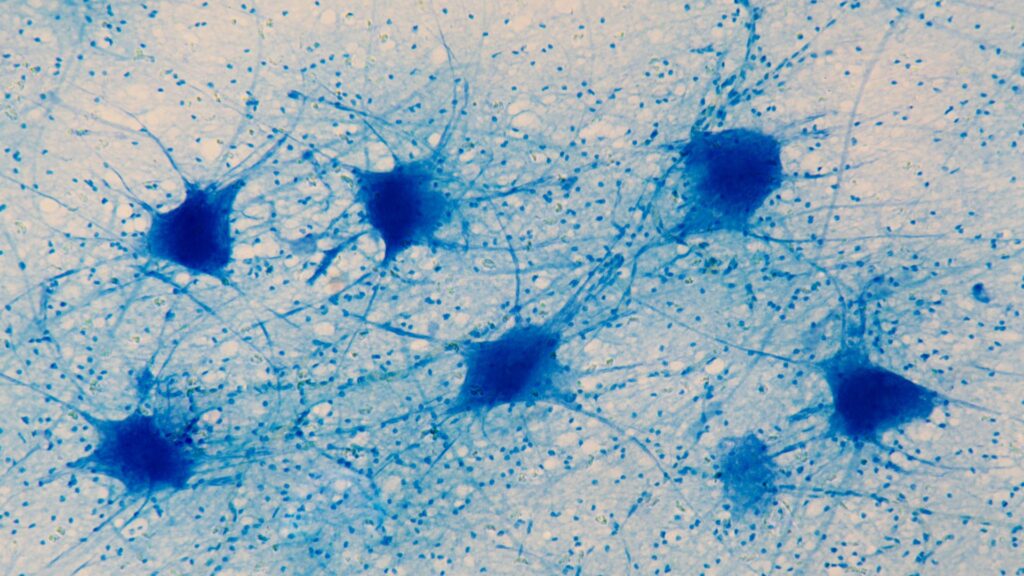
Valencia described how this biological GPS would work. If these particles were part of a living organism, one possibility is that they are connected to magnetoreceptive cells and act as magnetic sensors, he said. As the particle reoriented itself with Earth’s magnetic field, it could have generated a mechanical or electrical signal that the organism used to detect magnetic intensity and direction. This would have allowed navigation using the local magnetic field as a guide.
A Magnetic Sense Comparable to Human Sight
Valencia offered a compelling analogy for understanding this capability. The organism might have had a magnetic sense analogous to our sense of sight, which captures light distribution, allowing it to navigate its environment safely using the local strength and direction of the planet’s magnetic field as a guide. This discovery opens new avenues for understanding how ancient marine life traversed vast ocean distances millions of years ago, long before modern navigation technology existed.
PetsFanatic Team
Pet Care Expert & Content Creator
Passionate about sharing knowledge and tips for better pet care. Writing about everything from pet health to training techniques.