
Ancient Bacteria Frozen for 5,000 Years Is Resistant to 10 Antibiotics and Could Escape as Ice Melts

Buried beneath Romania’s Scarisoara Cave lies one of the world’s largest underground glaciers, a frozen mass roughly the size of 40 Olympic swimming pools that began forming around 13,000 years ago. When researchers drilled into a 5,000-year-old layer of that ice, they pulled out something unexpected: a cold-adapted bacterial strain resistant to 10 modern antibiotics. Their findings were published this week in Frontiers in Microbiology.
The strain, identified as Psychrobacter SC65A.3, belongs to a genus of bacteria that thrives in cold environments, including ice, refrigerated foods, and frozen ecosystems. Dr. Cristina Purcarea, senior scientist at the Institute of Biology Bucharest of the Romanian Academy and senior author of the study, confirmed the strain cannot infect humans. “This strain is a psychrophile,” she said, “meaning it’s a lover of the cold, not a lover of human bodies.”
What makes the discovery significant is not just the strain itself. The research demonstrates that antibiotic resistance is not a modern problem created by overprescription or pharmaceutical overuse. It is, according to Purcarea, “an ancient evolutionary characteristic that was shaped over millions of years by competition between microbes,” existing in nature long before doctors ever wrote a prescription. The findings were published in Frontiers in Microbiology.
A 25-Meter Ice Core Unlocked 13,000 Years of Frozen Microbial History
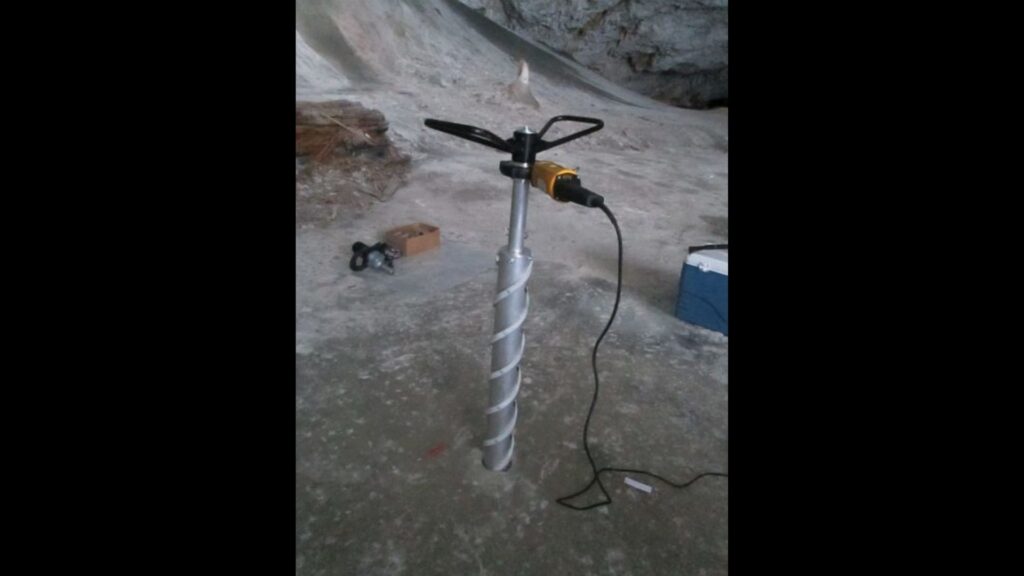
To retrieve the sample, the team drilled a 25-meter cylindrical ice core from the section of Scarisoara Cave known as the Great Hall. The core captured a 13,000-year timeline of frozen material, though the bacterial strain analyzed in the study came specifically from the 5,000-year-old layer. Ice fragments were sealed in sterile bags and kept frozen during transport to prevent any contamination before lab analysis.
In the lab, researchers isolated various bacterial strains from the core and sequenced their genomes to identify which genes enable survival in extreme cold and which are linked to antimicrobial resistance. When SC65A.3 was exposed to 28 antibiotics spanning 10 classes routinely used to treat bacterial infections, it showed measurable resistance to 10 of them, including rifampicin, vancomycin, ciprofloxacin, trimethoprim, clindamycin, and metronidazole.
Those 10 antibiotics are used to treat a range of serious conditions in clinical settings, including tuberculosis, colitis, urinary tract infections, and lung, skin, and blood infections. The study also noted SC65A.3 is the first Psychrobacter strain on record showing resistance to antibiotics, including trimethoprim, clindamycin, and metronidazole, making it a notable data point for researchers tracking how resistance spreads across microbial species.
The Strain Carries Over 100 Resistance Genes and Nearly 600 With Unknown Functions

Beyond the 10 confirmed resistances, the genome of Psychrobacter SC65A.3 contains over 100 resistance-related genes, along with nearly 600 genes whose functions remain entirely unknown. That pool of uncharacterized genetic material represents, according to the study, an untapped source for discovering novel biological mechanisms and new tools for medicine and biotechnology.
Bacteria share useful traits by exchanging small pieces of DNA across species, a survival strategy that has played out over millions of years of microbial competition. As glaciers and ice caves melt due to rising global temperatures, Purcarea warned that microbes trapped for millennia could be released into modern ecosystems. “While most are harmless, some could carry antibiotic resistance or other unknown biomolecules that might affect current ecosystems,” she said.
That concern extends beyond this study, as other researchers have revived 48,000-year-old viruses from permafrost to assess the risk of outbreaks from long-dormant pathogens. Purcarea is clear, however, that Psychrobacter SC65A.3 poses no threat to humans, and there is no evidence that it causes harm to people. The larger concern, she noted, is what other microbes, still frozen and unstudied, could carry.
The Same Bacteria Threatening Resistance Could Help Build Tomorrow’s Antibiotics

The story of Psychrobacter SC65A.3 does not end with risk. Genome analysis identified 11 genes with the potential to suppress or eliminate bacteria, fungi, and viruses. The strain also showed enzymatic activity with biotechnological potential, and researchers confirmed it can inhibit the growth of superbugs already resistant to multiple antibiotics, a meaningful finding given the current state of global antimicrobial resistance.
Matthew Holland, a postdoctoral researcher in medicinal chemistry at the University of Oxford who was not involved in the study, told CNN that scientists are increasingly searching extreme environments, including ice caves and the seafloor, for biomolecules that could become new antibiotic drugs. “The hope is that we can look at the molecules it makes and see if there’s the possibility within those molecules to make new antibiotics,” he said.
The urgency behind that search is real. The World Health Organization estimates nearly 5 million deaths occur every year linked to antimicrobial resistance, and in recent decades, pathogens have become resistant to many existing drugs due to overuse. Purcarea said, “These ancient bacteria are essential for science and medicine, but careful handling and safety measures in the lab are essential to mitigate the risk of uncontrolled spread.”
PetsFanatic Team
Pet Care Expert & Content Creator
Passionate about sharing knowledge and tips for better pet care. Writing about everything from pet health to training techniques.