
A Rare ‘Sunglint’ Made the Alabama River Look Like a ‘Golden Dragon’ From Space

For a brief moment in 2023, the Alabama River looked nothing like a river at all. From hundreds of miles above Earth, astronauts captured an image of the winding waterway glowing bright gold, twisting across the landscape like a mythical dragon. The striking transformation wasn’t caused by pollution, fire, or digital effects. Instead, it was the result of a rare alignment between sunlight, water, and atmosphere — a phenomenon so precise that it can only be seen from space.
What Astronauts Actually Saw From Orbit

The image was taken from the International Space Station and shows a long stretch of the Alabama River illuminated in an intense golden hue. The river’s curves appear exaggerated, glowing against the darker land around it. Social media users quickly compared the shape to a Chinese dragon, complete with a head, body, and tail formed naturally by bends in the river. The resemblance was accidental but uncanny.
The Rare Space Phenomenon Behind the Glow

The effect is known as sunglint, a mirror-like reflection that occurs when sunlight strikes a calm body of water at just the right angle. When conditions are perfect, the water reflects sunlight directly back toward an observer in space, creating a bright, metallic shine. Sunglints are fleeting and highly angle-dependent, which makes them difficult to capture and even harder to predict.
Why This Sunglint Looked Gold Instead of Silver

Most sunglints appear silvery or white, but this one stood out because of its warm, golden color. Scientists believe atmospheric particles — including dust, haze, and aerosols — scattered shorter blue wavelengths of light. What remained was a yellow-gold reflection that gave the river its molten, dragon-like appearance. This combination of atmospheric conditions is far less common, adding to the image’s rarity.
How the River’s Shape Created the “Dragon”

The Alabama River’s natural geography did the rest. Stretching more than 300 miles from Montgomery to Mobile Bay, the river snakes through the state with dramatic curves. One of the most prominent features is Gee’s Bend, a wide U-shaped loop that helped define the illusion of a coiled body. These bends amplified the visual effect, turning reflected light into a recognizable shape.
The Reservoir That Formed the Dragon’s “Head”

The brightest section of the image corresponds to the William “Bill” Dannelly Reservoir, an artificial lake created in the 1960s by damming part of the river. The reservoir flooded surrounding lowlands more than expected, creating shallow, reflective water surfaces. These conditions intensified the sunglint, making that section appear broader and brighter, much like the head of the dragon in the image.
Why Scientists Watch for Sunglints

Sunglints aren’t just visually striking, they’re scientifically useful. From space, they help researchers identify flooded regions, surface currents, internal waves, and even human activity such as ship wakes or oil slicks. In rivers, sunglints can highlight subtle changes in water levels and flow patterns that are difficult to detect by other means.
A Moment That Only Space Can Reveal
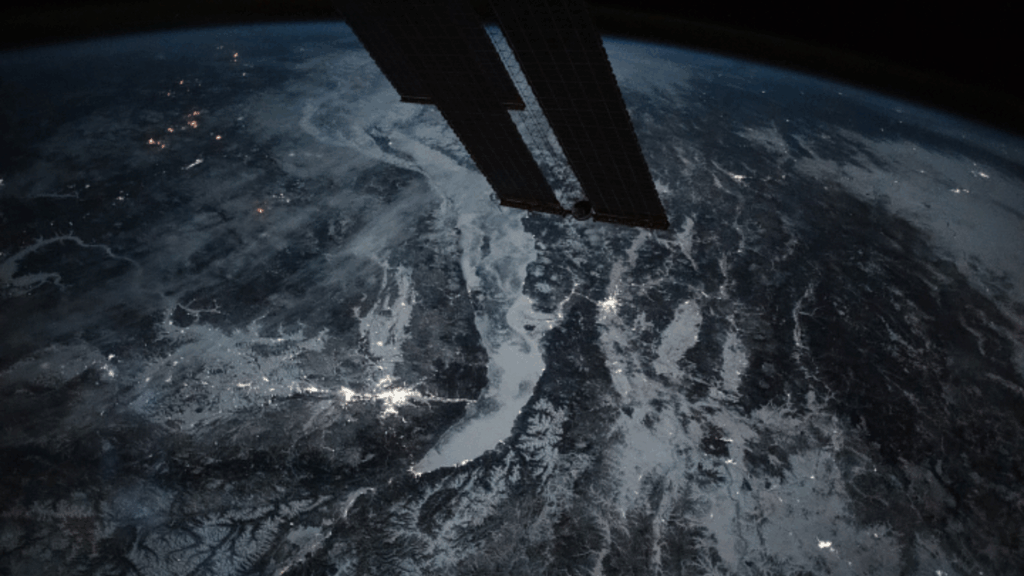
On the ground, nothing unusual was visible that day. The Alabama River flowed as it always does. The transformation existed only for observers in orbit, lasting just long enough to be captured by an astronaut’s camera. It’s a reminder that some of Earth’s most dramatic visuals depend entirely on perspective, and vanish almost as quickly as they appear.
Why Images Like This Captivate the Internet

Earth-from-space images resonate because they make the familiar feel extraordinary. A river people cross every day suddenly resembling a golden dragon challenges how we think about landscapes. These moments blend science with wonder, turning physics and geography into visual storytelling that sparks curiosity far beyond the scientific community.
Conclusion

The Alabama River didn’t actually become a dragon; but for a fleeting instant, light, water, and atmosphere aligned to make it look like one. Rare sunglints like this are reminders that Earth is constantly changing in ways we don’t always notice. From space, even the most ordinary features can reveal unexpected beauty, waiting for the right moment to shine.
PetsFanatic Team
Pet Care Expert & Content Creator
Passionate about sharing knowledge and tips for better pet care. Writing about everything from pet health to training techniques.