
Activists Break Into Wisconsin Farm to Rescue Beagles Bred for Research, Several Arrested

In the early hours of Sunday, March 15, a group of animal rights activists breached fencing at Ridglan Farms near Blue Mounds, Wisconsin, a facility that breeds beagles for biomedical research. Dozens of demonstrators, including out-of-state advocates and well-known figures in the animal rights movement, entered the property without permission in what they described as a planned “open rescue.” Video circulating on social media showed protesters carrying beagles out of kennel buildings and across open fields toward waiting vehicles.
Law enforcement responded shortly before 9 a.m. after reports of a break-in. Deputies from the Dane County Sheriff’s Office detained dozens of individuals at the scene. At least 20 people were arrested on charges including trespassing and burglary, and two vehicles were seized along with tools authorities described as evidence. Among those arrested were attorney and activist Wayne Hsiung and actress Alexandra Paul, both longtime advocates against animal experimentation.
The incident has amplified long-simmering controversy around Ridglan Farms and the broader practice of breeding dogs for laboratory research. For supporters of animal testing, the break-in was a criminal act that disrupted a regulated industry. For critics, it was a moral intervention in what they see as a system built on unnecessary suffering. The clash has placed renewed focus on the legal, ethical, and scientific questions surrounding research animals in the United States.
Inside Ridglan’s Role in the Research Pipeline
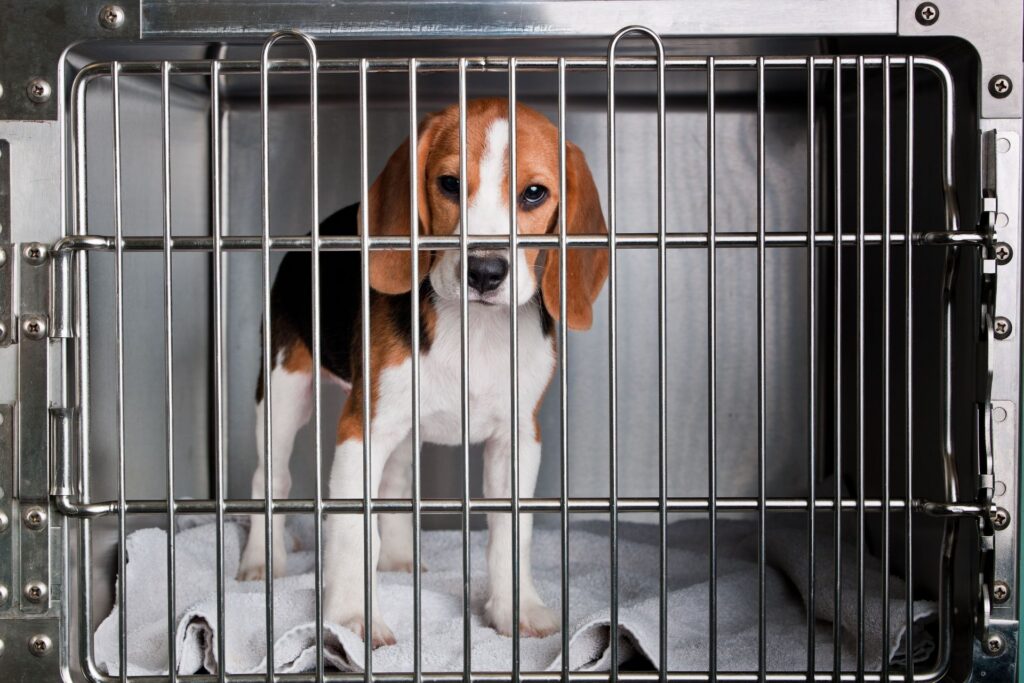
Ridglan Farms describes itself as a USDA Class A dog breeder and USDA-licensed Class R research facility. According to its public materials, it raises beagles for “scientific and medical discovery,” maintains a full-time veterinarian, and provides climate-controlled transportation to laboratory clients. The company positions itself as a professional supplier within a federally regulated biomedical research framework.
Critics, however, identify Ridglan as one of the nation’s largest breeders of beagles specifically for experimentation. Beagles are widely used in research due to their manageable size, gentle disposition, and adaptability to laboratory housing. The facility has long drawn protests from animal welfare groups who argue that breeding animals solely for experimentation is inherently exploitative.
Nationally, more than 40,000 dogs are used in experiments each year in the United States. Most are purpose-bred, born at facilities like Ridglan with the explicit intent of being sold to research laboratories. These dogs may be used in drug safety testing, pesticide studies, and medical device research, often undergoing invasive procedures before being euthanized at the conclusion of experiments. Ridglan’s place in this supply chain has made it a flashpoint for activists seeking systemic change.
Allegations of Cruelty and Whistleblower Testimony

Ridglan has faced allegations for years regarding the treatment of dogs inside its kennels. Advocacy groups have cited testimony from former employees and veterinarians describing dogs confined in small cages with limited enrichment. In 2017, activists from Direct Action Everywhere entered the facility in a similar open-rescue operation, removing three dogs and documenting what they described as cramped and distressing conditions.
Whistleblowers have alleged that some dogs were housed in cages measuring approximately two feet by four feet and were rarely allowed outdoors. Testimony also described foot injuries allegedly linked to damaged flooring and accounts of procedures such as cherry-eye removal conducted without proper anesthesia. Other former employees detailed devocalization surgeries in which dogs’ vocal cords were cut, claims that veterinary experts reviewing testimony suggested could constitute mutilation if performed without appropriate medical standards.
In response to mounting concerns, a Dane County judge determined there was sufficient evidence to appoint a special prosecutor to investigate potential felony animal cruelty charges. That decision marked a significant turning point, shifting scrutiny from protest actions to formal criminal review. Ridglan has denied wrongdoing and maintains that it complies with regulatory standards governing its operations.
Legal Boundaries and Federal Oversight

Dog testing remains legal in the United States under federal law. Facilities breeding and selling dogs for research operate under the Animal Welfare Act (AWA), which sets minimum standards for housing, feeding, sanitation, and veterinary care. However, the law does not prohibit invasive experiments themselves, focusing instead on baseline welfare conditions.
The Ridglan controversy has raised questions about the adequacy of oversight by both state and federal regulators. Advocates argue that alleged violations were not fully addressed until local authorities pursued deeper investigations. The involvement of a special prosecutor underscores how state-level animal cruelty statutes can intersect, and sometimes clash, with federally licensed research operations.
Meanwhile, a lawsuit seeking to free the dogs from Ridglan was dismissed, reinforcing the legal classification of purpose-bred research animals as property. That status complicates activist efforts and frames open-rescue tactics as criminal under existing law. Authorities have emphasized that while peaceful protest is protected, unlawful entry and removal of animals cross legal lines.
Dogs Freed, Recovered, and the Arrest Fallout

During the March 15 operation, activists initially claimed that roughly 22 to 23 beagles were removed from the property. Authorities later confirmed that some of the dogs were recovered and returned to Ridglan Farms, though not all animals were immediately accounted for. Investigations into the total number taken and their whereabouts remain ongoing.
Among those arrested were prominent activists Wayne Hsiung, co-founder of Direct Action Everywhere and The Simple Heart, and actress and longtime animal rights advocate Alexandra Paul. Both have publicly supported civil disobedience as a strategy to challenge industries they view as harmful to animals. Supporters argue that risking arrest to expose alleged cruelty follows a historical tradition of protest movements that sought to confront injustice directly. Critics, however, contend that removing animals and breaching private property undermines legal processes and public safety, regardless of the cause.
Dane County Sheriff Kalvin Barrett acknowledged strong public emotion surrounding the issue but emphasized that unlawful activity would be addressed through the justice system. Prosecutors are reviewing evidence, and charges could carry significant penalties. The outcome of these cases may shape how future activism targeting research facilities is handled.
A Phase-Out Agreement and Shifting National Policy

In late 2025, Ridglan agreed to surrender its state breeding license and halt dog sales to laboratories by July 1, 2026, following sustained advocacy pressure and an ongoing cruelty investigation. Supporters of the decision view it as a milestone in reducing large-scale breeding of beagles for research. However, the agreement allows continued breeding and sales until that deadline.
Critics argue that thousands of dogs may remain confined during the transition period, while others see the phase-out as evidence that activism and regulatory scrutiny can produce tangible change. The situation echoes the 2022 federal case against Envigo, a breeding facility where nearly 4,000 beagles were rescued and a record settlement followed.
Beyond Wisconsin, federal policy is also evolving. The FDA Modernization Act 2.0 eliminated a longstanding requirement that new drugs undergo mandatory animal testing before human trials. Agencies have increasingly promoted alternatives such as organ-on-chip technology and computational modeling. Yet tens of thousands of dogs are still used in U.S. laboratories each year. Whether the Ridglan arrests represent a turning point in that reality, or simply another chapter in a deeply entrenched debate, remains to be seen.
PetsFanatic Team
Pet Care Expert & Content Creator
Passionate about sharing knowledge and tips for better pet care. Writing about everything from pet health to training techniques.