
A Wild Cat Thought Nearly Lost Reappears in Thailand After 30 Years

An elusive wild cat long feared extinct in Thailand has been spotted again after nearly three decades. Conservation authorities and an international NGO confirmed the rediscovery of the flat-headed cat, a species last officially recorded in the country in 1995. The sighting marks a rare and hopeful moment for wildlife conservation in Southeast Asia. For scientists, it closes a 30-year gap filled with uncertainty and concern.
One of the World’s Rarest Wild Cats

Flat-headed cats are among the most endangered wild felines on Earth. According to the International Union for Conservation of Nature (IUCN), only about 2,500 adult individuals remain in the wild. Roughly the size of a domestic cat, they are known for their round, close-set eyes and flattened skull shape. Their small population and elusive nature make sightings extremely rare.
A Species Tied to Fragile Wetlands
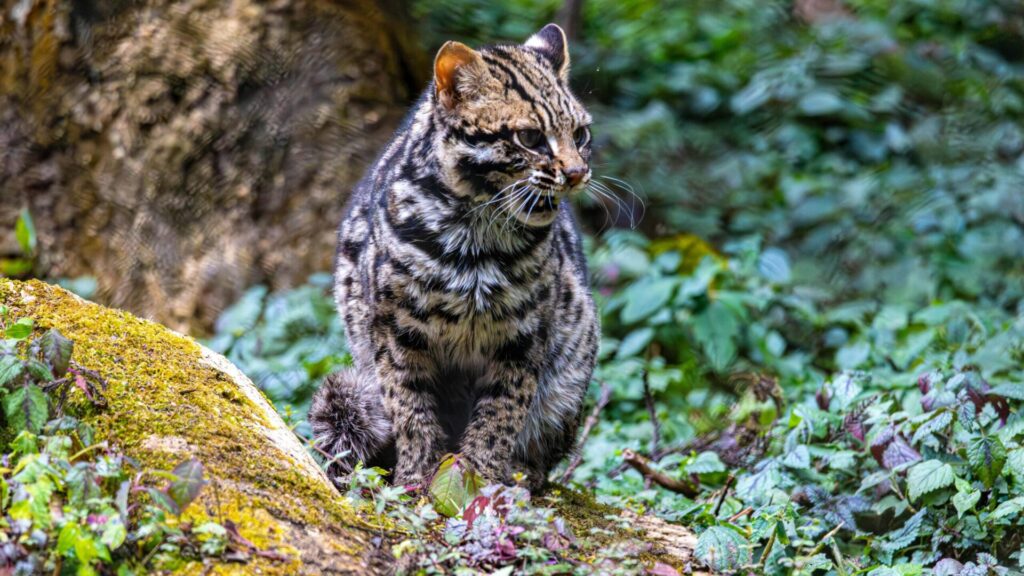
These cats live exclusively in Southeast Asia and depend heavily on dense wetland ecosystems. They are typically found in peat swamps, freshwater mangroves, and swamp forests. Unfortunately, these habitats are disappearing rapidly due to land conversion and agricultural expansion. In Thailand, peat swamp forests have become heavily fragmented over recent decades.
Why Thailand Lost Sight of the Species

The last confirmed sighting of a flat-headed cat in Thailand occurred in 1995. Since then, habitat destruction and isolation made researchers fear the species had vanished from the country entirely. Limited access to remote wetlands also made monitoring nearly impossible. For years, the cat’s presence existed only as speculation among conservationists.
Camera Traps Reveal a Surprise

In 2024, conservation organization Panthera partnered with Thailand’s Department of National Parks to conduct an ecological survey. Using camera traps placed inside Princess Sirindhorn Wildlife Sanctuary, researchers made a stunning discovery. The cameras detected flat-headed cats 29 separate times. These sightings confirmed the species was still alive in Thailand.
A Promising Sign for the Population

While it’s unclear how many individual cats were recorded, the number of detections suggests a relatively high local concentration. Flat-headed cats lack distinctive markings, making individual identification difficult. Even so, conservationists believe the repeated sightings point to a stable presence. This challenges previous assumptions that the species had disappeared entirely.
Rare Footage of a Mother and Cub

One of the most encouraging discoveries was footage of a female flat-headed cat with her cub. This is especially significant because the species typically produces only one offspring at a time. Reproduction has been a major challenge due to fragmented habitats. Seeing a mother and cub offers renewed hope for the species’ future.
Experts Urge Cautious Optimism

Veterinarian and wild cat researcher Kaset Sutasha described the rediscovery as “exciting” but warned that it is only a beginning. He emphasized that long-term conservation will require careful planning. Protecting habitat and enabling coexistence between humans and wildlife are now critical. Without sustained action, the species could still vanish again.
A Mysterious and Elusive Predator

Flat-headed cats are nocturnal and extremely difficult to observe in the wild. Their diet consists mainly of fish, frogs, and shrimp, making them uniquely adapted to wet environments. Much about their behavior remains unknown due to their rarity and inaccessible habitats. Researchers say every new sighting adds valuable insight into the species.
What This Rediscovery Means for Conservation

The return of the flat-headed cat to Thailand reshapes conservation priorities in the region. It highlights the importance of protecting remaining wetlands before they disappear entirely. The discovery also proves that even species feared lost can survive under the right conditions. For conservationists, it is both a victory—and a call to act quickly.
PetsFanatic Team
Pet Care Expert & Content Creator
Passionate about sharing knowledge and tips for better pet care. Writing about everything from pet health to training techniques.