
A Volcano 32 Times More Powerful Than Mount Pinatubo Is Refilling With New Magma

About 7,300 years ago, a volcano off the southern coast of Japan produced the most powerful eruption in all of recorded prehistory. A new study from Kobe University now shows the magma chamber beneath it is slowly refilling with new magma working its way in from below, and researchers say studying that process could bring scientists closer to predicting when giant volcanoes like this one might erupt again.
The Akahoya Eruption Dwarfed Nearly Every Volcanic Blast on Record

The Kikai Caldera’s Akahoya eruption ejected around 160 cubic kilometers of dense rock, more than 11 times the volume released by Alaska’s Novarupta in 1912 and 32 times that of the Philippines’ Mount Pinatubo in 1991. Pyroclastic flows reached up to 150 kilometers from the volcano, blanketing roughly 4,500 square kilometers, and volcanic ash fell across large portions of Japan and the Korean peninsula.
The Caldera Sits Mostly Underwater, and That Actually Helps

The Kikai Caldera is largely submerged beneath the ocean south of Japan’s Kyushu island, which limits access but also opens up research possibilities that land-based volcanoes don’t offer. Kobe University geophysicist Seama Nobukazu noted that the underwater setting allows researchers to conduct systematic, wide-scale surveys of the area in ways that would otherwise be difficult.
Scientists Used Sound Waves to See Inside the Volcano

Seama and colleagues from Kobe University and the Japan Agency for Marine-Earth Science and Technology sent research boats to the site, using air-gun arrays to generate seismic pulses and ocean-bottom seismometers to track how those pulses moved through the Earth’s crust. By measuring how the waves traveled, the team was able to map what lies beneath the seafloor, including the magma chamber that fed the Akahoya eruption.
Researchers Traced the Reservoir Back to the Akahoya Eruption
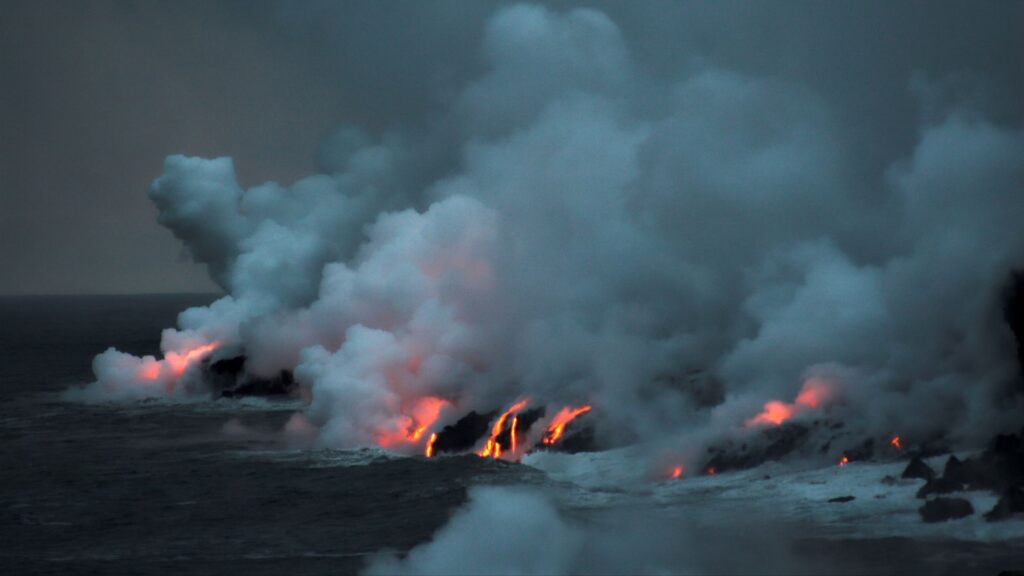
Published in Communications Earth and Environment, the study concluded that it is the same chamber responsible for the Akahoya eruption. A new lava dome has also been forming within the caldera over roughly the past 3,900 years, suggesting the volcano has remained active long after its last major event.
The Magma Filling the Chamber Today Is Entirely New

Chemical analyses of material from recent volcanic activity in the caldera show a different composition than what was ejected during the Akahoya eruption, indicating the magma present today is not a remnant of that ancient event. Seama concluded the chamber is actively being replenished with fresh magma rather than holding onto remnants slowly cooling from a prehistoric blast.
The Findings Point to a Broader Pattern Across Giant Volcanoes
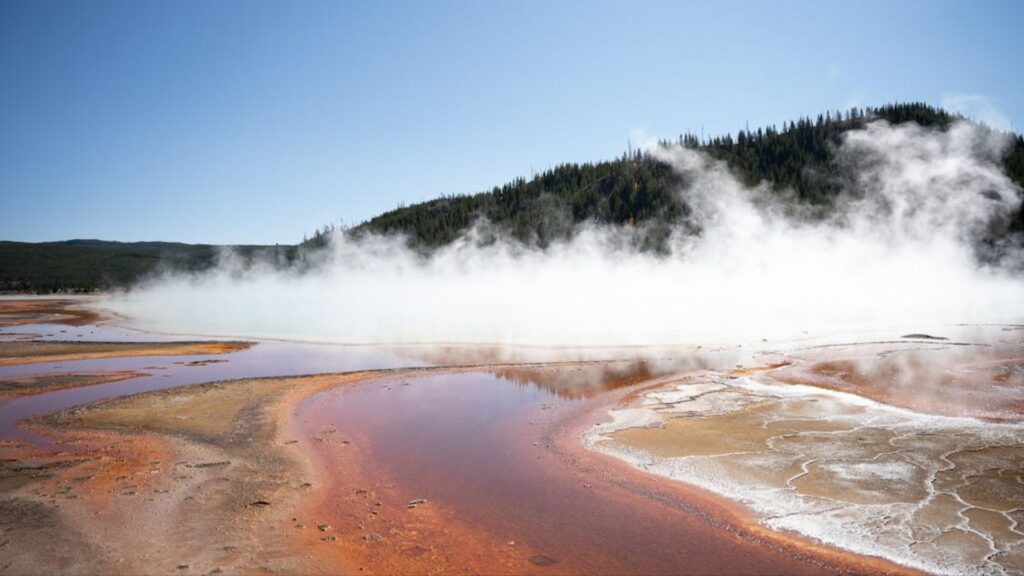
The research team used their findings to propose a general model for how magma chambers beneath large calderas refill over time. According to Seama, the magma re-injection model they developed is consistent with what is known about the shallow magma reservoirs beneath other major calderas, including Yellowstone in North America and the Toba caldera in Indonesia, suggesting the refilling cycle may be common to all supervolcanoes of this scale.
These Volcanoes Can Lie Quiet for Hundreds of Thousands of Years

Yellowstone’s last caldera-forming eruption occurred around 640,000 years ago, while the Toba caldera in Indonesia produced what is considered the largest volcanic eruption in all of human prehistory, approximately 74,000 years ago. Scientists have long recognized that these systems can remain dormant for vast stretches before reawakening, though the mechanics behind those long cycles remain poorly understood.
A Future Eruption Near Kikai Could Be Far More Dangerous Than the Last

The population density surrounding the Kikai Caldera region is substantially higher today than it was 7,300 years ago, when the Jōmon people, who inhabited Japan from roughly 14,000 BC to 300 BC, are believed to have suffered devastating losses from the Akahoya event. Even a comparatively modest eruption today could carry far greater consequences, given how densely the region is now settled.
The Goal Is to Get Better at Seeing What’s Coming

Seama described the study as a foundation rather than a final answer, with the team aiming to refine the survey methods that proved effective here and deepen their understanding of how magma builds back up beneath these systems. The broader objective, as the research group sees it, is to improve scientists’ ability to monitor the early warning signs that precede a giant caldera eruption, signals that right now remain difficult to read.
PetsFanatic Team
Pet Care Expert & Content Creator
Passionate about sharing knowledge and tips for better pet care. Writing about everything from pet health to training techniques.