
A Massive New Spinosaurus Species Has Been Unearthed in Niger

Paleontologists have announced the discovery of a brand-new species of giant Spinosaurus dinosaur in the remote deserts of Niger, a finding that is being hailed as one of the most exciting dinosaur discoveries in more than a century and reshapes scientific understanding of this fearsome group of prehistoric predators. The species, officially named Spinosaurus mirabilis, lived about 95 million years ago in what was then a forested riverine environment far from ancient coastlines, revealing new clues about how these massive dinosaurs adapted to their surroundings.
Fossils of this newly identified species were unearthed from the Farak Formation in central Sahara deposits by an international team of scientists led by paleontologist Paul Sereno of the University of Chicago, and the research was published in the journal Science. Extensive fieldwork and modern reconstruction techniques were used to piece together skull fragments, jaw bones and other skeletal material that confirm this dinosaur’s unique features and evolutionary significance.
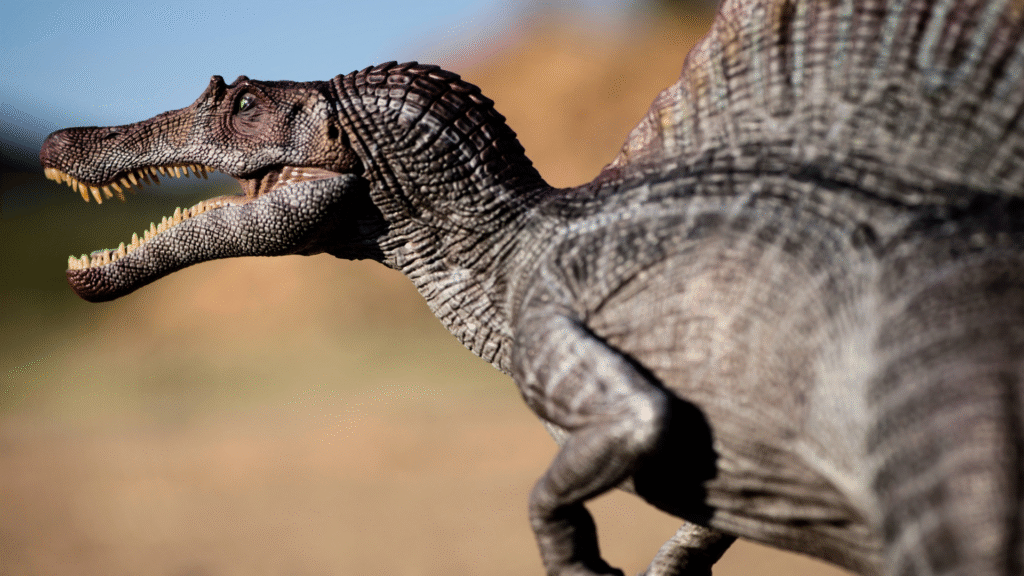
What distinguishes this new Spinosaurus species from others is its enormous blade-shaped crest rising from its skull and the combination of physical traits that make it one of the largest meat-eating dinosaurs ever documented. At an estimated 12 meters long and weighing several tons, Spinosaurus mirabilis would have been a dominant predator of its era, capable of snaring large fish from inland waters as well as navigating its relatively complex terrestrial habitat.
What Sets Spinosaurus Mirabilis Apart

One of the most striking characteristics of the new species Spinosaurus mirabilis is its scimitar-shaped crest, a tall, curved bony structure atop its skull that researchers believe was likely covered in keratin and may have been brightly colored in life. This crest could have served as a signaling device for mates or rivals, much like modern birds use elaborate head features during displays.
Unlike earlier spinosaur discoveries that were thought to be almost exclusively aquatic, S. mirabilis appears to have lived and hunted in inland river environments, stalking fish and possibly small vertebrates in shallow water much like a modern wading bird, leading some scientists to give it the evocative nickname “hell heron.” This behavior marks a departure from the long-held view of spinosaurids as primarily marine hunters.
The anatomical features of Spinosaurus mirabilis, including a more elongated snout and proportions that suggest it could move effectively on land and in water, provide fresh insights into how these giant theropods diversified and thrived in varied ecological niches across what is now northern Africa during the Late Cretaceous period.
Why This Discovery Matters to Science
The identification of Spinosaurus mirabilis is especially significant because it represents the first unmistakable new species in the Spinosaurus genus in over 100 years, providing paleontologists with crucial new data about variation within this remarkable group of dinosaurs and their evolutionary history. S. mirabilis joins Spinosaurus aegyptiacus, the iconic species first described in the early 20th century, expanding the known diversity of spinosaurs.
Because the fossils were found in fluvial sediments far from ancient coastlines, this discovery challenges previous assumptions about spinosaur behavior and habitat, hinting that these giant predators may have been more flexible in their lifestyles than previously thought and that inland waterways played a significant role in their ecology.
Beyond scientific curiosity, Spinosaurus mirabilis helps flesh out the environment of Cretaceous Africa, showing that lush river systems supported a complex community of predatory and prey species long before the Sahara became the desert it is today. Continued analysis of these fossils may illuminate broader questions about dinosaur adaptation, distribution and evolution across prehistoric ecosystems.
What This Discovery Means for Dinosaur Research

The discovery of a new giant Spinosaurus species has triggered excitement across the paleontology world, not only because of the creature’s impressive size and distinctive crest, but also due to how it reshapes understanding of spinosaurid diversity and behavior. By revealing that these dinosaurs thrived in inland environments as well as coastal ones, researchers gain a deeper appreciation of how adaptable and widespread spinosaurs may have been.
As scientists continue to examine the fossils and publish further findings, Spinosaurus mirabilis could become a cornerstone species for understanding theropod evolution during the Late Cretaceous, offering insight into how environmental pressures influenced the development of specialized hunting strategies and physical traits.
For dinosaur enthusiasts and researchers alike, the find underscores that even in well-studied dinosaur groups, there are still remarkable surprises waiting to be uncovered, reminding us that Earth’s ancient past remains rich with new discoveries that can transform long-held scientific narratives.
PetsFanatic Team
Pet Care Expert & Content Creator
Passionate about sharing knowledge and tips for better pet care. Writing about everything from pet health to training techniques.