
A Homeowner Found a Fluffy Kitten on Their Porch, Then Realized It Was Not a House Cat at All
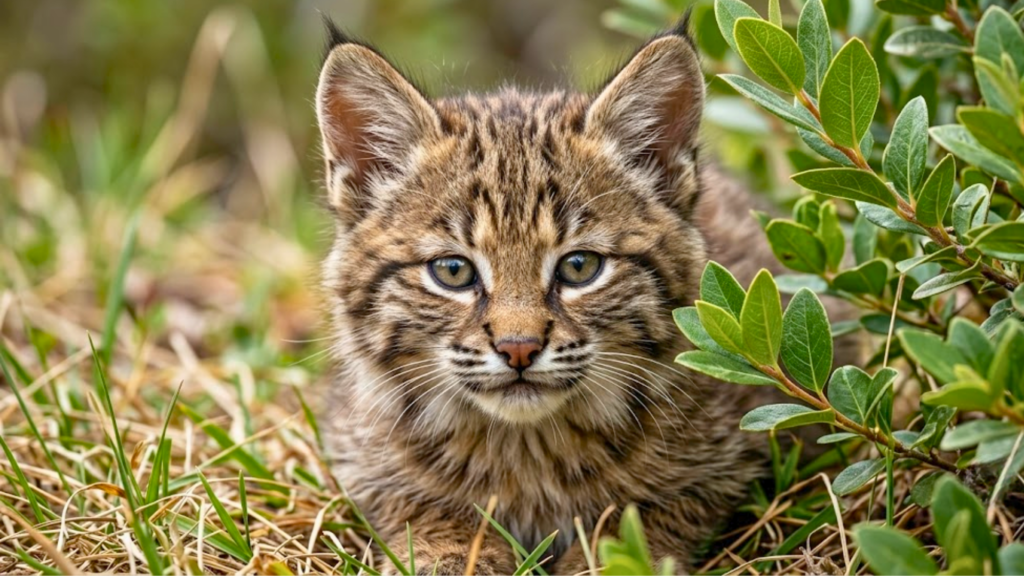
One morning, a Nevada homeowner stepped outside to find a small, fluffy kitten sitting on their porch, calm as a houseguest. It let them sit nearby. It purred. It rolled over and showed its belly. The internet would soon lose its mind over the encounter, but the real twist came first: this was no ordinary stray, and it had apparently decided this porch was exactly where it wanted to be.
The Post That Broke the Internet

On October 6, Reddit user u/Affectionate_Lime880 shared photos of the encounter with the caption “Abandoned bobcat kitten on my porch.” The cub had shown up that morning, calm and apparently unbothered by human presence. The post exploded, eventually surpassing 103,000 upvotes. The homeowner’s bewildered question, asking whether the animal had imprinted on them and what they should do, captured exactly what most people would feel in the same situation.
Built Like a Housecat, Wired Like a Predator

Bobcats look deceptively domestic, especially as cubs. Adults weigh between 15 and 30 pounds, roughly twice the size of a typical house cat, with tufted ears, spotted coats, and the stubby “bobbed” tail that gives them their name. They are adaptable predators found in wooded areas, semi-desert terrain, urban edges, and swampland environments. Cute as kittens, they grow into solitary hunters built for stealth, patience, and precision.
Nevada Is Bobcat Country

The Reno area where this encounter occurred sits squarely within prime bobcat territory. The bobcat’s range stretches from southern Canada to central Mexico, making it the most widespread wild cat in North America, with populations present in 47 of the 48 contiguous U.S. states. Kelley Stewart, a professor of wildlife ecology at the University of Nevada, Reno, told Newsweek that bobcats live throughout the region, including in sagebrush areas and residential neighborhoods. Their presence near homes is far less unusual than most people realize.
Where Was the Mother?

A lone bobcat cub on a suburban porch almost always signals trouble somewhere in the family. According to Kelley Stewart, the cub’s mother would likely return for it, unless something had prevented her from doing so, such as being struck by a vehicle. Wildlife rehabilitators note that rehabbing and releasing bobcats is considerably more difficult than recovering most other wildlife species, making early intervention critical when a mother is genuinely absent. That uncertainty made the homeowner’s next move all the more important.
Leave It Alone and Call for Help

Stewart’s advice was straightforward: do not approach the cub, do not leave food out, and contact the state department of wildlife immediately. She emphasized that bobcats are highly self-sufficient and that feeding a wild animal, even with good intentions, can cause lasting harm by reducing its natural fear of humans. Once a bobcat becomes reliant on humans, returning it to the wild becomes nearly impossible, according to wildlife conservation experts. The homeowner followed through, contacting a wildlife rescue service.
The Purring Problem With Cute Wild Animals

The cub’s behavior, purring, rolling over, tolerating touch, felt like affection. Wildlife experts say it reflects something more complicated. Mammals do not visually imprint on caregivers the way birds do, but they can become tame or habituated to humans if not handled appropriately, according to the Wildlife Center of Virginia. A young bobcat raised with too much human contact loses the wariness it needs to survive on its own. What looks like trust is actually a liability in the making.
Bobcats Are Adapting to Our World

This encounter reflects a broader shift in how these animals move through North America. Researchers have found that bobcat populations are rebounding thanks to greater regulation, and the animals are adapting to human population growth, moving into urban areas in ways most species cannot manage. Most bobcat populations have increased since the late 1990s, and urban green corridors, creek beds, parks, and undeveloped strips are now part of their everyday habitat. Humans and bobcats are, increasingly, sharing the same neighborhoods.
The Internet’s Feelings, Summarized

Reddit responded with characteristic warmth and wit. One user wrote “Tell him I said pspspspsps.” Another called the cub “the forbidden kitty.” A third reasoned that if it were not meant to be a friend, it would not have been made friend-shaped. The homeowner posted a clarification alongside the humor, stating clearly that the cub was a wild animal, belonged in nature, and should never be kept as a pet.
Wild Is Not a Problem to Fix

The rescue arrived, the cub was transported to professional care, and the porch returned to normal. What the story leaves behind is a reminder about instinct, both human and animal. A purring, belly-showing bobcat cub is irresistible. That is precisely why the right call is the harder one: step back, make the call, and let the professionals take over. The wildlife system works when people resist the urge to make it personal. This homeowner did exactly that.
PetsFanatic Team
Pet Care Expert & Content Creator
Passionate about sharing knowledge and tips for better pet care. Writing about everything from pet health to training techniques.