
A Hidden 5,000-Year-Old Fortress Is Raising New Questions About Ancient Civilizations

Deep within a dense forest in Neamț County, archaeologists have uncovered the hidden remains of a 5,000-year-old fortress that had been concealed by nature for centuries. This remarkable discovery is reshaping how experts understand early human societies and their capabilities. Using advanced scanning tools, researchers revealed a complex settlement that had long remained invisible beneath thick vegetation. The findings suggest that ancient civilizations may have been far more advanced and organized than previously believed.
A Discovery Hidden Beneath the Forest Canopy

For centuries, the fortress remained completely hidden under layers of forest growth, making it nearly impossible to detect through traditional exploration. The thick vegetation masked the site so effectively that even trained archaeologists could not fully observe its structure on foot. Only with modern technology were researchers finally able to uncover what lay beneath. This discovery highlights how many ancient sites may still be concealed around the world, waiting to be revealed.
How Modern Technology Made It Possible

The breakthrough came through the use of LiDAR, a technology that uses laser pulses to map the ground below. By sending light signals through the forest canopy, researchers were able to create detailed 3D images of the terrain. This allowed them to detect structures that would otherwise remain hidden. The method has become an essential tool in modern archaeology, enabling discoveries that were once thought impossible.
A Fortress From a Transitional Era

The fortress dates back roughly 5,000 years, placing it at a critical transition between the Neolithic and Bronze Age periods. This was a time when human societies were evolving rapidly, shifting from simple farming communities to more complex social systems. Discoveries like this provide valuable insight into how early civilizations adapted and organized themselves. The site offers a rare glimpse into a pivotal moment in human history.
Evidence of Advanced Planning and Engineering

LiDAR scans revealed that the fortress was not a simple settlement but a carefully planned defensive structure. It included long ditches, earthen walls, and elevated positions designed for protection and visibility. Some of these defensive features stretched hundreds of meters, indicating a massive construction effort. This level of planning suggests that the builders possessed advanced knowledge of engineering and coordination.
Built for Defense and Strategic Advantage

The fortress was strategically positioned on high ground, offering a clear view of the surrounding landscape. This placement would have allowed its inhabitants to monitor potential threats and defend their territory effectively. The design reflects a strong understanding of military strategy, even in such an early period. It challenges assumptions that prehistoric communities lacked organized defense systems.
The Role of Collaboration in the Discovery

The discovery was made possible through collaboration between archaeologists and technology experts. A partnership involving research institutions and private technology firms enabled the use of advanced scanning tools. Interestingly, the project also brought together a teacher and former student, showing how knowledge and innovation can span generations. This collaboration demonstrates how modern archaeology increasingly relies on interdisciplinary teamwork.
What the Fortress Reveals About Ancient Societies
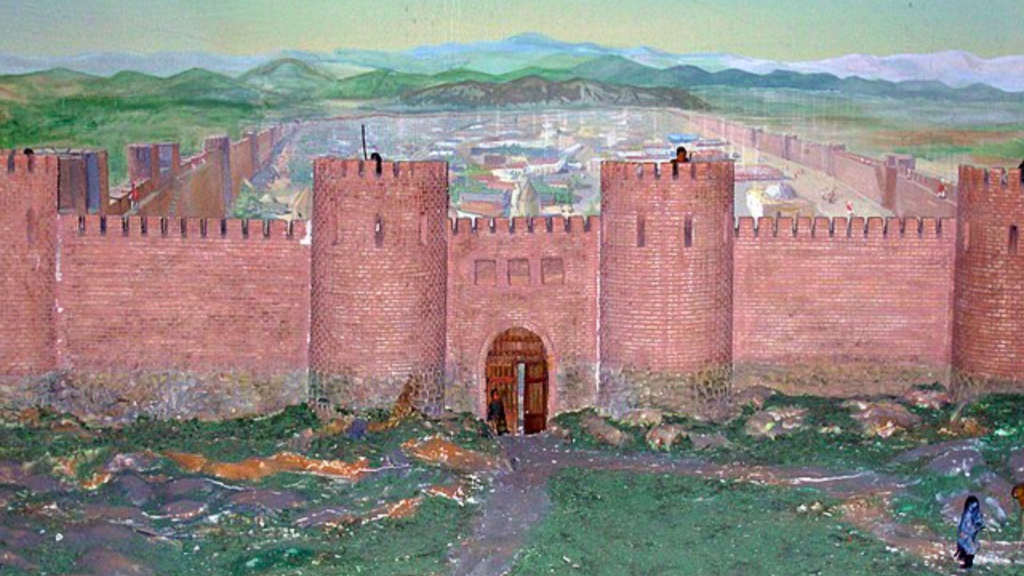
The scale and complexity of the fortress suggest that its builders lived in an organized and cooperative society. Constructing such a site would have required coordinated labor, resource management, and leadership. This challenges older theories that early communities were small and loosely structured. Instead, it points to the existence of more sophisticated social systems much earlier than once believed.
A Glimpse Into the Future of Archaeology

This discovery highlights how technology is transforming archaeology and expanding what researchers can uncover. Tools like LiDAR allow scientists to explore difficult terrain without disturbing the site itself. As these methods continue to improve, more hidden structures could be revealed across the globe. The future of archaeology is increasingly tied to innovation and digital exploration
Rethinking the Capabilities of Early Civilizations

The discovery of this hidden fortress is more than just an archaeological milestone, it is a reminder that history still holds many secrets. It forces researchers to reconsider what ancient people were capable of achieving thousands of years ago. As new technologies uncover more hidden sites, our understanding of early civilizations will continue to evolve. This ancient fortress stands as a powerful symbol of human ingenuity long before modern times.
PetsFanatic Team
Pet Care Expert & Content Creator
Passionate about sharing knowledge and tips for better pet care. Writing about everything from pet health to training techniques.