
A Glacier Holding 1,000 Years of Climate History Is Melting Fast, and Scientists Are Racing to Save What They Can
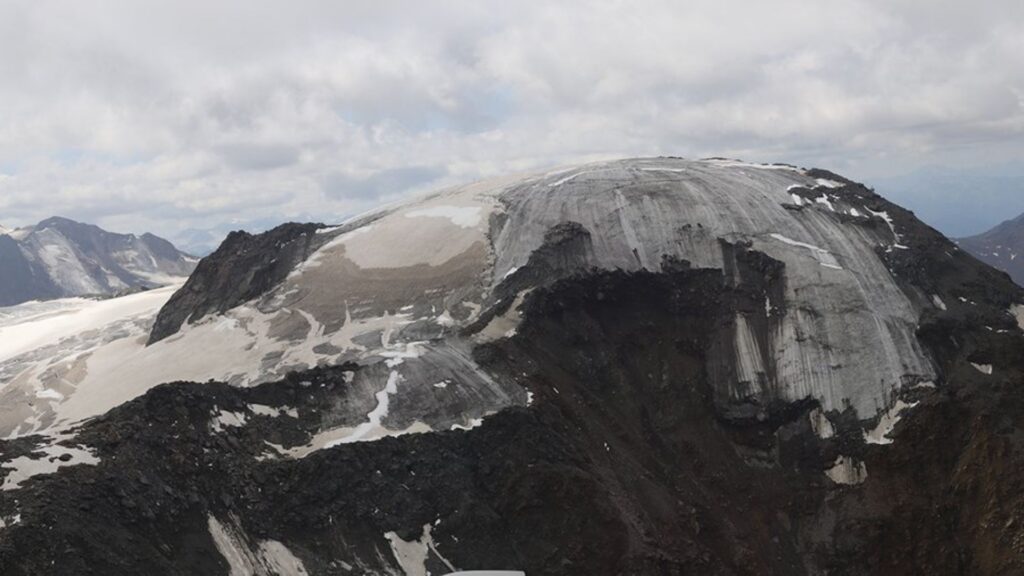
Half of Austria’s Weißseespitze ice cap has melted away since 2019. The glacier in the eastern Alps near the Austrian-Italian border held layers dating back more than a thousand years when researchers drilled a 9.5-meter core from the site six years ago. By 2025, only 5.5 meters remained. Scientists estimate the rest will disappear within years, according to research published in Frontiers in Earth Science.
Each ice layer contains frozen atmospheric particles from specific time periods, creating a chemical timeline of human activity and natural events across centuries. Researchers analyzed 18 trace elements and organic acids in the core samples to reconstruct environmental conditions spanning more than a thousand years. The ice captured traces of medieval mining and ancient wildfires, showing what the atmosphere looked like before industrial pollution took hold.
Paleoclimatologist Azzurra Spagnesi from Università Ca’ Foscari Venezia, who led the research, noted that losing this glacier means losing irreplaceable climate knowledge. The ice preserves information about atmospheric evolution and human influence on the environment that can’t be recovered once it melts. Scientists face a narrowing window to extract and analyze what remains.
Medieval Mining Left Chemical Signatures in Alpine Ice
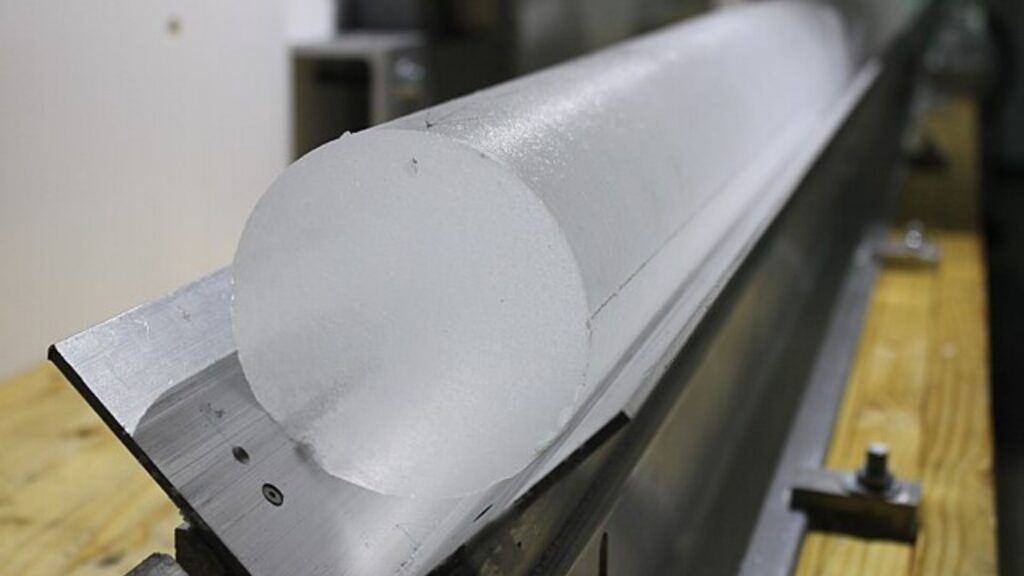
Researchers used continuous flow analysis to measure chemical composition in the ice samples. The technique involves slowly melting the core and vaporizing it for direct injection into analytical instruments. Tools like cavity ring-down spectrometers can detect trace gases at parts-per-trillion levels based on how different gases reflect light. This method cuts down on processing time and reduces contamination risks from direct handling.
Starting around 950 CE, the ice showed elevated levels of arsenic, lead, and copper. These peaks corresponded with intensified mining and smelting operations across medieval Europe, according to the research team. The concentrations also aligned with volcanic eruptions that occurred during the 13th and 14th centuries, demonstrating how both human industrial activity and natural events left distinct chemical markers.
The analysis revealed concentrations of certain elements that differed significantly from those in other regional cores. Thallium and bismuth levels measured about 20 times higher than cores taken from a glacier farther east in 2018, while uranium concentrations were roughly 5 times higher. Spagnesi suggested transport and deposition patterns might explain these discrepancies, though the exact reasons remain unclear.
Lower Elevation Ice Challenges Previous Scientific Assumptions
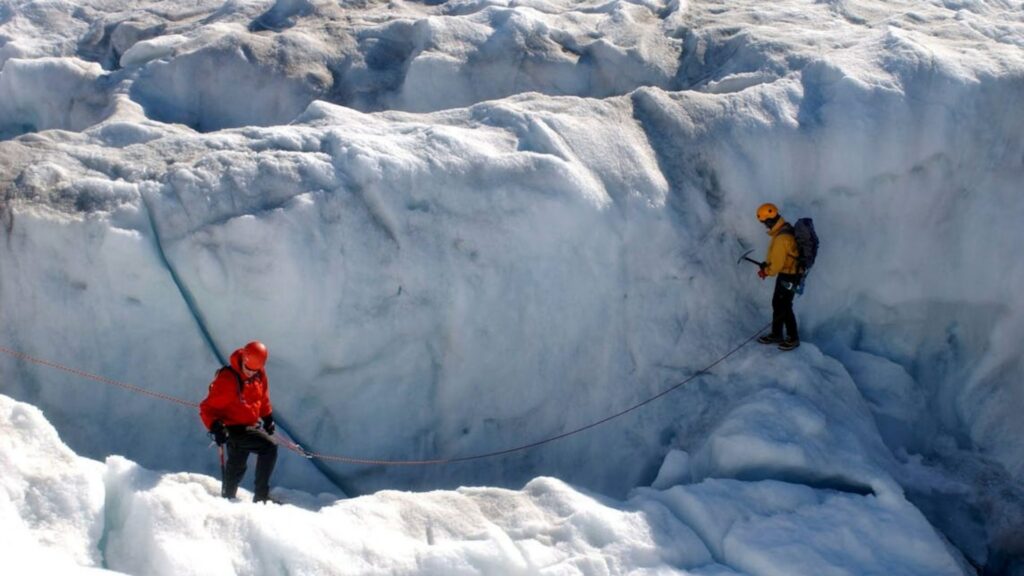
Most Alpine ice cores come from western glaciers at higher, colder elevations where climate records are preserved more easily. Scientists long believed glaciers below 3,500 meters in the eastern Alps couldn’t maintain undisturbed records because temperate ice conditions would affect melting. The Weißseespitze findings demonstrate that under certain conditions, ice at lower eastern Alpine elevations can still preserve valuable climate data.
Joe McConnell, a climate researcher at Nevada’s Desert Research Institute who focuses on ice core interpretation, explained that aerosols like dust and sea salts, plus emissions from wildfires, volcanic eruptions, and industrial processes, remain airborne only days before depositing on surfaces. Eastern Alpine ice cores potentially provide different environmental history information than western Alpine records, similar to how polar cores differ from mid-latitude samples.
Glaciologist Andrea Fischer from the Institute for Interdisciplinary Mountain Research has visited the site so many times she’s lost count. The location sits about an hour and a half drive, plus a 2-minute helicopter ride from her office. This proximity allows frequent visits and drilling on short notice, though the 2019 cores now hold the most valuable information since the uppermost 5 meters have already disappeared.
Ancient Ice Reveals Human Impact on the Atmosphere Before the Industrial Era
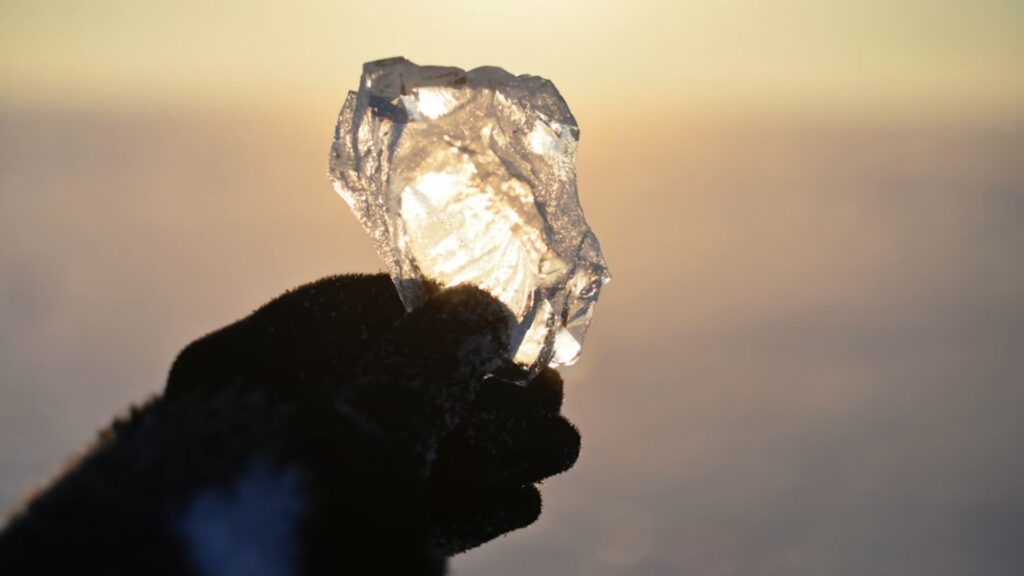
Analysis using argon isotopes showed the glacier’s surface formed between 1552 and 1708 CE, while modeling placed the deepest layer between 349 BCE and 420 CE. Researchers measured levoglucosan, a compound that forms when wood burns, to identify when wildfires occurred. Spagnesi noted that before the industrial period, human influence on the atmosphere was detectable but remained very small compared to natural processes.
Natural phenomena like dust transport and volcanic eruptions dominated the chemical signals recorded in pre-industrial ice layers. This provides a baseline for understanding how much the atmosphere has changed in modern times, according to Spagnesi. Ice core scientist Alison Criscitiello from the University of Alberta, who wasn’t involved in the research, said the study paints a picture of what was happening during this time period.
Criscitiello noted that scientists typically prioritize drilling locations expected to experience warming in the coming decades but haven’t yet seen significant melt. This study demonstrates that actively melting ice can still be a valuable resource. The research raises questions about other overlooked sites where historical records trapped in ice are steadily disappearing as temperatures rise and glaciers continue shrinking across mountain ranges worldwide.
PetsFanatic Team
Pet Care Expert & Content Creator
Passionate about sharing knowledge and tips for better pet care. Writing about everything from pet health to training techniques.