
A Black Hole May Have Eaten a Star and Produced the Longest Gamma-Ray Burst Ever Recorded

On July 2, 2025, something lit up the universe in a way that stopped astronomers in their tracks. A blast of high-energy radiation erupted from deep space and kept burning for hours. By the time it finally faded, it had lasted seven full hours, more than 1.6 times longer than anything ever recorded. Scientists had a name for it almost immediately: GRB 250702B. What they didn’t have was a model that could fully account for it.
Gamma-ray bursts are the most powerful explosions the universe produces. They appear without warning, burn intensely, and fade, usually within seconds or minutes. Of the approximately 15,000 gamma-ray bursts observed since the phenomenon was first identified in 1973, not one has come close to what unfolded on that July morning.
Eliza Neights, a researcher at George Washington University and NASA’s Goddard Space Flight Center who studies the physics behind gamma-ray bursts, was on duty when the signal arrived. She told BBC Sky at Night Magazine that the instrument flagged something immediately strange: three separate gamma-ray bursts appearing to originate from the same point in the sky. “This is certainly an outburst unlike any other we’ve seen in the past 50 years,” Neights said.
A Seven-Hour Signal That No Single Telescope Could Fully Capture
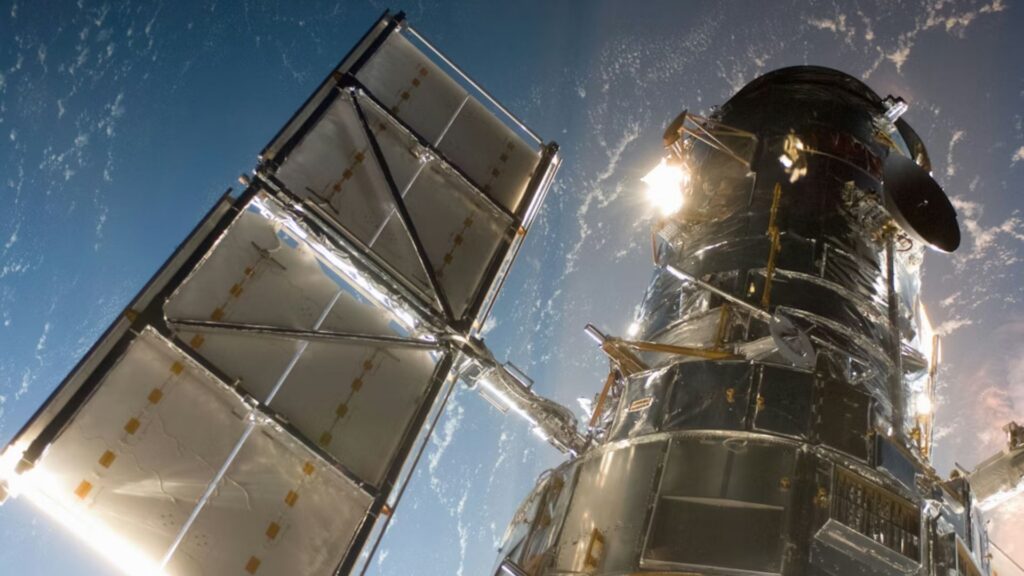
Confirming the burst’s true duration took the combined effort of five high-energy telescopes working across different spacecraft. Fermi’s Gamma-ray Burst Monitor triggered multiple times over three hours alone. The Burst Alert Telescope on NASA’s Neil Gehrels Swift Observatory, the Konus instrument aboard NASA’s Wind mission, the Gamma-Ray and Neutron Spectrometer on the Psyche spacecraft, and Japan’s MAXI instrument on the International Space Station each captured a piece of the event.
“The burst went on for so long that no high-energy monitor in space was equipped to fully observe it,” said Eric Burns, an astrophysicist at Louisiana State University and a member of Neights’ team. “Only through the combined power of instruments on multiple spacecraft could we understand this event.” Together, those instruments confirmed a duration of around 25,000 seconds. For context, the previous record holder had lasted roughly 15,000 seconds, and a typical burst wraps up in under a minute.
Finding the burst’s origin proved just as difficult. Early data placed it in the constellation Scutum, near the dense, dust-filled band of the Milky Way, which briefly raised the possibility it could be something closer to home rather than a distant cosmic explosion. That theory didn’t last long. Images from Keck and Gemini observatories in Hawaii and the European Southern Observatory’s Very Large Telescope in Chile revealed a faint galaxy at the location, and NASA’s Hubble Space Telescope confirmed it.
The Burst Traveled Eight Billion Years to Reach Us, and Its Host Galaxy Raised More Questions

Once astronomers established that the burst came from a distant galaxy, the sheer scale of the event became clear. Benjamin Gompertz, a researcher at the University of Birmingham, led a team that used NASA’s James Webb Space Telescope and the Very Large Telescope to measure the galaxy’s distance and properties. The light from this explosion had been traveling for roughly 8 billion years, meaning it erupted long before our Sun or solar system had even begun to form.
The host galaxy turned out to be just as surprising. It is more than twice the mass of the Milky Way, which is rare for a gamma-ray burst host. Jonathan Carney, a graduate student at the University of North Carolina, Chapel Hill, who led the host galaxy study, noted the galaxy’s size stands in sharp contrast to the typically small galaxies associated with most stellar-collapse gamma-ray bursts. The burst’s position also ruled out any connection to the supermassive black hole at the galaxy’s core.
Gompertz said the explosion released energy equivalent to a thousand Suns burning for 10 billion years. Webb’s NIRCam instrument also revealed a dark dust lane cutting across the galaxy’s center, and the burst had shone directly through it. “The resolution of Webb is unbelievable,” said Huei Sears, a postdoctoral researcher at Rutgers University who led the NIRCam observations. “We can see so clearly that the burst shined through this dust lane spilling across the galaxy.”
A Black Hole Eating a Star May Have Powered the Longest Explosion Ever Seen

Neither of the two established origins for gamma-ray bursts, the collapse of a massive star or the merger of two neutron stars, can produce jets lasting seven hours. That’s what makes GRB 250702B such a puzzle, and why researchers have proposed something far more unusual. The leading explanation among Neights and her team is what scientists call a helium merger: a stellar-mass black hole, roughly three times the mass of the Sun, spiraling into and consuming a companion helium star from the inside out.
Under this model, the companion star has already lost its outer hydrogen layers, leaving behind a dense helium core. As the black hole’s orbit tightens, it moves into the body of the star and begins consuming it rapidly. All of that angular momentum feeds into the black hole, generating a long-lived jet. The model also predicts a supernova as the black hole devours the star from within, though the enormous amounts of dust surrounding the host galaxy prevented even Webb from detecting it.
A second theory involves an intermediate-mass black hole, one weighing several thousand times the Sun’s mass, shredding a passing star through tidal forces, a scenario scientists call a tidal disruption event. The helium merger remains the leading explanation among the gamma-ray team, though neither has been ruled out. With the question still open, Neights is now preparing the Compton Spectrometer and Imager telescope, set for launch in 2027, to detect future long-duration bursts.
PetsFanatic Team
Pet Care Expert & Content Creator
Passionate about sharing knowledge and tips for better pet care. Writing about everything from pet health to training techniques.