
900 Hunters Entered Florida’s Python Challenge and a Woman Who Had Never Competed Before Won It With 60 Snakes

For ten straight nights, Taylor Stanberry waded through the Everglades in the dark, headlamp scanning for a glint of scales in the sawgrass. By the time the 2025 Florida Python Challenge ended, she had pulled 60 Burmese pythons from the swamp, more than anyone else among over 900 competitors. It was her first time entering the contest. It would also make her the first woman to ever win it.
The Florida Python Challenge has run since 2013, drawing hunters from across the country into the Everglades each year to remove one of the state’s most destructive invasive species. This year’s event expanded into new territory, marking the first time Everglades National Park itself opened its gates to competitors. Hunters flooded in from western Palm Beach County to the Tamiami Trail, chasing a $10,000 grand prize and bragging rights.
Stanberry was not new to python hunting. At 29, she had spent a decade working as a contract hunter for the Florida Fish and Wildlife Conservation Commission, tracking snakes barefoot through the brush on hundreds of nights before this contest ever crossed her path. What she had never done was enter the Python Challenge itself.
The Numbers Behind Her Record-Breaking Haul
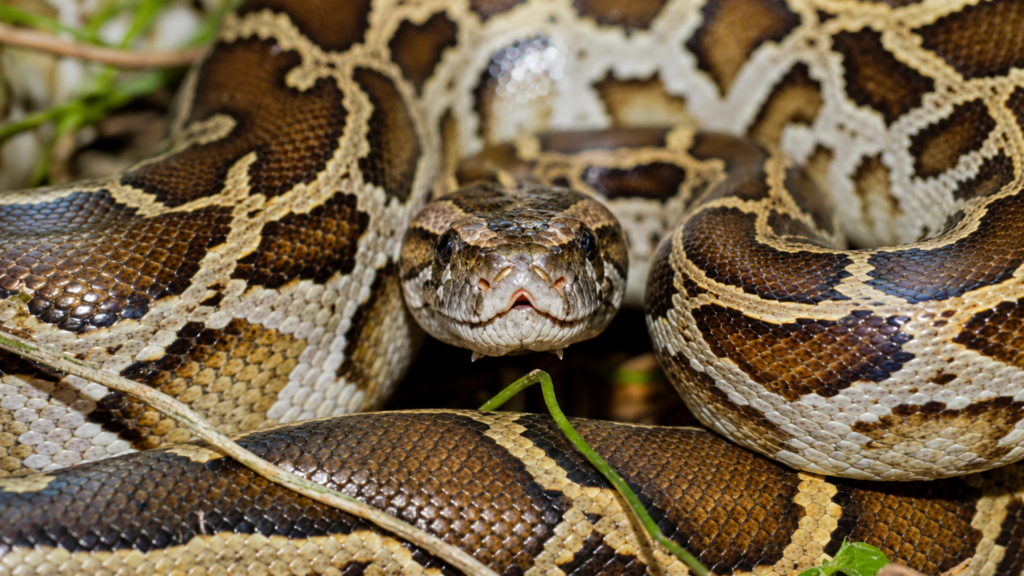
Of the 60 pythons Stanberry caught, 33 were female, and 27 were male, a mix that mattered more than it might seem. Her biggest catch stretched between 9.5 and 10 feet long. Across all competitors, hunters removed 294 pythons total, the highest count since the challenge began. Stanberry’s share of that number was enough to put her name at the top of the leaderboard.
Timing played a bigger role than luck. Fellow contract hunter Donna Kalil, who caught 56 snakes to win the professional division, pointed to the season itself. According to Donna Kalil, contract hunter for the South Florida Water Management District, the challenge landed just as young pythons were leaving their nests and adult females carried extra weight from recent meals, making them slower and easier to spot.
Kalil’s win alongside Stanberry’s meant the top two spots in a contest historically dominated by men went to women hunters. Stanberry described sundown-to-sunup shifts that left her exhausted but determined, calling the effort worth it to protect Florida’s native species. Her win did not sit well with everyone watching the leaderboard, and the reaction that followed said as much about the sport as the numbers did.
Why a Snake Count Matters More Than It Sounds

Burmese pythons are not native to Florida, and their presence has quietly gutted parts of the Everglades food chain for years. A 2012 Everglades National Park study found that in areas with heavy python activity, populations of raccoons, rabbits, and other medium-sized mammals dropped between 85% and 100%. Fewer prey animals mean fewer predators and scavengers up the chain, a collapse that spreads far past the snakes themselves.
The scale of the problem dwarfs any single contest. Since 2019, hunters working with the South Florida Water Management District and the FWC have removed more than 15,800 pythons from the region, and wildlife officials still consider that a fraction of the total population hiding in the sawgrass. Sarah Funk, who coordinates the FWC’s nonnative fish and wildlife program, put it simply: every python removed counts as a win.
That backdrop is what made 2025 stand out. Opening Everglades National Park to hunters for the first time gave competitors access to territory long considered off-limits, and the 294 total pythons removed reflected it, the highest single-year haul since the challenge started twelve years ago. Stanberry’s 60-snake run did not just win her the prize. It became the clearest sign yet that the strategy is starting to work.
What Her Win Says About the Fight Ahead

Not everyone welcomed a woman topping the leaderboard. Stanberry has said some critics dismissed her win as rigged simply because she is female, a reaction she has learned to shrug off after a decade in the field. She has kept her focus on the work itself rather than the noise around it, treating each season in the Everglades as its own separate mission regardless of who is watching.
Stanberry does not describe her job as easy to reconcile. She has said she still respects every snake she removes and takes no pleasure in killing them, even after years on the job. What keeps her going is what she has watched happen in the areas she hunts most: a slow return of bobcats, rabbits, and native snakes in spots where pythons once dominated. Small shifts, she says, but real ones.
15,800 pythons removed since 2019 have not solved the Everglades’ invasive species problem, and no single contest will. But Stanberry’s 60 snakes did something a decade of quiet field work could not: they put a name and a face on the fight, and proved that showing up for the first time can still change what the leaderboard looks like.
PetsFanatic Team
Pet Care Expert & Content Creator
Passionate about sharing knowledge and tips for better pet care. Writing about everything from pet health to training techniques.